Since President Donald Trump imposed 20-percent tariffs on goods inbound from China, companies have been working to compensate for the costs that could bring, both to their own businesses and to their consumers.
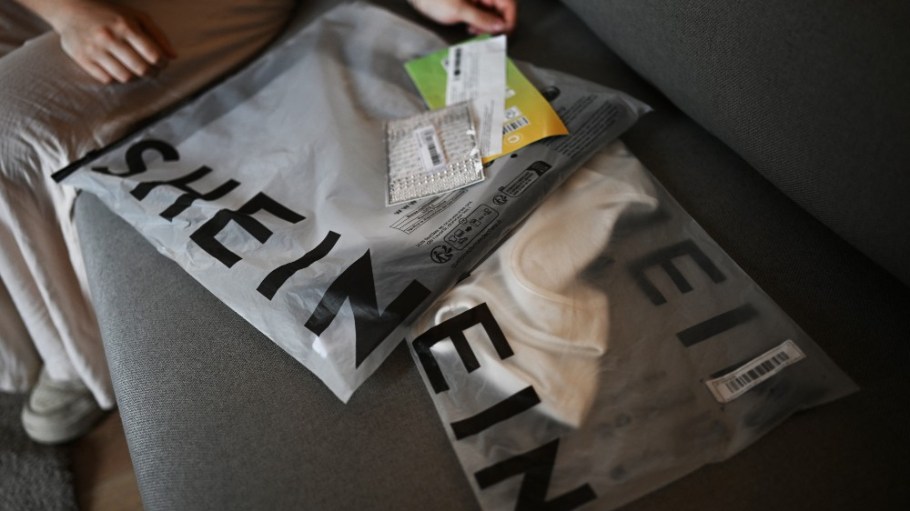
Shein, which ships many of its own products from China-based facilities, could be subject to tariffs if or when it imports products en masse. But in most cases, Shein ships individual orders directly to consumers because of its on-demand manufacturing model. In the U.S. market, the provision that helps make such an operation feasible hangs in limbo.
Related Stories
Earlier this year, when Trump announced he would pull back de minimis, a trade exemption that allows some parcels valued at less than $800 to enter the country duty free, all eyes turned sharply to Shein and Temu, two companies that notoriously capitalize on the de minimis provision—though legacy brands and retailers do, too.
Trump’s de minimis decree was quickly reversed and put on hold until his administration can figure out a way to adequately collect the duties that would come from the millions of packages that come in via de minimis each day. In 2024, CBP saw more than 1.3 billion packages enter the U.S. under de minimis.
Shein doesn’t seem to be sweating the potential for change. The AFP reported that Donald Tang, Shein’s executive chairman, said the company will work to provide the best possible experience for its customers despite trade uncertainty.
“We will find a way to deliver the goods,” he reportedly said, noting that Shein’s “business model” has helped it successfully navigate other unexpected global trade disruptions, like the COVID-19 pandemic.
According to its 2023 impact report, Shein has diversified some of its manufacturing to Brazil and Turkey. Reports earlier this year suggested the company had asked some of its China-based suppliers to migrate to Vietnam, though tariffs may come to the fore there, too.
The company has also participated in the U.S. Customs and Border Protection (CBP)’s Section 321 Data Pilot, which uses data provided by the company to expedite clearance for de minimis shipments.
And per the AFP, Tang said the company will continue to devise strategies to meet the needs of the business.
“We’re not focusing on customs policy,” Tang reportedly said.
But Shein’s lobbying records may sing a different tune on where the company’s interests lie, at least when looking back at last year’s efforts.
According to OpenSecrets, Shein spent $3.9 million on U.S. lobbying efforts last year, up from $2.1 million in 2023 and $280,000 in 2022. Data is not yet available for 2025. Those funds go through Shein’s U.S. subsidiary, Shein Technology.
When companies lobby Congress or federal agencies, they have to use a lobbying issue code to categorize the topic or legislation area they are working to impact. OpenSecrets’ data shows that, in 2024, Shein Technology lobbied on issues in four buckets: apparel, clothing and textiles; trade; defense and taxes.
In many of Shein Technology’s filings tagged with the trade and apparel lobbying issue codes, its lobbyists indicated the initiatives were targeted at “legislative and regulatory issues impacting the fashion and apparel industry, on-demand inventory, e-retailing and overall online competition, including trade-related matters” and “general education regarding Shein’s presence, operating footprint and economic impact in the United States.”
But notably, OpenSecrets shows records of two near-identical filings submitted under the taxes issue code. In each of those, Melissa Laurenza, a partner at Akin Gump Strauss Hauer & Feld, allocated $120,000 toward “legislative and regulatory issues impacting the apparel industry and e-retailers.”
But there’s one main difference between Laurenza’s two tax-tagged filings. In one of the two, Shein Technology discloses it has used those funds to lobby the Department of Homeland Security (DHS), which oversees CBP. CBP enforces the collection of duties and levies, as well as de minimis.
The filing doesn’t provide granular detail into what Shein Technology lobbied DHS on.
Tang has previously made a public call for de minimis reform.
In 2023, he said de minimis “needs a complete makeover to create a level playing field for all retailers” and noted that the company would happily engage in dialogue with Congress, the industry and the then-Biden administration to “determine the specific reforms needed.”
He has not, however, publicly shared the specificities of how Shein believes de minimis should be altered to achieve the goals he has in mind.
According to the AFP, Tang said Shein will place customers at the forefront of its processes and decisioning, regardless of what happens with de minimis under the Trump administration.
“We will do our best to make sure the customers’ interest and customers’ experience is not affected,” Tang reportedly said of de minimis.