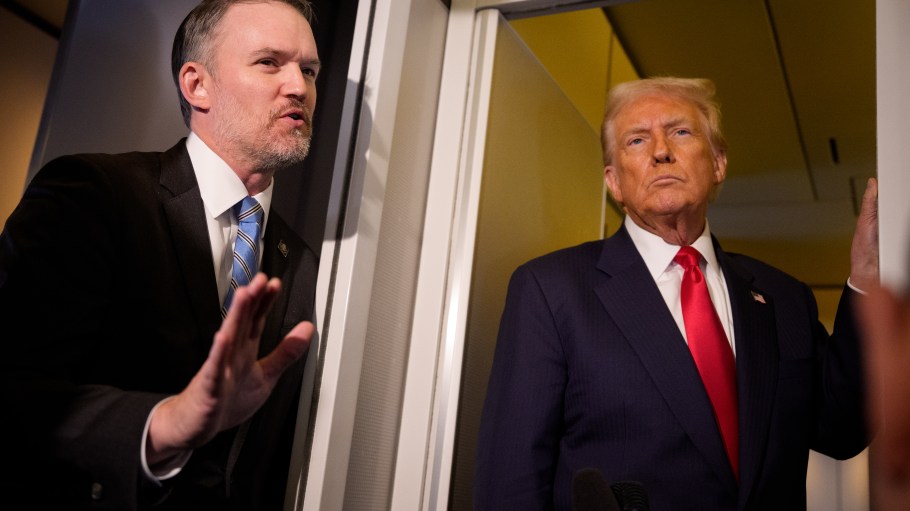
United States Trade Representative (USTR) Jamieson Greer announced Thursday that the United States has agreed to update its trade frameworks with Guatemala and El Salvador.
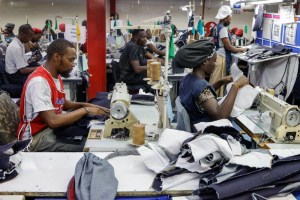
The agreements, which have yet to be finalized but are expected to be made official in the coming weeks, will see the U.S. dropping its so-called “reciprocal tariffs” on textile and apparel products inbound from both countries under the U.S.’s Dominican Republic-Central America free trade agreement (CAFTA-DR).
Related Stories
Imports from both countries have been subject to a 10-percent duty for several months, and while President Donald Trump’s administration plans to maintain that level on many goods, it will provide concessions for certain products, including textile and apparel items, and for “qualifying exports that cannot be grown, mined or naturally produced in the United States in sufficient quantities,” a joint statement on the frameworks noted.
Both Guatemala and El Salvador have agreed to a slew of terms that the Trump administration believes will give the U.S. greater access to the Central American nations’ markets and bolster the U.S. economy.
“[These] announcements lay the groundwork for Agreements on Reciprocal Trade to unlock new markets for U.S. exports and lower trade barriers facing American workers and producers,” Greer said in a statement.
The leaders of El Salvador and Guatemala’s respective governments publicly applauded the agreements.
Nayib Bukele, president of El Salvador, posted the terms of the U.S.’s agreement with the country on X and simply wrote, “Friends.”
Bernardo Arévalo, Guatemala’s president, posted a video on X noting that the agreement is a result of the strong relationship between its government and the U.S.’s government. In the video, which Sourcing Journal translated from Spanish to English, Arévalo said the move “positions us as a more competitive and more attractive country for investment.”
Textile and apparel trade group leaders are taking the agreements as a win.
“We are grateful to President Trump and his trade negotiating teams for this bold step to support U.S. workers and communities whose lives and livelihoods are directly enabled by U.S.-Central American trade,” Steve Lamar, president and CEO of the American Apparel and Footwear Association (AAFA), said in a statement. “These actions bolster key U.S. export markets in Central America, reduce costs for American consumers, and reinforce the competitiveness of integrated regional supply chains that rely on U.S. cotton and other textiles.”
The National Council of Textile Organizations (NCTO), which has been vocal in calling on the Trump administration to honor CAFTA-DR for the textile industry over the past several months, said the Trump administration’s decision will positively influence the industry and U.S. consumers.
Kim Glas, the trade group’s president and CEO, called the update “a critical key first step” for all three countries’ industries.
“Restoring duty-free textile and apparel qualified goods from the CAFTA-DR region is important to bolster the U.S. textile supply chain [and] can help bring some stability to this critical sector,” Glas said in a statement. “The U.S.-Western Hemisphere supply chains stand as a bulwark to China and other Asian countries.”
The NCTO said that, because CAFTA-DR aided more than $11 billion worth of trade last year and supported “more than 470,000 U.S. workers in the domestic textile sector alone,” the Trump administration needs to continue thinking critically about its merits. Trump’s reciprocal tariffs have seen textile and apparel imports from free trade partners dipping while the same imports from Asian nations continue to increase. The administration has repeatedly aired its frustrations with China in particular and has been looking to compete with the Asian nation in multiple industries.
With that in mind, Glas said, Trump and his allies should place further consideration on extending similar agreements to other CAFTA-DR countries that still face reciprocal tariffs.
“NCTO and our industry leaders have long been pushing for the reinstatement of duty-free treatment for qualified textile and apparel goods for our CAFTA-DR partner countries,” Glas said in a statement. “We welcome the administration’s announcements about restoring these benefits for Guatemala and El Salvador and continue to press for a resolution for the other trade partners including Honduras, the Dominican Republic and Costa Rica, while acknowledging that the administration is conducting an extensive review under Section 301 of Nicaragua and their human rights violations under a separate track.”
AAFA leaders also called on Trump and Greer to extend the agreements to other free trade partners. Beth Hughes, AAFA vice president of trade and customs policy, said, on top of that, the administration needs to solidify its promises on Guatemala and El Salvador.
“We urge these agreements to be finalized soon so that these gains can quickly take effect and encourage the United States to incorporate similar provisions in forthcoming agreements with our other CAFTA-DR partners,” Hughes said in a statement.