The Office of the United States Trade Representative (USTR) held three days of hearings with stakeholders across multiple sectors last week regarding the future of the U.S.-Mexico-Canada Agreement (USMCA), which comes up for review in July 2026.
The legislation, which replaced the North American Free Trade Agreement (NAFTA) in 2020, is largely viewed by apparel and textile industry players as an essential platform for promoting free trade and multilateral investment in a more self-sufficient and prosperous North American supply chain.
Related Stories
But over the course of the past year, trade ties between the U.S. and the rest of the world have frayed, including America’s relationship with its closest neighbors. Tensions between the U.S. and both Mexico and Canada became inflamed early in Trump’s second term, with the president eventually opting to impose double-digit duties on imports from both countries.
Still, the USMCA remains in place, blanketing the majority of imports from both countries in free-trade benefits—for now.
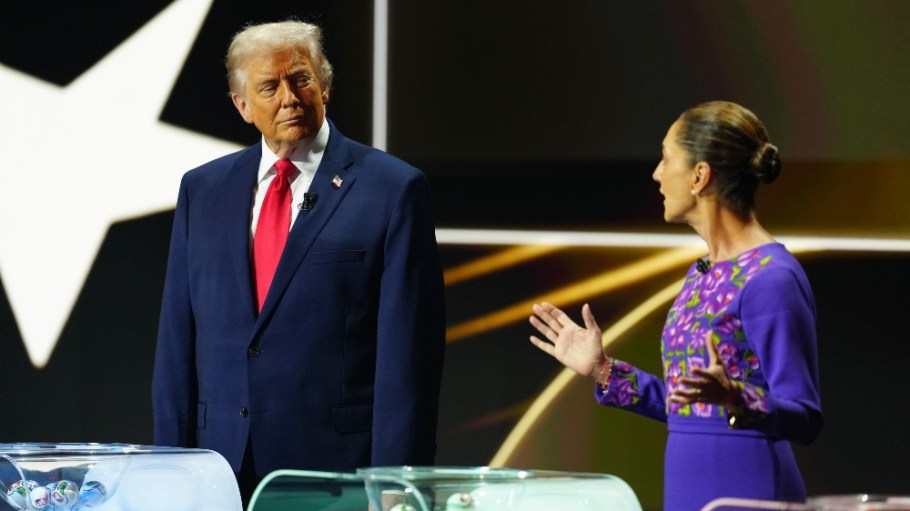
Both Mexican President Claudia Sheinbaum and Canadian Prime Minister Mark Carney met with Trump last week during the official drawing for the FIFA World Cup in Washington, D.C. the day after the USTR hearings. The heads of state vowed to continue conversations about the future of the trilateral trade agreement, though few details about closed-door conversations were released.
Mexico has taken a decidedly different tack from Canada this year when it comes to preserving and protecting its trade relationship with the U.S., which it views as essential to its economic survival. Sheinbaum has struck a conciliatory tone in her dealings with Trump; a contrast with Canadian Prime Minister Mark Carney, who has pushed back on Washington’s tariff threats with retaliatory measures of his own.
At home in Mexico, Sheinbaum’s government has also taken concrete legislative steps toward customs reform. Those actions shouldn’t be viewed in isolation, but likely as part of a larger plan, according to Jonathan Todd, vice-chair of the Transportation and Logistics Practice Group at Benesch law firm.
Mexico’s Senate in mid-October approved changes to the country’s Customs Law, or Ley Aduanera, which aim to up enforcement and increase efficiency and transparency when it comes to imports. The proposed amendments, slated to take effect on Jan. 1, 2026, will crack down on customs violations by holding importers and brokers liable for illegal acts like undervaluation, tariff misclassifications and false or incomplete customs entries.
“The reforms are targeting compliance and the enforcement side of importing into Mexico, and the burden is borne most strongly by the customs brokers,” Todd told Sourcing Journal. “There are very serious penalties financially, and also loss of license and other consequences that can occur if a customs broker in Mexico is involved with duty evasion or smuggling of goods into Mexico.”
Customs brokers will assume the role of gatekeepers to the country’s economy and its supply chain. Todd said his firm’s clients, including U.S. manufacturers, were buoyed by the development, as there are “real concerns about duty evasion and other non-compliance of imports into Mexico that erode the competitiveness of U.S. production.” As the North American supply chain becomes increasingly interconnected, laws impacting Mexico’s imports have the potential to change business dynamics for Mexican and American producers alike.
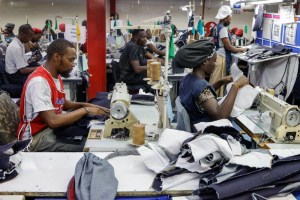
Within the new amendment to the Ley Aduanera are reforms to the country’s Maquiladora, Manufacturing and Export Services Industry (IMMEX) program. Launched in 2006, IMMEX was designed to attract foreign investment by allowing companies operating in Mexico to import materials and inputs duty free, with the intent of exporting finished goods to other export markets like the U.S.
Leveraged heavily by the textile, apparel and footwear sectors, many players within the space believe the program has been preyed upon by foreign actors seeking to avoid paying Mexico’s customs duties or to circumvent U.S. trade laws. The proposed IMMEX reforms aim to quash such instances of evasion by implementing new controls. These safeguards, including a focus on digitalization and greater penalties for misuse, were developed to ensure that temporary imports undergo the appropriate transformation via Mexico’s labor force and are re-exported.
However, China’s appetite for globalization poses new trade enforcement challenges. “China has is known to have built out facilities, particularly in the textile and fashion space, around the world,” Todd said. That’s happening across Latin America, with a heavy concentration in Mexico due to its proximity to the U.S.
That’s a complicated prospect for Mexico’s manufacturing base, and for its most prominent trade partner, which has escalated efforts to check China and its hold on global manufacturing in recent years.
The Biden administration took a particular interest in issues of forced labor, passing the Uyghur Forced Labor Prevention Act in 2021, primarily targeting cotton production in China’s Xinjiang province. Meanwhile, Trump has been calling to divest American interests from China for about a decade, implementing Section 301 duties on thousands of China-originating products worth about $380 billion during his first term.
But as supply chains become more globally connected and, consequently, more muddled, it has become tougher to trace the origins of goods and track their movements across the globe.
That’s where Mexico’s emerging zeal for customs reform could provide a point of leverage in the impending USMCA negotiations. “I don’t think that the two events are happening in isolation, and I think that that’s worth watching, especially as we go into the joint review next year,” Todd said.
“If it’s correct and true and enforced appropriately, then the point [of Mexico’s customs reform law] is to strengthen Mexico’s regulation on imports and Mexico’s domestic production base, which is very similar to President Trump’s ‘America First’ trade policy,” he added. “It appears that there’s a degree of alignment between the Sheinbaum administration and the Trump administration on these kinds of issues.”
Certainty is, of course, hard to come by in this modern era of trade policy, but the lawyer believes Mexico’s government is positioning the country for a more fruitful future by mirroring some of the current U.S. administration’s protectionist philosophy.
“We’re in a time of great change, and all this is happening before our eyes. But there may be a degree more harmony here emerging than I think a lot of people would anticipate,” he said.