With a decision still pending, most Americans believe the Supreme Court should limit President Donald Trump’s authority to impose wide-ranging and far-reaching tariffs on United States trading partners across the globe.
Polling by Marquette Law School released this week showed that 63 percent of 1,003 U.S. adults surveyed think the high court should uphold the rulings of the lower courts, which said that the Commander in Chief overstepped his presidential authority by using the International Emergency Economic Powers Act (IEEPA) to levy duties. Just 36 percent of respondents believe the Supreme Court should overturn the rulings and side with the president.
Related Stories
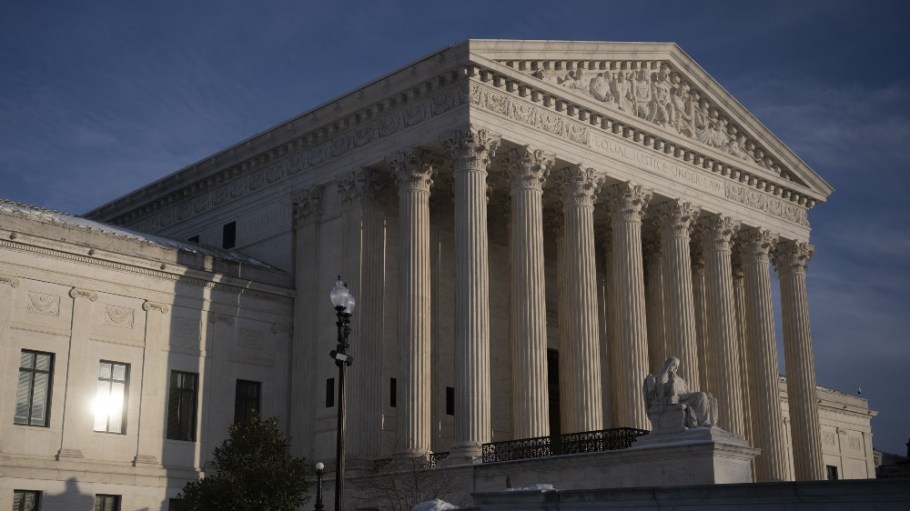
The Supreme Court heard oral arguments in the case, Learning Resources, Inc. v. Trump, on Nov. 5 but has yet to issue a decision. The next potential decision day is Feb. 20, but the court does not announce which rulings it is handing down in advance.
Marqette, which has conducted three surveys on the issue—two others in September and November—revealed that polling on the issue has remained relatively consistent, with results within three percentage points of those gleaned between Jan. 21-28 this year.
A majority of the public (56 percent) said they believe tariffs are hurting the American economy, while 30 percent said they believe they’re helping and 14 percent said they don’t make much of an impact.
Within the contingent who believe in the benefits of duties, 77 percent are in favor of the president maintaining authority on the issue. However, even among this contingent, 23 percent said they believe Trump’s power should be limited.
Among the respondents who believe tariffs are having a negative effect on the economy, 89 percent said the Supreme Court should rule in keeping with the lower courts.
Opinions are predictably split on approval of Trump’s handling of the tariffs, with most opinions falling in line with how respondents believe the high court should rule. Just 37 percent give Trump’s strategy a thumbs up, and among this group, 78 percent believe the Supreme Court should allow him to maintain authority over the issue, while 22 percent said the nine justices should limit his power. Within the cohort who disapprove, 89 percent said the Supreme Court should rein in Trump’s authority.
Notably, opinions on the IEEPA case aren’t cleanly split on partisan lines. While 67 percent of right-leaning respondents want the Supreme Court to come down on the president’s side of the issue, 33 percent—one-third of that group—believe his power should be checked. Democrats are more united, with 92 percent favoring limits on presidential power over tariffs, and 69 percent of independents said the same.
Americans also have opinions about the motivations of the Supreme Court.
More than half of the survey group (57 percent) said they think the court is going out of its way to avoid ruling against the president, while 43 percent believe the opposite. Democrats are much more likely, at 78 percent, to believe the Supreme Court is trying to appease the president, though 34 percent of Republicans and 59 percent of independents said the same thing.
Whatever the Supreme Court decides, 82 percent of American adults believe the president must obey the decision. Notably, though, 17 percent said he can ignore an unfavorable decision from the court. That belief isn’t unique to the IEEPA case—in fact, such views have been stable across 10 polls conducted by Marquette since 2019, never sliding below 76 percent saying the president must obey the Supreme Court. Since January 2025, that number has remained at 82 percent or higher.
Belief in the Supreme Court’s authority is largely shared across the aisle, with 76 percent of Republicans, 90 percent of Democrats and 79 percent of independents agreeing that its judicial authority should be upheld.