The same public interest group that went toe-to-toe with the Trump administration over its International Emergency Economic Powers Act (IEEPA) duties is fighting back against the president’s newest tariff scheme on behalf of small businesses.
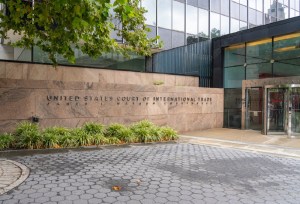
The Liberty Justice Center is now representing two small American companies in the fight against the Section 122 tariffs imposed by President Donald Trump on Feb. 20. The non-profit litigation firm filed a complaint on Monday in the New York-based Court of International Trade (CIT) on behalf of toy company Basic Fun, which imports products like Tonka trucks from China, and Burlap & Barrel, which brings in ingredients and spices from across the globe to be sold on its e-commerce site.
Related Stories
The firm previously represented plaintiffs in the VOS Selections v. Trump lawsuit, which was ultimately consolidated into a single complaint with another group of plaintiffs under Learning Resources v. Trump before making its way to the Supreme Court last month. The suit successfully dismantled the president’s “reciprocal” tariff scheme when six out of the nine high court justices sided with the small businesses and state attorneys general that filed the complaints.
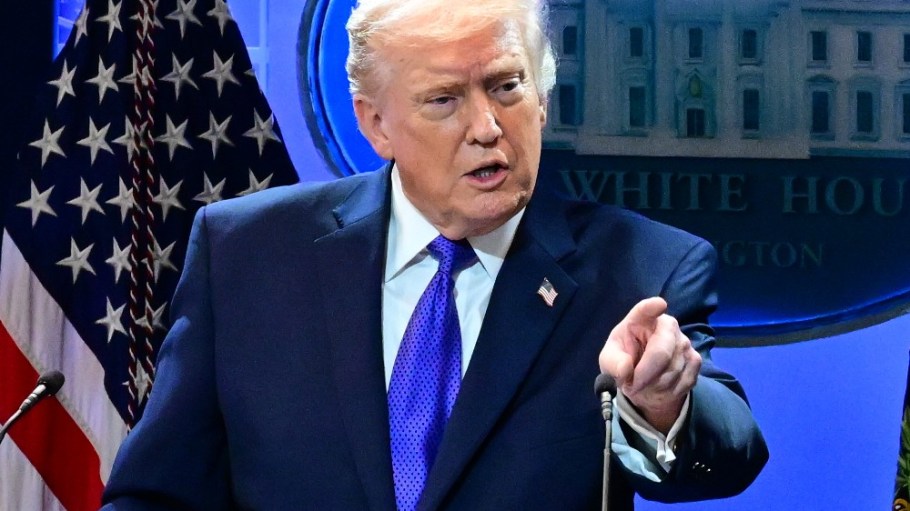
In anticipation of an unfavorable ruling, the Trump administration said it was ready to deploy other tools to reconstitute the dissolved tariff scheme. Within hours of the Supreme Court’s decision, Trump announced on Truth Social that he would be implementing a 10 percent universal baseline duty under Section 122 of the Trade Act of 1974, a never-before-utilized statute that deals with balance-of-payments issues. He announced soon afterward that he planned up the duty rate to 15 percent.
“The President has once again imposed a global, economically drastic tariff regime, imposing a 10% import tax on the entire world—which the President promised would be raised to 15%—without regard to the express requirements and limitations imposed by Congress,” the Liberty Justice Center wrote in its complaint.
“This Court has been down this road before,” it added. Last year, the CIT’s three-judge panel found that the president overstepped his authority in imposing unilateral, unlimited tariffs under IEEPA.
The complaint alleged that while Section 122 gives the president some power to impose tariffs, “it does so under specific circumstances that do not currently exist, with specific limitations on the President’s authority which he has declined to observe.” The president in his executive order cited the existence of bilateral trade deficits with other countries as a balance-of-payments deficit, “but these are distinct economic phenomena.”
The balance of trade (BOT) is the contrast in value between the country’s exports and its imports of goods and services over a period of time. A trade deficit might be an indicator that a country is too dependent on imports from other countries, or is not competitive when it comes to exports, for example. Meanwhile, a balance of payments (BOP) is a much broader record including all of a country’s monetary transactions. It includes goods and services trade, but it also includes capital flows and financial transfers. It’s possible for a country to be in a trade deficit but not have BOP issues because of factors like foreign investment.
The president argued in his executive order that “fundamental international payments problems within the meaning of section 122 exist and that special import measures to restrict imports”—namely tariffs—”are required to address these problems.”
But as with the IEEPA duties, the Liberty Justice Center argued that the CIT should find the Section 122 tariffs exceed the Commander in Chief’s tariff authority granted by Congress, “reaffirming once again what the Supreme Court made clear a few weeks ago: the imposition of tariffs is a power of Congress and can be exercised by the President only for the purposes it has granted to him, subject to those limitations Congress imposed.”
“The Supreme Court has already ruled that the President cannot unilaterally impose worldwide tariffs,” Jeffrey Schwab, director of litigation at the Liberty Justice Center, said in a statement. “Section 122 authorizes temporary tariffs for certain economic conditions that do not currently exist; it is not a general license for the President to tax the American people for reasons Congress never intended.”