Much remains unclear about the refund process for about $166 billion in tariff revenue collected under President Donald Trump’s now-defunct International Emergency Economic Powers Act (IEEPA) duties.
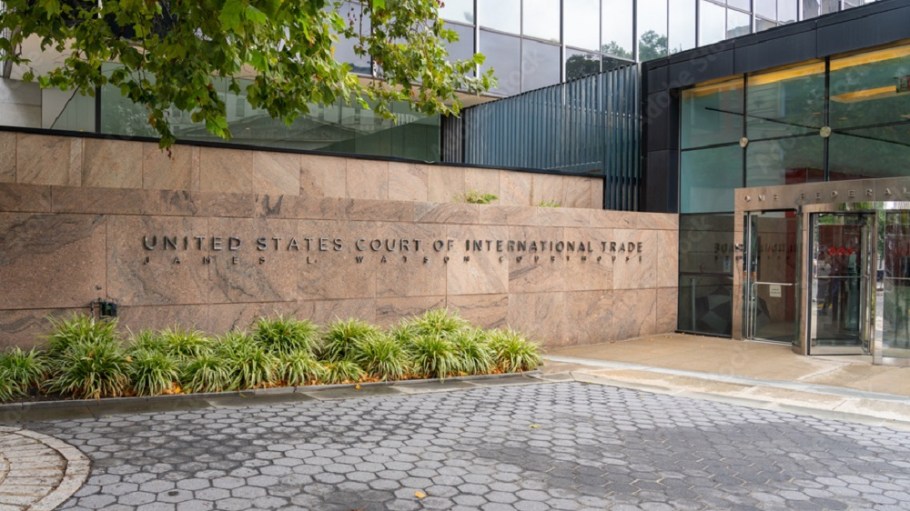
But companies weighing filing suit against the federal government in the pursuit of tariff refunds may not find themselves propelled to the proverbial “front of the line” when paybacks are doled out. While huge corporations like FedEx and Costco wasted little time in filing legal complaints in hopes of speeding up the process, the Court of International Trade (CIT) ruled that United States Customs and Border Protection (CBP) must dispense refunds to all importers through its existing standard procedures.
Related Stories
“We’re not recommending for all clients to file the lawsuits, because it should be an administrative process. If they’re truly unlawful tariffs, they ought to be refunded—but that’s a calculus all of our clients and importers more broadly have to do,” Julia Bonestroo Banegas, special counsel in the Maritime Practice Group of Jones Walker law firm, told Sourcing Journal.
The lawyer believes that there’s a chance that litigants in cases might be issued refunds quickly because they moved quickly, “but we really don’t know that that’s how they’ll prioritize them,” she said. “That question is still sort of unanswered, and so, even though it’s not the biggest lift to file the suit, it doesn’t necessarily get you closer to the front of the line.”
Importers may run into a more complex set of hurdles when it comes to entries that have been liquidated or face liquidation imminently, however, and there, they should be prepared for action. When it comes to IEEPA entries that aren’t yet liquidated, importers may need to file a Post Summary Correction (PSC) in order to correct those entries’ classifications and valuations and trigger the refund process. While the CIT ordered that CBP “reliquidate” IEEPA entries that have already been liquidated, a formal protest is typically required for liquidated entries within 180 days.
The scale of the IEEPA refunds is unprecedented, and that’s sure to a new layer of complication to current processing standards, however ingrained they may be. CBP is working on a tool within its Automated Commercial Environment (ACE) portal—the digital venue for dealing with refunds from the agency—specifically to streamline IEEPA refunds.
“I would encourage all importers to set up their [Automated Clearinghouse (ACH)] through the ACE portal with CBP to make sure you can get the refund immediately, because it doesn’t look like they’re going to be issuing refund checks—they’re going to be wiring the money, and so you have to have that account set up,” Banegas said. ACH allows for both the electronic payment of customs fees, duties and taxes, as well as the receipt of refunds.
Banegas is particularly interested in what happens when importers do finally get back the capital that was taken from them when they were paying the IEEPA tariffs. Many, if not the majority, of sellers raised prices to offset the escalating costs to their own operations, placing much of the tariff burden on consumers.
Now, the class actions are starting to hit. Notably, Costco and FedEx—pioneers when it came to taking on the federal government in pursuit of refunds—are in the crosshairs of their patrons, who say they paid the price for the tariffs and are owed monetary refunds themselves.
Banegas said she believes the mass litigation trend will continue. But even if the plaintiffs are victorious, there’s no clear road ahead for how damages will be assessed. “The duties changed a lot from the supposed ‘Liberation Day’ in April through the following 11 months until we got the Supreme Court decision, and as tariff amounts went up and down, the ways that they that those charges were passed through to the buyer, straight from the importer of record or further down, [changed].”
That could make it harder to parse which the parts of the tariffs were paid by each party in the supply chain, as well as the end consumer.
And all of this could wreak havoc on importers’ financial reporting. “I’ve heard a lot of clients say, ‘We already reported our earnings from last year,’ depending on how you do your financial calendar,” Banegas said. When the refunds come back to importers, they will likely be taxed by the Internal Revenue Service (IRS) in some capacity—as a gain contingency, for example. “There’s a lot of financial modeling and cash flow and valuation issues that are going to come from all of this. And I think you’ll see that complexity play out in the in the litigation as well—lots of different factual scenarios,” she added.
This may be sticky for importers without the legal firepower or the accounting chops to navigate—especially if they also took hits to their bottom lines. A company that that did pass along the cost to consumers by raising prices but also suffered business losses itself could find itself in a hard place if refunds come through and shoppers demand their fair share.
“It looks like a windfall; they passed on the costs and then they received it back from the federal government. But it practically might not really be a windfall if volumes were down year over year, and you weren’t quite at the scale you would have been in 2024,” Banegas said.
One thing is for certain, though: consumers want a piece of the refund pie, and it’s up to importers, sellers, brands and retailers to come to their own conclusions about how to approach the issue even if litigation isn’t a part of the equation.
“There should certainly be, and will certainly be, a lot of entrepreneurial marketing styles and ways to get goodwill from consumers,” Banegas said. For example, Cards Against Humanity, maker of an adult card game, was among the first to publicly commit to return any tariff-related refunds it receives to shoppers who paid higher prices for their product. How many consumers will take the company up on the offer is yet to be seen, though—and the gesture could be more powerful than the actual payout.
“Frankly, if a distributor or an importer has really strong, long-term relationships with their customers, they’re going to want to share a little bit of the refund just as an act of goodwill to keep people working together,” Banegas surmised. “You might see that also in in really competitive industries where there’s only a few sources of the [product].”
As the Trump administration now leans on other trade statutes in an attempt to rebuild its tariff regime, the lawyer believes that businesses will adapt swiftly, armed with the legal lessons learned during the IEEPA rollercoaster.
The turbulence of the past year brings to mind the sourcing strain of the 2020 pandemic—and the ways companies became more legally literate almost overnight as a matter of survival. “It’s similar to the contractual language about force majeure related to Covid-19 that’s so burned in our brains; you can’t help but learn those lessons and be wary of certain scenarios,” she said. “In some ways, we’ll never be the same again.”