Though the future of its trade agreement with the United States is in flux, India has teamed with an American-led effort to safeguard supply chains.
The two countries signed the Pax Silica Declaration earlier this month, solidifying a commitment to strengthen the supply chains for critical minerals and enhance collaboration surrounding advancements in areas like artificial intelligence.
Run by the U.S. State Department, the effort aims to establish closer ties between the U.S. and its allies and trading partners. To date, signatories include Australia, Greece, India, Israel, Japan, Qatar, the Republic of Korea, Singapore, United Arab Emirates and the United Kingdom, while non-signatory participants include Canada, the European Union, the Netherlands, Taiwan and the Organization for Economic Cooperation and Development.
Related Stories
India’s signing on Feb. 20 represented “a growing geopolitical consensus that economic security is national security, and national security is economic security,” a State Department spokesperson said. “India brings to Pax Silica a deep talent pool, processing and refining capacity for critical minerals, investments in AI infrastructure, and an understanding of the importance of trusted technologies.”
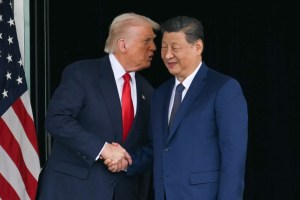
The move is a “critical step” in moving toward the vision President Donald Trump and Indian Prime Minister Narendra Modi hashed out in early 2025 when they established the U.S.-India COMPACT (Catalyzing Opportunities for Military Partnership, Accelerated Commerce & Technology) for the 21st Century). The initiative contains provisions related to the acceleration of technological advancement as well as the drawing down of trade barriers and movement toward a bilateral trade agreement.
The U.S. and India also formalized a commitment to a pro-innovation regulatory framework this month—”a strategic counter-narrative to the rising global trend of restrictive, fear-based regulatory regimes.”
According to the State Department, some regions are over-regulating AI while “the United States and India are doubling down on free enterprise and private sector creativity.” By encouraging and incentivizing bilateral investment in the sector, the partners believe startups and tech experts will ensure that the U.S. and India are well-positioned to lead in innovation as well as security.
The newly minted partnership comes at an awkward time for U.S.-India relations.
The two nations settled on a framework for a trade agreement on Feb. 2 following months of protracted negotiations and vacillating tensions, only for the deal to be called into question following the Supreme Court ruling on Friday invalidating President Donald Trump’s International Emergency Economic Powers Act (IEEPA) tariffs. The agreed-upon terms included India halting its purchase of Russian oil in exchange for a lowering of IEEPA tariffs from 25 percent to 18 percent. India also committed to eliminate duties on American products and address non-tariff barriers to trade, while investing in purchasing more U.S. energy, technology and agricultural products.
Now that IEEPA is no more, however, the basis for the agreement has changed. Trump swiftly announced new global tariffs under Section 122 that will eventually blanket U.S. trading partners in 15 percent duties (for now, the rate stands at 10 percent). An Indian delegation of trade officials canceled a trip to Washington, D.C. scheduled for this week where the finer points of the deal were to be hammered out.
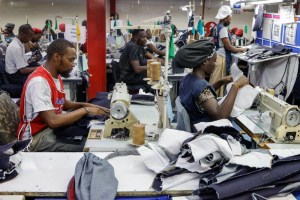
The stalled pact is causing consternation to ripple through India’s sizable apparel sector, which generated $37.54 billion last year. “Without a doubt, the developments of Feb. 20 have cast a fresh spell of uncertainty,” said Ashwin Chandran, chairman of the Confederation of Indian Textile Industry (CITI). The country’s farmers were already skeptical of the deal, which they believe will undercut their earnings as it provides an open market for U.S. agricultural imports.
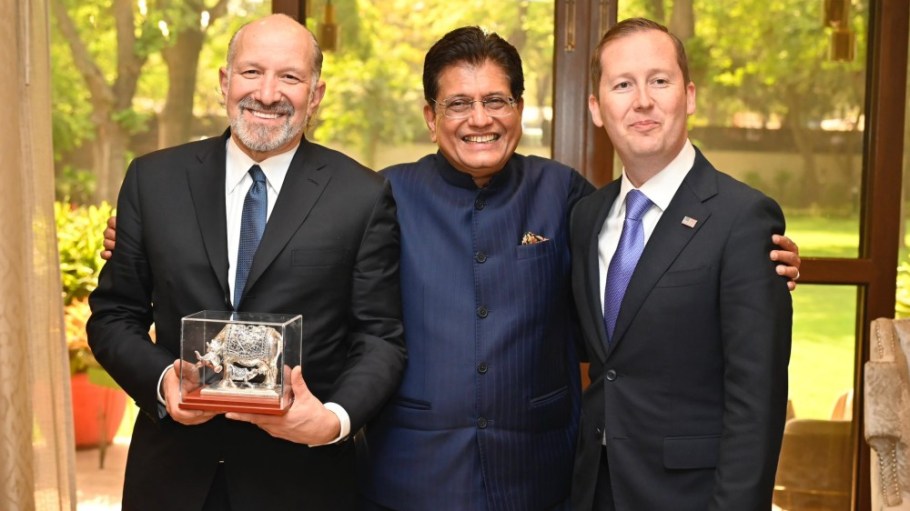
According to Indian news outlet India Today, Trump’s cabinet is eager to salvage the deal if it can. On Thursday, Commerce Secretary Howard Lutnick quietly traveled to Delhi to meet Union Minister Piyush Goyal. The meeting was not formally announced by either country’s government.
Following the meeting, Goyal tweeted, “Hosted US secretary of commerce Howard Lutnick and Sergio Gor. Engaged in very fruitful discussions to expand our trade and economic partnership.”