When it comes to the removal of the 11 percent duty on cotton imported into India, reactions have been mixed. The decision has set off a surge of demand for foreign cotton among exporters who had long been restrained from bringing in the raw material from outside sources, even during domestic production shortfalls.
For many manufacturers, the policy change has led to an ability to fulfill special requests from brands and retailers, and in some cases, access to cotton that meets stringent production parameters. The relief has been particularly valuable in the wake of the 50 percent tariffs imposed by the U.S. on Indian textile and apparel exports as of Aug. 27. Although the Indian government initially set the duty waiver to run from Aug. 19 through Sept. 30, it has since been extended until Dec. 31.
Related Stories
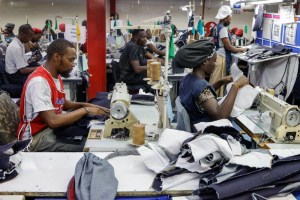
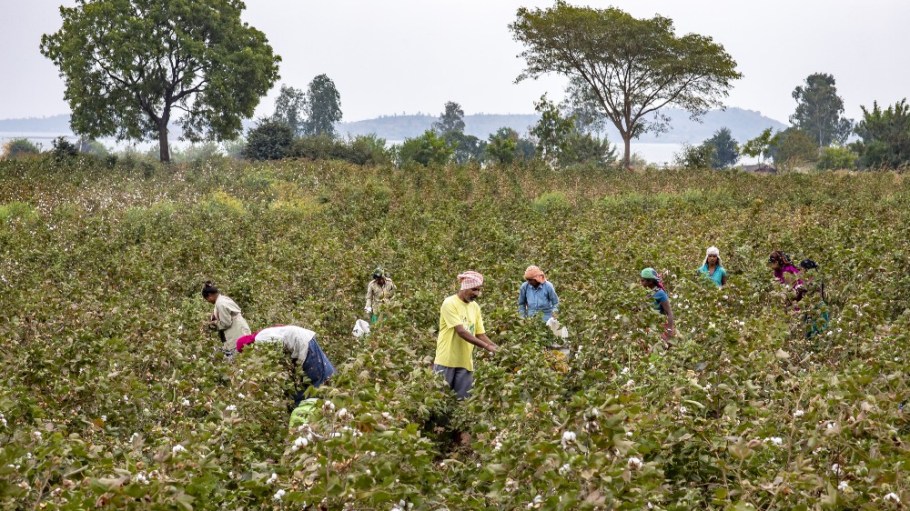
The extension has sharpened the divide between India’s powerful textile industry and its agricultural backbone. Cotton farmers say they are being squeezed at a critical time, while manufacturers argue that the tariff shock from the U.S left them with little choice.
Both sides are hurting, and both are demanding urgent attention.
Exporters and mill owners have long pushed for such a reprieve, particularly as India’s textile sector has struggled to keep pace with neighbors such as Bangladesh and Vietnam, where exporters benefit from lighter duties and taxes.
“It is the first time in 100 years that there has been this level of cotton imports in India,” Atul Ganatra, president of the Cotton Association of India, told Sourcing Journal. “Customers want certain types of cotton, often contamination-free. This also requires less cleaning, so net utilization is better by 2 to 3 percent,” he said.
India’s apparel and textile exports have stagnated or declined over the past few years, with exporters blaming high input costs and unfavorable trade terms. Many argue that the suspension of duties is a much-needed boost. But some also point out the timing is fraught.
A manufacturer, speaking on condition of anonymity, called the move “a bit off in terms of the cotton season.” He explained, “We have been making this demand for some time now, hoping it would come into effect earlier this year. Coming at a time when the cotton picking season has just started might add to farmers’ worries.” He stressed, however, that the real problem lay elsewhere. “Yields are too low. Indian farmers are getting as little as 400 kilograms per hectare, while Brazil produces 2,200 kilograms per hectare.”
For mill owners and exporters, though, the decision has been described as nothing short of a rescue package. With U.S. tariffs threatening an immediate 10 percent drop in orders, imported cotton has offered them a lifeline.
Cotton farmers, on the other hand, said it was no longer about duties and taxes, but about livelihood and survival. Representatives of the All India Kisan Sabha, the country’s farmers’ union, expressed alarm at the dual pressures farmers are under—namely, rising inflation in production costs and stagnant yields. Talking about the issues that need to be urgently addressed by the government, they said they were calling for a higher minimum support price (MSP) for cotton and debt waivers to ease their financial distress. They also wanted to find ways to stem the farmer suicides.
Farmers agreed on the fact that the timing of the decision was questionable.
“It should have been near the end of the cotton season, in the off-peak months. Instead, it coincided with U.S. negotiations, creating more confusion,” a farmer in Maharashtra’s Vidarbha region said.
“This move to scrap import duties comes at a particularly bad time as farmers prepare to harvest their crop. Cotton-growing regions of India are notorious for agrarian distress and death by suicides by farmers. The latest policy decision will further push cotton farmers into indebtedness and aggravate the economic distress,” said Vijoo Krishnan, general secretary of All India Kisan Sabha.
“It is also important to remember that the U.S. government is putting pressure on India to similarly open Indian markets to other farm products from the U.S. Unless farmers make it clear to the Indian government that such anti-farmer decisions will not be tolerated, it is likely that the Modi government will succumb to the US pressure and take such decisions for other crops as well,” he said.
The political backdrop is tense. The U.S. has made the opening of India’s agricultural markets a key sticking point in trade negotiations, fueling resentment among Indian farmers and policymakers. Ganatra suggested a seasonal compromise: “We did suggest that duties could be dropped from January to June when the cotton picking season is off. That would help both sides.”
He pointed to the industry’s broader weight in the economy. “There are 45 million workers are employed in the textile industry, while there are six million cotton farmers. For farmers, the government is already providing support through the minimum support pricing (MSP). But there are 45 million in the value chain whose livelihoods are at stake. With the import duty waiver, mills can work smoothly.” Imported cotton is more contamination-free and yields two to three percent higher realizations, making it attractive for mills, he added.
Industry voices have echoed the concerns about the balancing act. Durai Palanisamy, newly elected chairman of the Southern India Mills Association (SIMA), hailed the decision as “a pathbreaking initiative” that, together with the rationalization of GST rates across the textile chain, offers a much-needed breather. He underlined the stakes: the U.S. accounts for 28 percent of India’s total textile and apparel exports, worth approximately $11 billion annually. “The Indian industry is heavily impacted,” he said.
CAI’s Ganatra emphasized that minimum support price remains a crucial cushion. “Farmers are aware that the Indian government is giving the highest minimum support price in the world. If the government doesn’t buy this cotton, there will be protests. The Cotton Corporation of India has already purchased 10 million bales at MSP, one-third of the 31 million bales produced in the 2024–2025 season. We expect 33 million bales in 2025–2026, which is 6 percent higher than last season.”
Yet India’s yield figures highlight the structural challenge. At 440 kilograms per hectare, they lag far behind Brazil at 2,200 and Australia at 2,300. This gap translates directly into low farmer incomes, and as harvesting is now underway the concern about the fluctuating market conditions is causing confusion, the farmers said. However, others said that with an expected 50,000 bales by the end of September, 250,000 to three million bales in October, and the bulk of the crop arriving from November to January they expected that the Indian domestic industry itself was consuming a higher bulk of cotton. Domestic consumption is estimated to slightly exceed production: with domestic demand estimated around 31.5 million bales.
In the 2024-2025 cotton season, India’s cotton output dropped to about 295.30 lakh bales29.35 million (each bale 170 kg), down from 327.45 lakh(32,7 million) bales in 2023-2024. Farmers said that they wanted more support in various formats, including the quality of seeds as well as more technical training.
Chandrima Chatterjee, secretary general of the Confederation of Indian Textile Industry (CITI), said the bigger picture is about reform.
“Both farmers and industry are crying,” she said. “Input costs are rising without proportionate productivity. The root cause is inefficiency, not just in cotton but across other crops. MSP cannot rise indefinitely; productivity has to improve. Mechanization, better seeds, more efficient practices—these are the real answers.”
Some in the manufacturing sector caution that the government’s timing undermines its intent. “The industry has been making this request since January,” said one mill owner. “This came a bit late.”
As emotions run high on both sides, the situation reflects the larger contradictions facing India’s economy. The government is struggling to balance global trade pressures with domestic priorities, the demands of a labor-intensive textile industry with the survival of millions of farmers. In the short term, the duty waiver may soften the blow of U.S. tariffs and provide exporters with breathing space, but as industry analysts noted, more consistent trade policies would be helpful.
“The coming months will show whether the relief measures can hold both sides together, or whether they deepen the divide between the field and the factory,” another association representative in Southern India explained. “The situation is so dynamic with the U.S.-India tariff talks still in progress that we should not call out a war between sectors, but rather stand together.”