European Union–India free trade agreement negotiations concluded on Tuesday, solidifying an eradication of duties on up to 99 percent of Indian goods being imported into Europe.
The development gives India a boost in an area where other countries like Bangladesh, Turkey and Pakistan have thus far had an advantage. The textile ministry noted that this would reduce tariffs by up to 12 percent for textiles and apparel.
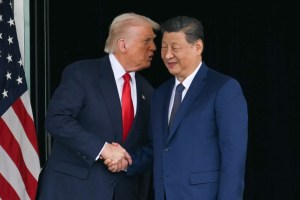
Prime Minister Narendra Modi announced the the deal, which has been two decades in the making, bringing hope to an industry that has been reeling from the impact of the United States’ 50 percent tariffs announced by President Donald Trump last year.
Related Stories
Business heads across the country said they had been waiting anxiously for the FTA with the EU to help offset some of this pain.
“We knew it was coming,” K. Subraminiam, a small apparel manufacturer in Chennai, told Sourcing Journal, “but it was so important that we were almost afraid to envision any last minute glitches.”
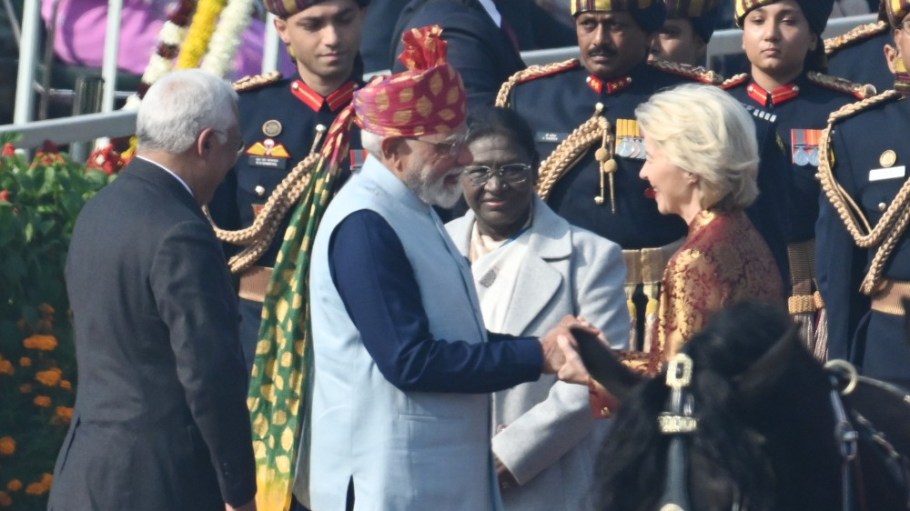
He described the deal as a “winning move,” with European Commission President Ursula von der Leyen and European Council President António Costa attending as the chief guests for India’s remarkable Republic Day celebrations held in New Delhi on Monday.
“There are moments when history itself declares that this is where the direction changed, that this is where a new era began. Today’s historic Summit between India and the European Union represents such a moment,” Modi said while announcing the conclusion of the negotiations.
“Today, India has concluded the largest Free Trade Agreement. It is a happy coincidence that on the 27th day of the month, India is entering into this FTA with the 27 Member States of the European Union,” he said during the joint press statement with Costa and von der Leyen.
There have been big words of praise for this historic agreement from all sides, with von der Leyen labeling it the”mother of all deals.”
“This is the tale of two giants; the world’s second and fourth largest economies. Two giants which chose partnership in a true win-win fashion. A strong message that cooperation is the best answer to global challenges,” she observed. The FTA sealed by India and the EU sends “a strong signal to the world,” she added, describing it as a “decisive moment” in India-EU partnership.
“This is only the beginning,” she said.
“After a year of tireless engagement and more than a decade in the making, we have delivered the biggest FTA ever—a deal like no other. High tariffs down, opportunity unleashed,” said Maroš Šefčovič, Commissioner for Trade and Economic Security, Interinstitutional Relations and Transparency.
The EU announced in a media release that the “negotiations concluded today for a historic, ambitious and commercially significant free trade agreement, the largest such deal ever concluded by either side.”
Describing it as “unprecedented,” Union Minister for Commerce and Industry Piyush Goyal spoke about the “extent and the depth of the agreement.”
“This agreement covers almost 99 percent of the exports that are sent from India to the European Union and more than 97 percent of the European exports to India,” he said.
India represents but a small fraction of the $6.5 trillion worth of goods imported by the EU, along with approximately $3 trillion worth of services. “India exports only 1 and a half percent of the goods and two and a half percent on the services. This is a massive opening up of opportunities,” he said, pointing to the $263.5 billion EU export market.
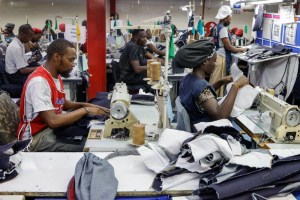
This is also particularly relevant for India’s second largest sector after agriculture: the apparel and textile industry, which employs more than 45 million workers.
Industry projections estimate that Indian apparel exports could grow by 20–25 percent year on year after operationalization of the FTA from the current growth rate of 3.01 percent in the EU market.
The EU receives approximately 27 percent of Indian apparel exports worth $7.5 billion each year while the U.S. is the largest market importing about 28 percent of India’s textiles and apparel.
“This FTA enables Indian firms to compete more in terms of quality, design, and sustainability parameters rather than in terms of price,” said Dr. A Sakthivel, chairman Apparel Export Promotion Council (AEPC).
“The FTA eliminates tariffs on 100 percent of apparel tariff lines which will enhance market access to all member countries of the EU,” he added. “The EU is the world’s largest apparel importer with total apparel imports worth $202.8 billion in FY 2024-25. Some of the major garment importing countries of the EU like Germany, France, Spain and Italy source substantially from India and this deal will further boost our apparel exports to these economies.”
“While the EU accounts for a roughly 28 percent share in India’s apparel exports, India’s share is only 2.9 percent in the EU’s apparel market. With the elimination of tariff on Indian apparel products, the Indian apparel industry gain immensely as it will get a level playing field vis-à-vis its competing countries like Bangladesh, Turkey and Vietnam which enjoys duty free or preferential duty access in EU’s market,” he said.
Within the industry, ready made garments form the largest component of exports to the EU, at 60 percent of exports, followed by cotton textiles (17 percent), man-made fiber and textiles (12 percent), handicrafts (4 percent), carpets (4 percent), jute products (1.5 percent), Woolen (0.6 percent), Handloom (0.6 percent) and silk products (0.2 percent) the ministry noted.
The textile ministry observed that India’s textile exports to the EU are “anchored in a cluster-based ecosystem.” It emphasized that the FTA will enable small and medium enterprises to scale, generate employment, and reinforce India’s positioning as a “reliable, sustainable, and high-value sourcing partner.”
“Ready-made garments are driven by Tirupur, Bengaluru and Gurugram–Faridabad, supporting large-scale employment, particularly for women. Cotton textiles and home furnishings are anchored in Karur, Panipat and Ahmedabad, while MMF and synthetic textiles are led by Surat, Dadra, Nagar Haveli and Mumbai, strengthening India’s presence in blended and man-made fibre products.
Traditional and value-added segments are supported by handicrafts from Moradabad, Jaipur and Jodhpur, handlooms from Kanchipuram, Karur and Kolkata, carpets from Bhadohi, Mirzapur and Varanasi, jute products from Howrah, North 24 Parganas and South 24 Parganas, and silk and woolen textiles from Bengaluru, Mysuru and Bhagalpur, it said.
The Tirupur cluster in Southern India has been exemplary, and an example of the power of entrepreneurship.
“Definitely we are exuberant and hoping for the greater growth of the Tirupur cluster. This will be a boosting factor at this turmoil in the geopolitical situation,” said Raja M. Shanmugham, former president of Tirupur Exporters Association. “Although it won’t bring immediate economic growth, until it gets the approval of the EU countries parliaments. But for the longer run this agreement would be an important factor to accelerate the growth of this industry, benefitting the Tirupur cluster and the country itself.”
More euphoric descriptions poured forth in production centers across the country. According to Tiruppur Exporters’ Association (TEA) President KM Subramanian, exporters see the deal as a “game-changer,” especially at a time when high U.S. tariffs have constrained market access. Tirupur presently exports approximately $1.74 billion worth of apparel to the EU, approximately 22.9 percent of the whole.
The Ministry of Commerce and Industry noted that beyond enhancing competitiveness, the FTA “empowers workers, artisans, women, youth, and small and medium enterprises, while integrating Indian businesses more deeply into global value chains and reinforcing India’s role as a key player and supplier in global trade.”
India has been pushing hard on signing more free trade agreements, as well as market diversification. In 2025, trade deals were signed with the U.K. and Oman, and the conclusion of trade deal with New Zealand was announced.
It has been almost 20 years since negotiations first began in 2007. Discussions were suspended in 2013 and then relaunched in 2022. The last formal negotiating round was in October, although talks continued on an intersessional, technical and political levels.
Although celebrations have begun, there is still a process that must take place before the FTA really goes into effect.
The negotiated draft text must be published shortly by the EU. Following the signature, the agreement requires the European Parliament’s consent, and the Council’s conclusion that it should enter into force. Once India also ratifies the agreement, it will go into effect.
However, complex as that may seem, officials told Sourcing Journal that the agreement is likely to be implemented this year itself.
As brands take another look at the geo-political situation, with elections coming up in Bangladesh and Thailand in February, and still awaiting final results in Myanmar, several of them said that they were “certainly evaluating” and thinking once again about India.