Members of the House of Representatives representing major cotton-producing districts are appealing to the Trump administration to push India to remove its duties on the United States-grown crop.
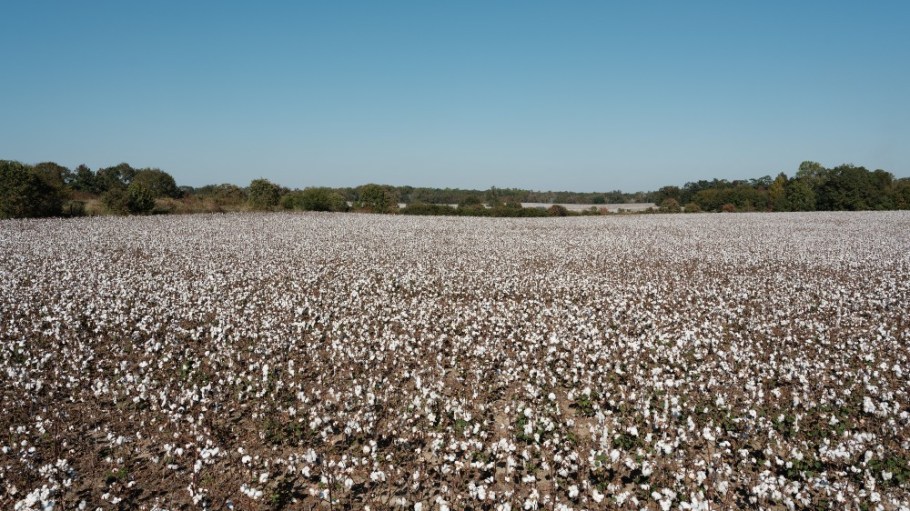
House Budget Chairman Jodey Arrington (R-Tex.) spearheaded a letter signed by a dozen conservative lawmakers from California, North Carolina, Georgia and Texas to U.S. Trade Representative (USTR) Ambassador Jamieson Greer asking that the elimination of 11 percent duties on American cotton become a focus of the ongoing U.S.-India trade negotiations.
Related Stories
The members of Congress highlighted the recently announced Interim Agreement framework, announced on Feb. 2, as a “monumental opportunity” to achieve better trade terms for American farmers. “Importantly for the U.S. cotton industry, which exports 85 percent of its production, India is currently the fourth largest global textile exporter,” the letter said. However, the country’s double-digit duties on the raw material have created a “significant barrier” for U.S. businesses looking to do business there.
“On occasion, India has temporarily lifted its import duties on U.S. cotton to support its growing textile sector, but these instances are short-lived and do not represent reliable market access,” the letter continued. “As you finalize the details of this Interim Agreement and any subsequent agreements with India, we urge you to negotiate a permanent reduction or elimination of India’s trade barriers to American cotton exports.”
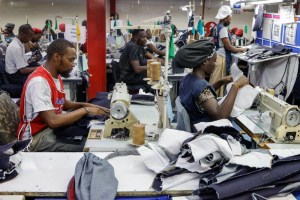
India previously suspended its customs duty on U.S. cotton between Aug. 19 and Sept. 30, 2025 in a bid to give the country’s domestic textile and apparel manufacturers cheaper access to raw materials coming from the U.S. The exemption also served as a temporary concession to U.S. farmers, who were pushing for greater market access and lower barriers to trade. India’s own falling cotton yields necessitated a shift from exporter to importer of the fiber, and the U.S. represents the top external supplier of cotton to the nation’s producers.
“This is a critical moment for American cotton farmers. Increasing market access to one of the world’s largest economies would provide a much-needed market-driven boost to our cotton farmers who have suffered several years of historic losses resulting from inflation, low demand, and inclement weather,” the letter said. In addition, upping cotton exports to India would help support the country’s growing textile industry with reliable inputs, it added.
U.S. cotton industry groups have been quick to lend their voices to the effort to streamline cotton trade with India and secure access for farmers.
“The American Cotton Shippers Association (ACSA) strongly supports Chairman Arrington’s leadership in urging USTR to eliminate India’s 11 percent tariff on U.S. cotton, which impedes access for U.S. cotton into this critical market,” said Buddy Allen, the group’s president and CEO. “ACSA appreciates USTR’s continued efforts to expand market access for our industry and looks forward to working together to strengthen the U.S. cotton industry at this critical time.”
Similarly, the National Cotton Council stressed that expanded export opportunities are pivotal at “a time when producers are facing enormous financial strains.” President and CEO Gary Adams said the group “welcomes this congressional effort to ensure that continued trade negotiations with India result in real and lasting gains for American cotton.”
India’s farmers may be less enthusiastic about the prospect of greater market access for American crops, however, based on recent demonstrations.
Days after the Interim Agreement was announced, solidifying duty-free access for the majority of U.S. imports and a commitment from India’s government to purchase $500 billion in American energy, technology, coal and agricultural products, a nationwide strike sprung up across India, led by a coalition of trade unions and farmers groups representing 700 million agricultural workers. The groups claimed that the deal stands to undercut domestic producers and displace demand for their offerings while giving American goods the upper hand.
Data from the Observatory of Economic Complexity showed that U.S. cotton exports are growing on the whole. In 2025, the U.S. exported $5.8 billion in cotton, making the crop the country’s 39th most exported product. India was the country’s fifth largest export market, taking in $392 million in cotton. Notably, India also represented the U.S.’ third fastest-growing export market for cotton, demonstrating growth of $182 million between 2024 and 2025.
The India-U.S. trade negotiations have been a winding road marred by rising tensions over the former’s continued purchasing of oil from Russia—a move that President Donald Trump has said directly finances the war in Ukraine. India agreed to stop purchasing petroleum from Russia as a part of the Interim Agreement.
However, with Trump’s International Emergency Economic Powers Act (IEEPA) tariffs struck down by the Supreme Court on Feb. 20, the basis for the deal—and all recent American trade pacts with foreign partners—has been called into question.
An Indian delegation of trade officials canceled its trip to Washington last week to hash out the finer points of the agreement in the wake of new 10 percent tariffs from the U.S., universally applied using Section 122 of the Trade Act of 1974. One week ago, the country’s trade minister said talks with the U.S. would resume when there is more “clarity” on the situation.