More than 100 House Democrats are pushing President Donald Trump to negotiate for “significant and necessary improvements” to the U.S.-Mexico-Canada Agreement (USMCA), the landmark trade legislation of his first term, as the trade pact comes up for its six-year review in July.
The first hearing in that review process, conducted by the Office of the U.S. Trade Representative (USTR), will take place on Nov. 17.
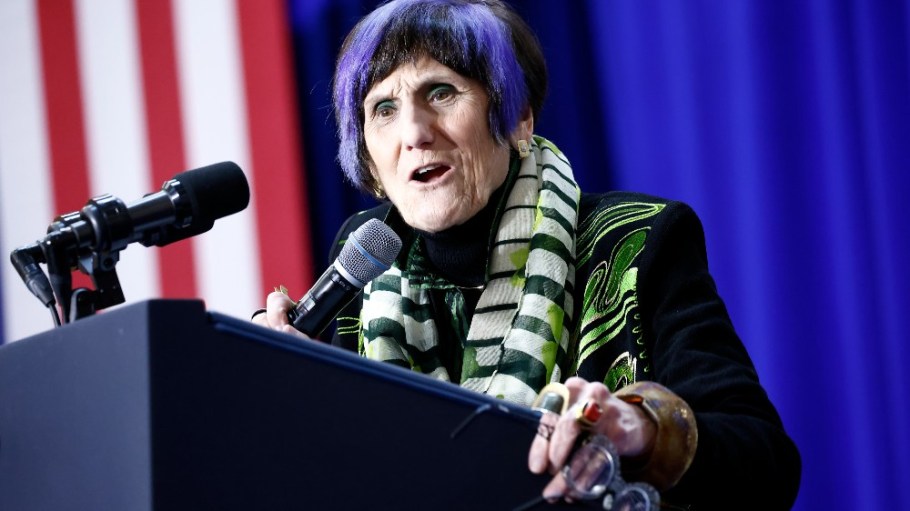
A total of 104 Members of the House of Representatives led by Rep. Rosa DeLauro (D-Conn.) and Frank Mrvan (D-Ind.) signed a letter to the president expressing disappointment in the five-year-old program, which they said has given corporations too much leverage to wield over workers fighting for fair pay and treatment and has led to a loss of American jobs—the opposite of the president’s stated intention.
Related Stories
Ratified and enacted in 2020, the USMCA replaced the North American Free Trade Agreement (NAFTA) and made significant changes to some of the former deal’s key provisions, like adding higher regional content and wage requirements for the auto industry, introducing digital trade and intellectual property rules and more stringent labor and enforcement standards and enforcement mechanisms.
Still, lawmakers argued that the deal hasn’t done enough to advance the goal Trump touted most heavily: to bring jobs back to the U.S. In fact, “The U.S. trade deficit with Mexico and Canada has significantly increased, and surging USMCA imports have undermined American workers and farmers and firms in the auto, steel, aerospace, and other sectors,” they wrote.
The backsliding will only increase under the current rules, they believe, as Chinese firms have accelerated investment in Mexican manufacturing in order to skirt U.S. trade sanctions and take advantage of the duty-free benefits the USMCA agreement provides.
“These disappointing results contrast with your claims at the time of the USMCA’s launch, when you promised Americans that the pact would remedy the NAFTA trade deficit, bring ‘jobs pouring into the United States,’” they wrote.
The lawmakers put forth requests for improvement, particularly pertaining to strengthening safeguards against unfair labor practices and incentivizing onshoring.
They asked that Trump, through his negotiations, improve the USMCA’s Rapid Response Mechanism (RRM), which they said has yielded “mixed results” in enforcing the law’s labor standards. While wages and conditions have improved in specific instances using successful RRM cases, the trade agreement hasn’t resulted in broad economic gains for Mexico’s workforce, nor has it upped union representation or wages.
These elements are critical not just to helping Mexican workers, but to eliminating incentives for companies to offshore American jobs (those being cheap labor and lax enforcement of standards).
On the whole, the provisions the law provides to disincentivize offshoring and promote reshoring need to be rethought, the lawmakers wrote. There’s a need to strengthen regional value content requirements to ensure that more of the parts and pieces of products assembled within USMCA partner countries are actually made in North America, and a need to make USMCA benefits contingent upon compliance with more stringent labor and environmental standards standards, they wrote.
Notably, the letter writers also said more needs to be done to ensure that U.S. taxpayer dollars are creating more jobs domestically. They asked that the government revise and enforce the standards for federal procurement of goods, which accounts for $750 billion in spending annually, to favor domestic producers.
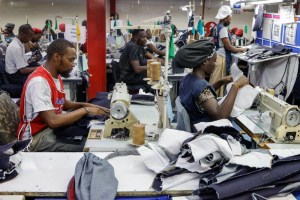
A separate letter to USTR Ambassador Jamieson Greer (penned by the House Labor Caucus and 69 Democratic signatories) made similar requests, highlighting the flight of manufacturing business from the U.S. to Mexico and perceived unfair advantages the USMCA has provided to non-U.S. entities by not delivering adequate enforcement mechanisms for issues like labor and wage violations. It also said that neither Canada nor Mexico has enforced forced labor bans, despite agreeing to them, and the letter highlighted a particular concern about China’s influence on Mexico’s production force through both investment and the transshipment of goods. They recommended imposing quotas and tightening up enforcement measures, including the RRMs.
Trump himself has expressed concerns about China gaining illegal duty-free access to the U.S. market through its investments in Mexico’s manufacturing sector, and he’s also accused Mexico and Canada of aiding in the smuggling of fentanyl precursors that originated in China into the U.S.
While Democratic lawmakers have been unimpressed by the current trade agreement’s performance, retail industry trade groups from all three countries believe USMCA has helped promote healthy trilateral trade—and they said it should be renewed for 16 years.
In a letter to Greer, the American Apparel and Footwear Association, the Footwear Distributors and Retailers of America, the National Retail Federation, the U.S. Fashion Industry Association, Mexico’s ANTAD retail trade association, the Canadian Apparel Federation, the Network Association of Uniform Manufacturers and Distributors and Mexico’s National Chamber of the Apparel Industry expressed their support for USMCA, which they said has been “a benefit to our industries and the North American market as a whole.”
The groups, which represent brands, retailers and producers across the apparel and footwear sectors, said the trade pact must be preserved and extended with “as few changes as possible” in order to protect the deeply integrated regional industries and “prevent trade disruptions and business uncertainty.”
This is especially important during a time of dynamic global trade negotiations. “The USMCA’s clear, predictable rules of origin have been critical for our industries, and we believe overly burdensome and complex requirements would create unnecessary barriers and increase costs for businesses and working families,” they wrote.