European trade officials met in Brussels on Monday to game out a plan to deal with looming 30-percent duties that will be levied by the United States beginning Aug. 1.
After voicing strong disapproval of President Donald Trump’s weekend announcement of the new tariff rate, representatives from the 27-member trade bloc now say they will retaliate with tariffs of their own if a deal is not reached by the deadline.
Denmark Foreign Minister Lars Løkke Rasmussen called Trump’s threats “absolutely unacceptable” and told reporters that the bloc “shouldn’t impose countermeasures at this stage, but we should prepare to be ready to use all the tools in the toolbox.” According to NPR, the leader said that the Scandinavian country wants a deal, but he invoked a truism to describe the current conundrum: “If you want peace, you have to prepare for war.”
Related Stories
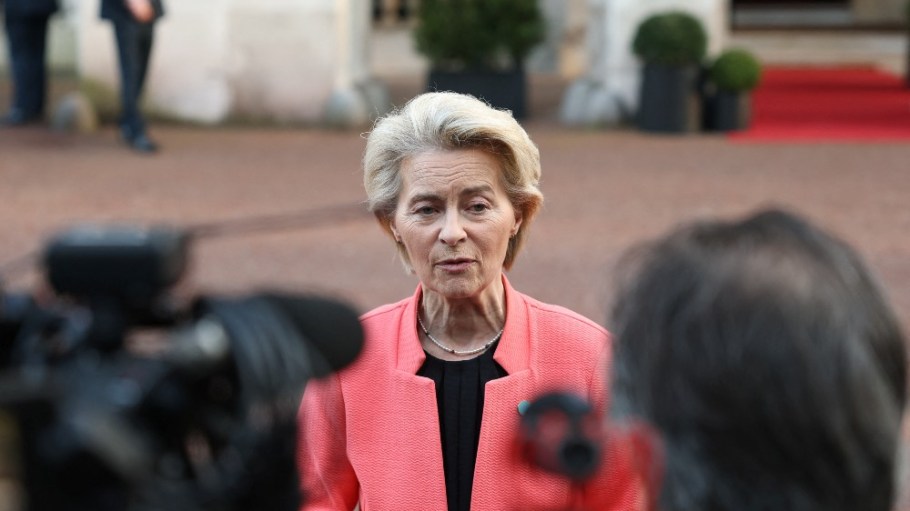
Following Trump’s Saturday release of letters to Mexico and the European Union, European Commission President Ursula von der Leyen sought to strike a diplomatic tone. “Few economies in the world match the European Union’s level of openness and adherence to fair trading practices,” she said in a statement. “The EU has consistently prioritized a negotiated solution with the U.S., reflecting our commitment to dialogue, stability, and a constructive transatlantic partnership.”
While the bloc is “ready” to continue working towards an agreement by the end of the month, von der Leyen said it would take “all necessary steps to safeguard EU interests, including the adoption of proportionate countermeasures if required.”
The escalation in tension comes after a cooling off period that lasted several months. The EU had planned to implement retaliatory duties on more than $24 billion in American-made goods as a response to Trump’s “Liberation Day” tariff announcement, wherein he hit the continent with 20-percent across the board duties. Trump ultimately paused those tariffs for 90 days (though he threatened the EU with 50-percent duties weeks later) and Europe, too, backed off on its plan in hopes that a deal could be reached.
The end of the reciprocal tariff pause last week was marked by a flurry of announcements from the American president, delivered to dozens of trade partners in letter form via his platform of choice, Truth Social.
European leaders were unsurprisingly nonplussed by the development. French President Emmanuel Macron voiced his “strong disapproval” of the announcement of the steep tariffs, which he said came “after weeks of intense engagement by the Commission in negotiations with the United States, on the basis of a solid offer made in good faith.”
Macron said it was now up to the Commission to “resolutely defend European interests” by “speeding up the preparation” of countermeasures and other trade tools to defend against the tariff impact if a consensus can’t be reached.
Italian Prime Minister Giorgia Meloni also decried the U.S. tariffs but supported the European Commission in negotiating on behalf of the trade bloc. “A trade war within the West would make us all weaker in the face of the global challenges we are addressing together,” she said in a statement Sunday. “Europe has the economic and financial strength to uphold its interests and reach a fair and common-sense agreement. Italy will do its part, as always.”
As Europe prepares to hold its ground, Trump struck a more conciliatory tone on Monday, saying, “We are open to talk, including to Europe. In fact, they’re coming over, they’d like to talk to us.”
“They would like to do a different kind of a deal and we’re always open to talk,” he told reporters from the Oval Office.
Meanwhile, Mexican President Claudia Sheinbaum on Monday expressed greater confidence than her European counterparts that the country could reach a deal with the U.S. before the tariffs take effect. During her morning news conference, Sheinbaum referenced Trump’s missive, saying, “The letter clearly states that they are seeking an agreement to avoid these tariffs, which are set for August 1st.”
“We will continue working and hope to reach an agreement,” she added. “The most important thing for us is that employment is not affected and that cooperation between our countries is maintained.”