The average American family could be subjected to an added tax burden of more than $1,700 per year if former President Donald Trump wins the November election.
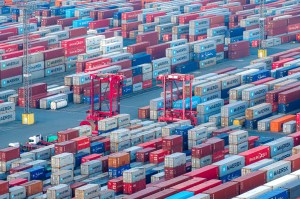
The Republican presidential nominee has vowed to wrestle China into economic submission by upping tariffs on imports from the country by a whopping 60 percent or more. If that threat comes to fruition, the U.S. could be in danger of “reverting to an antiquated approach to funding its government” that will ultimately hit shoppers squarely in the pocketbook, according to a study from the Peterson Institute for International Economics (PIIE).
Related Stories
“At the beginning of its history, the United States relied on tariffs—taxes on imported goods—as its major source of government revenue,” the group wrote in a study published this month. That changed in the early 1900s “with the enactment of the federal income tax and the advent of a new consensus recognizing tariffs as regressive, burdening the working class while leaving untaxed much of the income accruing to the wealthy.”
In 2024, less than 2 percent of government revenue in high-income countries like the U.S. comes from import taxes and tariffs. But Trump is looking to upend that reality—not just by levying higher duties on China-made goods, but products from all trade partners. The former president has said he supports a 10-percent universal tax increase on goods imported from anywhere in the world.
Trump’s import duty scheme aims to offset the cost of the income tax cuts he has vowed to make if elected. The candidate’s campaign platform has centered on an extending the 2017 Tax Cuts and Jobs Act (TCJA), “the signature legislative accomplishment of his administration,” and he’s hinted at the desire to supplement it with a new round of tax cuts or a lower corporate rate.
“As fiscal policy, the Trump agenda amounts to regressive tax cuts, only partially paid for by regressive tax increases,” analysts wrote. “A lower-bound estimate of costs to consumers indicates that the tariffs would reduce after-tax incomes by about 3.5 percent for those in the bottom half of the income distribution; tariffs would cost a typical household in the middle of the income distribution at least $1,700 in increased taxes each year.”
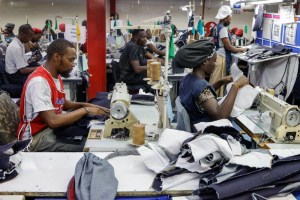
Contrary to the nominee’s assertions that foreign entities—like Chinese producers, for example—bear the cost of added duties, “economists have long understood that tariffs burden domestic purchasers of imported goods,” the report said. Tariffs raise the price of market transactions for both producers and consumers, but “[d]omestic buyers of the good are obviously worse off, as some drop out of the market at the higher price, and those who continue to buy face a higher price.”
The impact of higher duty rates would be even more pronounced today than when punitive tariffs were first levied against China in 2018 and 2019, as trade volumes, incomes and prices have all increased in the ensuing years, analysts wrote. A study from the Center for American Progress revealed that a new 10-percent tariff would be similar to an annual consumption tax increase of around $1,500 per household. Meanwhile, the National Taxpayers Union set its estimate even higher, projecting that household taxes could increase by $2,600 per year—the “largest tax increase since World War II.”
By contrast, experts found that an all-around 2-percent tariff cut would have positive impacts on the economy equivalent to a one-time reduction in consumer price index (CPI) inflation of around 1.3 percentage points. “These effects result in part from increased market competition, saving the typical household hundreds of dollars,” according to PIIE.
Operating with the understanding that tariff costs are passed on to U.S. consumers, analysts estimated that the combination of Trump’s tariff proposals would generate consumer costs of at least 1.8 percent of the U.S. gross domestic product (GDP).
That doesn’t even take into account the knock-on effects of foreign retaliation for added duties or lost competitiveness, they added. For example, after the first waves of Section 301 duties were implemented, the Chinese government hit back with its own tariffs that hurt U.S. agriculture. The Trump administration subsequently upped farmer subsidies, effectively zeroing out the China tariff revenue the federal government generated from 2018 through 2020, analysts reported.
With the former Commander in Chief’s plans now elucidated for voters, economists and industry experts are running the numbers. PIIE said its own calculation implies “that the costs from Trump’s proposed new tariffs will be nearly five times those caused by the Trump tariff shocks through late 2019, generating additional costs to consumers from this channel alone of about $500 billion per year.”