Close to a century after it was implemented, the de minimis trade exception has come to an end.
The trade provision, which allowed small shipments worth $800 or less to be shipped into the country from foreign lands duty free, became a central pillar of the global e-commerce boom. It prompted direct-to-consumer business models to flourish and drop-shipping to become a dominant channel for retail sales.
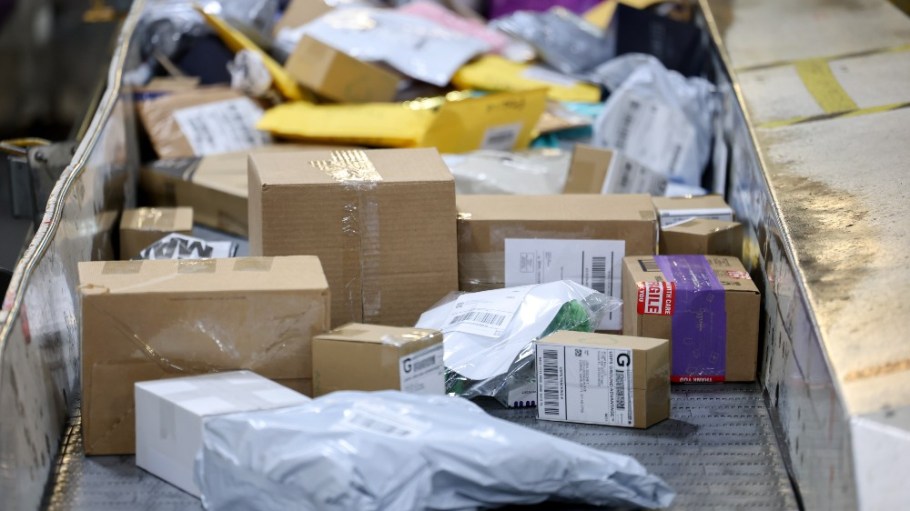
During the whole of 2024, 1.4 billion packages—nearly 4 million per day—were brought into the United States using the trade rule, first sketched out in Section 321 of the Trade Act of 1930. The country’s forbears and trade officials could never have predicted that the provision, originally intended to ease the duty burden on travelers bringing home souvenirs and gifts, and makers to ship samples tax free, would become what it has: a superhighway for global commerce.
Related Stories
But in the eyes of President Donald Trump, de minimis represented “a big scam”—a means for foreign actors to skirt import duties and ferry huge volumes of cheap and illicit wares into the U.S. market while facing minimal customs scrutiny.
Trump—and the Republicans—weren’t alone in that view. In recent years, as pandemic-driven online spending ratcheted up and marketplaces like Shein and Temu rose to global prominence, lawmakers on both sides of the aisle called for the trade “loophole” to be closed. The Biden administration last fall set in motion executive actions designed to restrict the use of de minimis and rein in its rapidly growing influence.
Some members of American industry, too, called for an end to de minimis. The National Council of Textile Organizations (NCTO), a Washington-based trade group representing the interests of the country’s textile and apparel producers, lobbied against the trade provision for years, appealing to members of the Trump and Biden administrations alike. The group argued that the law undermined the competitiveness of American-made products, which couldn’t compete with the appeal of $12 dresses from Shein—especially when they weren’t subject to the same environmental or consumer safety standards that U.S. makers face.
“For years, companies have used this loophole to avoid tariffs and customs reporting requirements on shipments valued at $800 or less, devastating U.S. manufacturers, undercutting American jobs, and opening the floodgates to unsafe and counterfeit products and goods made with forced labor,” NCTO president and CEO Kim Glas said Thursday. “The administration’s executive action closes this channel and delivers long overdue relief to the U.S. textile industry and its workers, while strengthening America’s economic and national security.”
But John Lash, group vice president of product strategy at supply chain platform e2open, told Sourcing Journal that there will be downsides to the new policy for both shoppers and the supply chain.
“Aside from the postal services temporarily halting small package delivery to America, the two parties most likely to feel the pinch from this latest action are domestic consumers and small foreign businesses,” he said.
“For consumers, higher import costs on favorite goods are one more blow to an already fragile consumer confidence. While ending de minimis is unlikely to be the tipping point, it’s a step closer to a larger and far more significant indirect economic effect from curtailed spending,” he added. “The last time I checked, consumer spending made up just shy of 70 percent of the economy, so any downturn is concerning.”
Brookings Institute economic expert Elena Patel wrote in a memo Thursday that the issue became deeply convoluted as de minimis came into vogue. Consumers have certainly benefited from the unfettered access to a wide assortment of globally sourced products, and some U.S. enterprises have made hay by leveraging the provision—but others have indeed seen their market share erode as they’ve been held to stricter standards and forced to pay higher taxes.
“For low-value packages, exempting duties and documentation can reduce costs for both governments and businesses. But the rule now raises deeper questions about fairness and tax neutrality,” she said. “Two sellers, one domestic and one foreign, can offer the same product but face vastly different tax and regulatory obligations. Domestic retailers must collect and remit sales taxes and comply with consumer protection laws, while foreign sellers often bypass these requirements under de minimis.”
Despite its disproportionate burdens on U.S. business, Patel noted that the “abruptness of this change”—the wholesale axing of de minimis—is “far from ideal, sowing uncertainty for parcel carriers, postal systems, businesses, and consumers while raising questions about how the new rules will be put into practice.”
“The magnitude of this is not only on consumers and e-commerce marketplaces. The entire supply chain will need to recalibrate itself, and that can have significant impact on costs, on delays, as well as priorities, because I would imagine some carriers will opt out of this segment entirely,” echoed Ram Ben Tzion, founder and CEO of Ultra Information Solutions.
Over the course of the past week, a number of international mail carriers have announced their intentions to halt service to the U.S. market due to the moratorium on de minimis. And companies like DHL, FedEx and UPS, too, will face seismic shakeups.
“They have been optimizing capacity for years. They have been hiring space on air cargo and airplanes, which is now far less relevant and necessary to the market demands,” Ben Tzion told Sourcing Journal. “If you cannot stack up a bunch of Temu packages on an airplane, and you need to consolidate them into a container, then there’s going to be a lot of capacity that will need to be redirected or recalculated.”
In the supply chain technology executive’s estimation, carriers are trying to apply pressure on the government by ceasing operations. “They are hoping for an outcry from both business and private consumers that will turn this [decision] way down, reverse it or reduce it,” he believes.
It’s unclear to everyone involved—businesses, logistics providers, even the architects of the policy and those who will carry it out—what exactly the new rules are and how they’ll be implemented. But Ben Tzion believes that’s not just par for the course for this administration, but part of its strategy.
“This is part of the shock therapy that we’ve been seeing on all trade policies—the back and forth with the radical measures that are not necessarily completely thought through. But the momentum and the vector is still there, meaning at the end of this tunnel there’ll be a new reality.”