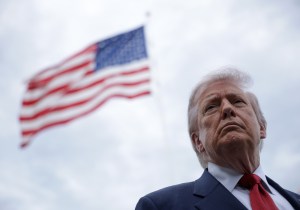
President Donald Trump’s “big, beautiful” tax bill was approved by the House Ways and Means Committee this week—and the massive package could alter the fate of the de minimis trade exemption.
The bill, which extends the president’s first-term tax and spending cuts and ties in a number of GOP legislative objectives, also aims to end the trade provision, which allows commercial shipments worth $800 or less to enter the country duty free.
Since taking office, Trump has been taking steps toward this outcome. On May 2, the president rescinded China’s access to de minimis trade—a major blow to e-commerce firms like Shein and Temu, which are among those responsible for blanketing U.S. ports of entry in at least 2 million packages per day.
Related Stories
While the White House this week announced it was slashing duties on parcels that would have entered the country using de minimis by more than half—a move to further de-escalate trade tensions with China after walking back “retaliatory” duties—a 54 percent duty or flat fee of $100 remains in place.
The change in the law is meant to end the deluge of low-value shipments that have been entering the U.S. market unchecked. Lawmakers on both sides of the aisle have blamed the trade “loophole” for allowing foreign actors to undercut U.S. businesses and facilitating the ferrying of illicit substances, like fentanyl precursors, into the country. But the rollout of a ban at such a massive scale has forced Customs and Border Protection (CBP) to enact informal entry processes that are already leading to backlogs.
The China de minimis ban, which is still very much in its rollout phase, has been viewed as a mortal wound to the trade provision. Now that de minimis is closed to its most prolific user, it will be easier to enact a ban that halts the same duty-free access for America’s other trading partners.
President Trump’s tax bill, which will next be pushed through a process called budget reconciliation (which will allow Republicans to pass it without a single vote from Democrats), will likely be voted on in the House of Representatives before Memorial Day. But with extremely narrow majority margins in both chambers of Congress, passing the legislation will be a high-wire act for the GOP. Some Republican lawmakers have already said they’d vote against the bloated bill.
While tax policies that benefit the wealthy and spending cuts to public health programs like Medicaid are its most hotly debated elements, the text also contains language stipulating an end to de minimis for all commercial shipments from all countries by July 1, 2027. This would impact not just foreign brands and online retailers, but U.S. businesses that drop ship from factories in Mexico or Canada, for example.
A longtime proponent of the demise of de minimis, the National Council of Textile Organizations (NCTO), which represents American producers of fibers, yarns, fabrics and sewn products, commended the House Ways and Means Committee for including the ban in the bill.
The group’s president and CEO, Kim Glas, said the move “validates that the destructive de minimis loophole has harmed U.S. textile manufacturing and impeded the fight against illicit fentanyl trafficking and must be permanently closed.”
Glas said that the ban on Chinese de minimis shipments has already seen a smooth transition with express shippers transitioning to new entry processes.
“We recognize the committee’s leadership in moving forward with a permanent global solution that will help restore a level playing field for U.S. manufacturers and spur more investment and job growth,” Glas said.
“As the bill makes its way through the legislative process, we strongly support a more aggressive timeline to implement a permanent ban on de minimis globally given its significant harm to manufacturers, retailers, and the fight against fentanyl and other illegal products,” she added.
The NCTO lead implored the Trump administration to utilize an executive order—as it did to ban de minimis shipments from China—to close off access to the trade provision for countries across the globe before the bill’s stipulated deadline in two years.
“We are also grateful that the Trump administration has already used executive authorities to end de minimis access for Chinese goods—which represent approximately two-thirds of all de minimis shipments—while also laying the groundwork to close de minimis to commercial shipments from all countries,” she said. “We request that the administration utilize its executive authorities to immediately close this damaging loophole once and for all as Congress considers a legislative solution.”