With just days to go before China’s access to the de minimis trade exception is cut off, the Trump administration has quietly changed its policy on how shipments will be processed for entry into the United States.
An April 28 Federal Register notice announced the waiving of Customs and Border Protection (CBP) rules that would require formal entry for goods classified within HTSUS Chapter 99 Subchapters III and IV, that are valued at over $250 and subject to President Donald Trump’s International Emergency Economic Powers Act (IEEPA) duties.
Related Stories
Had these rules remained in place, shipments of this kind being imported into the U.S. would be subject to either Type 11 informal entry (for goods worth up to $250) or Type 01 formal entry (which doesn’t stipulate a value cap, but does require more data from shippers on package contents and origin).
Now, CBP said it’s pausing, for an unspecified period, the $250-dollar threshold for Type 11 informal entry, and allowing entries worth up to $2,500 to go through the informal entry process. Informal entry doesn’t require the use of a Customs broker or the posting of a bond, or have the same stringent data requirements as formal entry. This suspension applies to all countries of origin—including China—and all modes of entry.
This is an about-face for the administration and CBP, which had previously stated in its IEEPA FAQ explainer that informal entry would not be permitted, and that formal entry would be mandated for any shipments worth more than $250 that are classified under Subchapters III and IV of Chapter 99 of the HTSUS. That rule was deleted and replaced with the new mandate.
Izzy Rosenzweig, CEO of global e-commerce shipping firm Portless, wrote in a social media post that the change would work in favor of both CBP and importers.
“This should allow for 10x the number of packages per entry, which will bring down the cost until it is negligible, but also vastly reduce the number of clearances CBP is handling,” he said. “Perhaps the best news here is that it means someone at the CBP is thinking through these operational changes very clearly and wants to make sure they are as streamlined as possible, which is a really good sign.”
But for those eager to see the end of the de minimis exception, the waiving of Customs rules subvert the efficacy of Trump’s executive order closing the trade “loophole” on May 2.
“Absent action in the next 36 hours to reverse the customs waiver or otherwise require the needed data and accountability to accurately and thoroughly collect tariffs, the Trump administration will have undermined its promised end of the de minimis loophole,” American Economic Liberties Project’s Rethink Trade director, Lori Wallach, said in a statement.
“Allowing Informal Entry of goods subject to penalty tariffs valued between $250-$2500 will also undermine enforcement of all Trump tariffs because without requiring importers to provide full tariff codes, it will be almost impossible to collect proper tariffs and without requiring involvement of a U.S. entity, like a Customs Broker, it’s very hard to discipline against cheating,” she added.
Members of the Coalition to Close the De Minimis Loophole—a collective of law enforcement groups, industry trade organizations and brands—expressed strong support for the president’s executive action closing de minimis for China and the order to end de minimis for all imports once adequate systems are in place to collect tariff revenue.
The group, which includes the National Council of Textile Organizations (NCTO), AFL-CIO, the Alliance for American Manufacturing, Families Against Fentanyl, the National Crime Prevention Council and New Balance, among others, wrote an open letter to President Trump on Wednesday.
“We believe that robust customs rules will be crucial to end the damage and threats posed by this loophole as you terminate de minimis for imports from China and Hong Kong,” they wrote. “We encourage your administration to require the necessary information to enhance duty collections and inspections so that CBP can properly screen imports and enforce the law.”
“We urge CBP not to suspend—even temporarily—regulations such as those requiring formal entry for all shipments valued over $250 subject to penalty tariffs to permit the agency to enforce your directive effectively,” the Coalition added.
The group noted that when Trump’s previous de minimis ban on China-originating packages was implemented, express shippers were able to pivot “virtually overnight” to accommodate the new requirements, “which demonstrates their ability to comply with the president’s executive orders.”
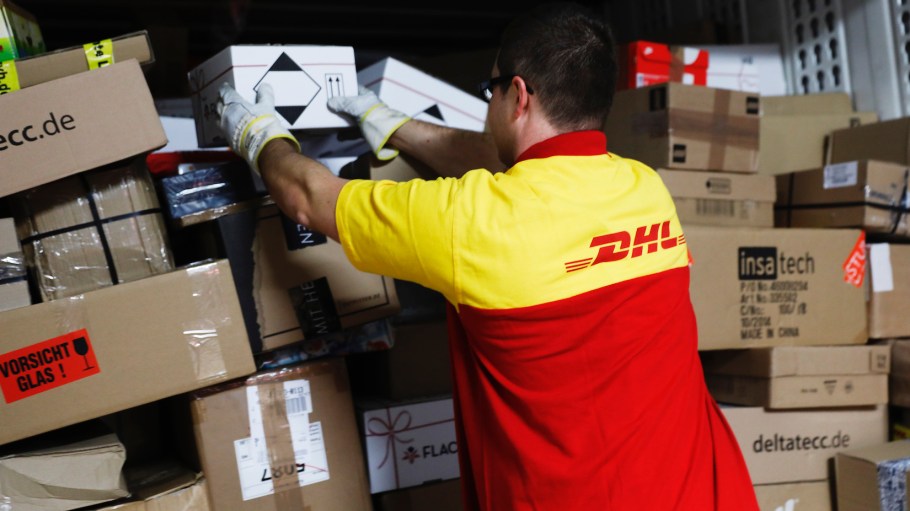
But DHL, one of the express shippers in question, has been working behind the scenes to advocate for a softening of the rules—and it took a victory lap after CBP’s waiver was released.
The group issued a statement saying the administration’s decision “follows constructive dialogue between DHL and the U.S. government, who demonstrated a strong willingness to understand our operational and technical challenges, and who agreed that it was imperative to act quickly in the interest of U.S. consumers.”
“DHL Express values the opportunity to have contributed to the development of this new regulation by the U.S. government in favor of our customers, who have been our focus,” the company added. “It is our priority to effectively support your needs, and we view this development as a positive step forward in continuing the facilitation of international trade.”
The shipper said customers might still experience delays as it navigates the reintroduction of the service and clears its package backlog.