Tariffs continue to impact import cargo levels, new data from the National Retail Federation (NRF) and Hackett Associates shows.
According to the trade organization, external economic considerations like the now-resolved East Coast port strike and tariffs coming from President Donald Trump‘s administration—which are developing—continue to impact import rates.
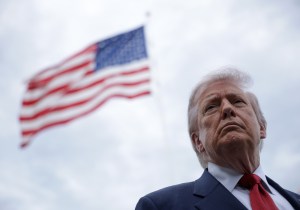
President Trump has decreed a 10-percent tariff on goods inbound from China, and earlier this month announced he plans to bring down a 25-percent tariff on most goods incoming from Mexico and Canada. He has since agreed to a 30-day pause on tariffs with the North American countries, but the tariffs on China remain intact—despite some back and forth on de minimis.
Related Stories
Ben Hackett, founder of Hackett Associates, said that even if tariffs on Canada and Mexico do come into effect, it may not impact cargo imports because such a large proportion of U.S. imports from those two countries come via truck or rail.
Despite the tariff tumult, brands and retailers have spent the past few months stockpiling goods in an attempt to preempt the added costs tariffs would inevitably add to their goods.
Hackett Associates data created for NRF’s Global Port Tracker shows that the ports it tracks processed 2.14 million Twenty-Foot Equivalent Units (TEUs) in December of last year. That’s up 14.4 percent as compared with 2023, though November 2024 saw the same ports handling 0.9 percent more TEUs. While the organizations are still waiting for several ports to finalize their data, they project 2024 will be the strongest December on record.
In 2024, the ports tracked saw a 14.8 percent uptick in TEUs processed as compared with 2023. Hackett Associates estimates the total TEUs handled last year came in at 25.5 million; 2021 set the highest-recorded total, at 25.8 million.
Jonathan Gold, NRF’s vice president for supply chain and customs policy, said uncertainty continues to be an inescapable piece of managing global supply chains.
“Supply chains are complex,” Gold said in a statement. “Retailers continue to engage in diversification efforts. Unfortunately, it takes significant time to move supply chains, even if you can find available capacity. While we support the need to address the fentanyl crisis at our borders, new tariffs on China and other countries will mean higher prices for American families.”
Though the tail end of 2024 saw companies’ executives worrying about a variety of factors, the formal entrance of a new administration may have done little to assuage business concerns.
Hackett Associates projected that, in January, TEUs processed would increase 7.8 percent year over year. The firm expects February, which typically sees slow growth because of closures related to the Chinese New Year, to see modest growth of 0.2 percent year over year. But once March comes around, the projection ticks back up to double digits, at 11.1 percent.
Hackett said those projections remain intact despite the flurry of tariff threats and whispers coming from Washington, D.C.
“At this stage, the situation is fluid, and it’s too early to know if the tariffs will be implemented, removed or further delayed,” Hackett said in a statement. “As such, our view of North American imports has not changed significantly for the next six months.”
But even if companies have managed to bring a significant amount of product into the country to proactively avert tariffs, the NRF said that strategy could bring about new issues, particularly related to storing that excess inventory.
“Retailers have engaged in mitigation strategies to minimize the potential impact of tariffs, including frontloading of some products, but that can lead to increased challenges because of added warehousing and related costs,” Gold said. “We hope to resolve our outstanding border security issues as quickly as possible because there will be a significant impact on the economy if increased tariffs are maintained and expanded.”