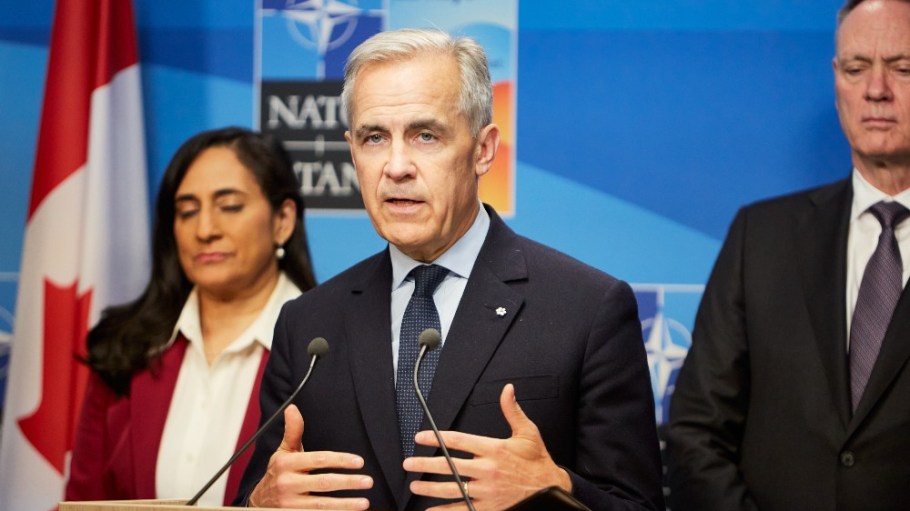
Canadian Prime Minister Mark Carney is no longer convinced that the nation to the North can come to a trade truce with the United States that doesn’t involve the use of tariffs.
While the recently elected head of state has expressed optimism in recent months about the prospect of reaching a trade agreement with President Donald Trump, after this past weekend’s Truth Social announcement, he’s not so sure.
Canada was among the U.S. trading partners to receive a letter from the president over the course of the past week detailing its new tariff rate. The unceremonious declaration of the steep, 35-percent duty rate—which took place on Truth Social Saturday morning—appears to have left a bad taste.
Related Stories
During a cabinet meeting on Tuesday, Carney told reporters that “there’s not a lot of evidence right now” that a deal can be reached with the U.S. that doesn’t involve some tariffs. This, despite the U.S.-Mexico-Canada Agreement (USCMA) still being the law of the land, and providing trilateral free trade terms across North American borders. A review of the deal is slated for July 2026.
“The government has consistently stood up for Canadian workers and businesses throughout these negotiations, and we’ll continue to do so,” Carney said. “I expect the discussions will intensify between now and the end of the month and we’ll be working hard on that.”
As Trump continues to alienate the country’s nearest neighbors, it appears they’re willing to work together in an effort to mitigate some of the economic fallout caused by the American tariff regime.
Mexican President Claudia Sheinbaum during a Wednesday press briefing detailed a call with Carney wherein she “proposed strengthening collaboration with Canada in different areas and obviously, particularly in trade.” The leaders “both agree that it is essential to respect the trade agreement,” USMCA, she said.
Sheinbaum said she and Carney “shared experiences” of receiving the tariff letters from President Trump (Mexico’s for 30-percent duties) saying that both have meetings on the books with the U.S. government to talk about the terms. Sheinbaum also invited the Canadian prime minister to visit Mexico, which he agreed to do.
According to the Canadian government, the bilateral trade relationship with Mexico has been steadily growing since the advent of the North American Free Trade Agreement (NAFTA) was signed in 1994 (to be replaced by USMCA during Trump’s first term in office). The free trade agreement facilitated $56 billion in two-way trade between the nations in 2024, and Mexico represents Canada’s third-largest single-country merchandise trading partner behind the U.S. and China.
Canadian enterprises also directly invested $46.4 billion into Mexico last year, with the government saying Mexico’s growing consumer base and competitive labor have made it an attractive market for both export and investment. Because of the increased interest, Mexico has been deemed a priority market for Export Development Canada, a government-funded export credit agency.
Carney on Wednesday also announced another measure that he believes will shield Canada from some of the impact of U.S. tariffs on trading partners across the globe.
Now that Chinese steel faces steep American duties of 50 percent, the country may be looking to export more of the metal to Canada, threatening domestic industry.
“The trade actions of the United States are further transforming global steel market dynamics and supply chains,” the prime minister said. “Canada will be one of the countries most impacted by these developments.”
Carney said he aims to block steel from China, as well as other nations that sell it at impossible-to-beat low costs, to protect Canadian producers.