The Golden State is going toe-to-toe with President Donald Trump on tariffs.
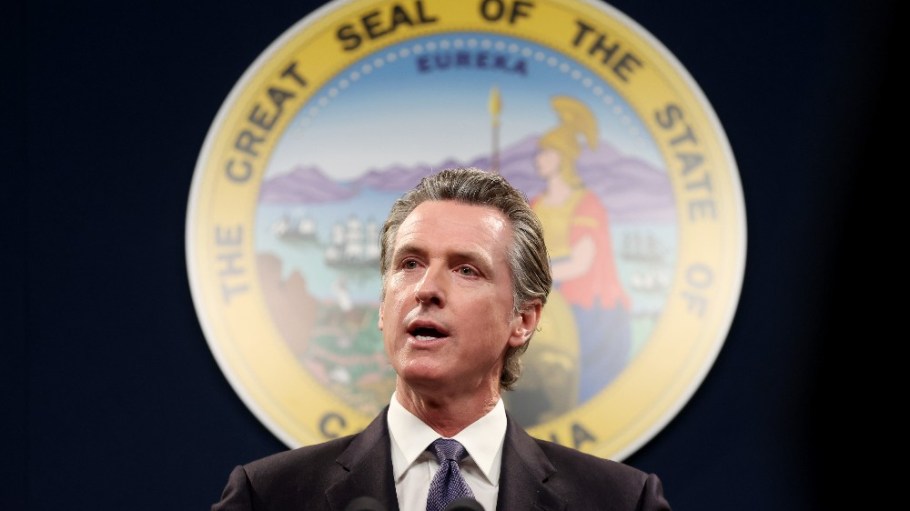
On Wednesday, Governor Gavin Newsom and Attorney General Rob Bonta filed a lawsuit against the president in the U.S. District Court for the Northern District of California in a bid to stop the administration’s forthcoming duties on trade partners from across the globe.
The complaint challenged his authority to leverage the International Emergency Economic Powers Act (IEEPA) to enact sweeping duties that could harm California, “the largest economy, manufacturing, and agriculture state in the nation.”
Related Stories
According to Newsom and Bonta, Trump’s tariffs have already had manifold impacts on local enterprises and shoppers by disrupting established supply chains and inflating costs. “President Trump’s unlawful tariffs are wreaking chaos on California families, businesses, and our economy—driving up prices and threatening jobs,” Newsom said. “We’re standing up for American families who can’t afford to let the chaos continue.”
“The President’s chaotic and haphazard implementation of tariffs is not only deeply troubling, it’s illegal,” Bonta added. “As the fifth largest economy in the world, California understands global trade policy is not just a game. Californians are bracing for fallout from the impact of the president’s choices—from farmers in the Central Valley, to small businesses in Sacramento, and worried families at the kitchen table—this game the president is playing has very real consequences for Californians across our state.”
According to the filing, Trump lacks the authority to unilaterally impose duties against Mexico, China and Canada using IEEPA—or create a universal baseline tariff of 10 percent that impacts all trading partners. The trade provision gives the president power to take action only in response to a foreign-born economic, policy-related or national security threat—and the suit argued that none of those are at play.
The lawsuit also invoked the U.S. Supreme Court’s major questions doctrine, which dictates that the executive branch and federal agencies under the president’s control must have clear approval from Congress when it comes to matters of “vast economic and political significance.”
The doctrine has been used effectively to check presidents in recent administrations; the Court applied the standard to put the kibosh on President Barack Obama’s Clean Power Plan as well as President Joe Biden’s student loan forgiveness program, “ruling that novel executive actions with broad impacts on the national economy cannot rest on vague statutory authority.”
According to Newsom and Bonta, there are few more economically significant actions that a president can take than enacting broad-based tariffs that threaten to cut off trade to the country’s most active economy. California contributes massively to America’s overall financial standing, with a gross domestic product (GDP) of $3.9 trillion in 2023 (50 percent larger than the GDP of Texas, the second largest state).
According to the governor’s office, California also sends over $83 billion more to the federal government than it takes in via federal funding, and it’s the leading agricultural producer and manufacturing bastion for the U.S. with more than 36,000 producers employing over 1.1 million people. Downtown Los Angeles’ Fashion District, for example, employs 45,000 workers in garment manufacturing roles.
Trade is integral to California’s status as an economic juggernaut, with Canada, Mexico and China representing its top three trading partners accounting for more than 40 percent ($203 billion) of the state’s imports. The buying goes both ways; two-way trade generated $675 billion in 2024, with these top trade partners buying nearly $67 billion in California-made exports—over one-third of the total $183 billion in goods exported last year.
As such, Newsom isn’t stopping at taking on Trump—he’s also attempting to court Canadians who have been recently deterred from visiting the U.S. through a new tourism campaign announced earlier this week.
According to the governor’s office, tourism from Canada dropped 12 percent year-over-year in February—the first decline in visits since the pandemic. In 2024, 1.8 million Canadians traveled to the Golden State and spent $3.72 billion. The most prominent tourism destination in the U.S., California brought in $150 billion in 2023.
Newsom’s team said the upcoming campaign will extend Visit California’s existing $5.2-million annual marketing investment in Canada, and will attempt to “stem this tide” of tourism losses. The nonprofit corporation is funded by private travel, tourism and hospitality businesses.
The move follows the governor’s announcement earlier this month that California is pursuing strategic trade relationships of its own with international partners, with the goal of ensuring economic resilience and inoculating the state against the damage done by President Trump’s trade policies. This week, Newsom met with British Columbia Premier David Eby to talk about expanding trade between the state and the province.
“Donald Trump’s tariffs do not represent all Americans,” the governor said in early April. “We value international trade… We look forward to continuing to strengthen those ties, strengthen those bonds. I remind all our international trading partners, California is a stable trading partner, and we hope you consider that as it relates to California made products.”