American companies are growing increasingly wary about doing business in China as the ideological gulf between Beijing and Washington grows ever wider.
A robust report released Tuesday by the American Chamber of Commerce in China (AmCham China) revealed that trade tensions between the two countries, along with opaque and unpredictable policies and enforcement, are among the most vibrant red flags deterring further investment from U.S. companies.
Based on a survey of American enterprises currently doing business in China, the 617-page report also named heightened labor costs and data security as key causes for concern.
Related Stories
According to AmCham China chair Sean Stein, “U.S. and Chinese leaders have acknowledged the significant benefits American business in China brings to both countries,” but both governments have reached a stalemate when it comes to fostering a healthier trade dynamic. While the U.S.-China bilateral relationship has seen “significant progress” over the course of 45 years, “uncertainty continues to challenge our economic and trade relations,” he said.
“Now, more than ever, it is important for the business community to speak with one voice about the challenges and opportunities facing businesses in China,” Stein added.
According to the report, the foreign business community in China evinced a sense of “cautious optimism” last year, as the last of the Covid-era control measures faded and high-level dialogues between the U.S. and China resumed. A November meeting between President Joe Biden and President Xi Jinping in San Francisco—wherein the two leaders resolved to reestablish their presidential hotline—was largely seen as positive.
But despite the attempt at a course correction, “Rising tensions in US-China relations” remained the top-cited challenge in AmCham China’s survey.
One significant hindrance to U.S. firms is China’s nationalistic worldview, the report said. “The Chinese government has stated that it encourages foreign direct investment, but many of our members continue to encounter barriers to investment and operations including policies that discriminate against them and public relations campaigns that create suspicion of foreigners,” it read.
Over the past year, China took steps to solidify its stance on foreign investment—namely, that it was encouraged. “Initiatives such as the ‘24 points’ issued by the State Council in August and the subsequent introduction of the New 24 Measures in March 2024 underscore China’s commitment to enhancing its attractiveness as a destination for long-term foreign investment,” the report said.
Roundtable discussions with foreign businesses were had, tax breaks for foreign workers and domestic purchases of research equipment were enacted and improved ID cards for foreigners living and working in China were issued under these programs.
But, “Despite these efforts, the actual experiences of our members reveal a nuanced landscape, characterized by historical skepticism and cautious optimism regarding China’s investment environment,” the AmCham report said.
Profitability has taken a hit, the group’s research showed; less than half of the companies operating in China reported that they expect to be profitable this year. And as a result,the group’s data revealed that 40 percent of U.S. businesses have no plans to increase their investment in China, while 37 percent expect a minor increase.
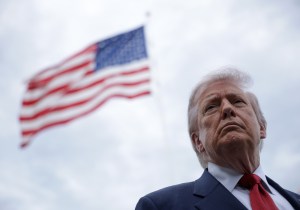
The already-strained relationship is made more complicated by the upcoming U.S. presidential election, which the report characterized as “looming large” over the business dynamic. With both President Joe Biden and former President Donald Trump eager to advance America-first agendas and rattle the saber at Beijing, it’s unlikely that relations will improve in the near term.
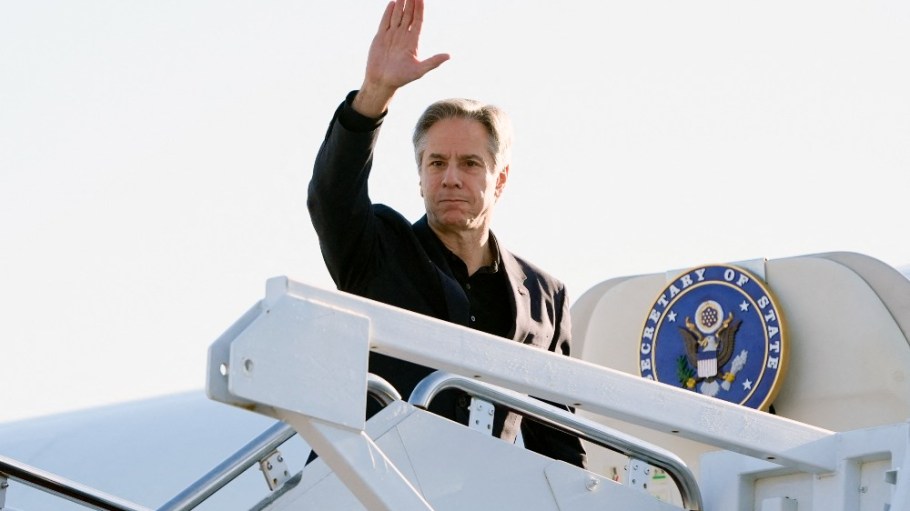
In fact, the strain between the two nations seems to be growing each day. Secretary of State Antony Blinken arrived in China Wednesday after the Senate voted to pass a foreign aid package worth $95 billion to help Ukraine, Israel and Taiwan (which China maintains is a part of its territory) on Tuesday. It will also force TikTok owner Bytedance to sell the social media platform within 270 days or face a ban in the U.S.
President Biden signed the bill hours later, inciting a swift response from Beijing.
“I’d like to emphasize that the United States and Taiwan strengthening military ties will not bring about security for Taiwan,” Chinese Foreign Ministry spokesperson Wang Wenbin said, noting that the $8 million in funding allocated to the Indo-Pacific “will only increase tensions and the risk of conflict across the Taiwan Strait.”
Blinken made the sojourn to China reportedly to smooth over some of the friction, as well as “to work on issues that matter to the American people,” he said in a video posted to his X account on Wednesday afternoon. “I’ll be talking to students, to academics, to business leaders, the people who are building bridges and ties between our countries—and of course, we’ll be dealing with areas where we have real differences with China, dealing with them directly, communicating clearly.”
“Race to face diplomacy matters,” he added. “It’s important for avoiding miscommunications, misperceptions and to advance the interests of the American people.”