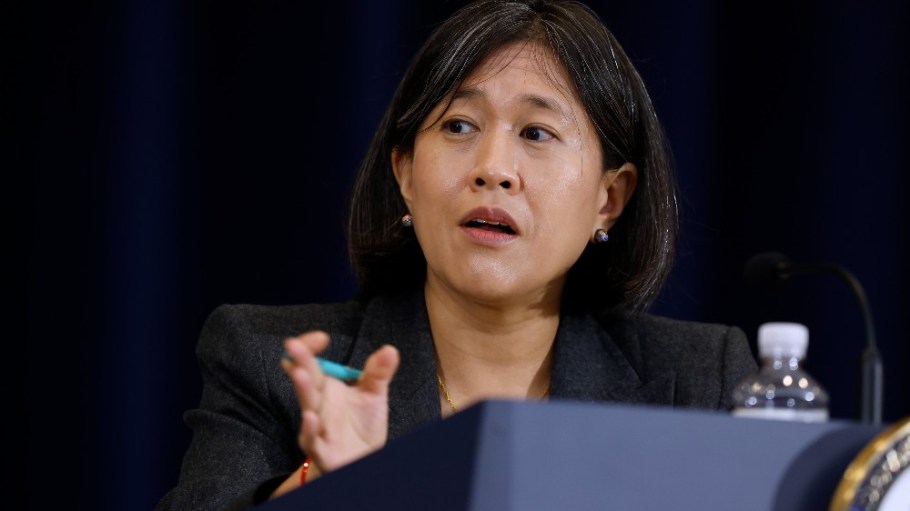
American officials including U.S. Trade Representative (USTR) Ambassador Katherine Tai and deputy assistant Secretary of State for African Affairs Joy Basu will travel to South Africa on Thursday for an Africa Growth and Opportunity Act (AGOA) forum with African leaders. They’re expected to discuss whether the trade law, set to expire in 2025, will get renewed.
The trip comes days after President Joe Biden announced that Gabon, Niger, the Central African Republic and Uganda will stop receiving AGOA benefits on Jan. 1, 2024. Biden also reinstated the trade preference program for Mauritania on Tuesday, four years after the West African nation lost its eligibility due to worker rights concerns.
Related Stories
USTR‘s annual eligibility review showed that Mauritania had made progress by working with the U.S. to eliminate forced labor. In February, the Mauritanian government launched the Instance Nationale, an organization designed to combat hereditary slavery and human trafficking.
“Recognizing progress made by Mauritania in recent years, we know that there is more hard work to be done,” Tai said. “Mauritania’s continued partnership with, support for, and empowerment of labor, civil, and human rights organizations will be key to its success.”
“Using the tools provided by the AGOA program, we will closely monitor Mauritania’s progress, in effectively and decisively protecting internationally recognized worker rights, particularly eradicating the scourge of hereditary slavery,” she added.
The USTR revoked Gabon and Niger’s eligibility, citing unconstitutional changes to the governments of both countries. Former Gabonese President Ali Bongo was ousted in a military coup in August, after he was reinstated for a third term following a controversial election. In July, Niger’s military forcibly removed democratically elected President Mohamed Bazoum, replacing him with Gen. Abdourahamane Tchiani in what the U.S. Department of State called an illegal coup.
Uganda and the Central African Republic lost their trade benefits “on the basis of gross violations of internationally recognized human rights being perpetrated by those governments.” Uganda has seen a rise in extrajudicial killings in the past few years, and recently enacted a law that sanctions the persecution and execution of LGBTQ people. In the Central African Republic, the militia is fighting rebel coalitions in a protracted civil war.
“Absent urgent changes, these four countries are set to be removed from the program due to actions taken by their governments that are inconsistent with the AGOA eligibility criteria,” Tai added. “I will provide each of these countries with clear benchmarks for a pathway toward reinstatement, and our administration will work with them to achieve that objective.”
However, “The ‘stick’ of being removed from the AGOA program becomes less potent if the ‘carrot’ of AGOA beneficiary status is undermined by questions of timely or effective renewal,” American Apparel and Footwear Association (AAFA) president and CEO Steve Lamar told Sourcing Journal. The 23-year-old trade agreement’s fate hangs in the balance, despite widespread support for its renewal on The Hill. Lawmakers and textile industry stakeholders alike have urged the Biden administration to commit to renew the act as companies diversify away from China and move production elsewhere.
“USTR’s designations highlight the importance of this program to support foreign and trade policy objectives, and reinforce why Congress needs to extend it now for a long period of time,” Lamar said. Companies and policymakers must “have predictability as to whether [AGOA] will continue to be a key tool” if they are going to continue to invest in the region, he added.
This week’s forum will see U.S. officials and counterparts from AGOA-eligible countries convene with representatives from regional economic organizations as well as private sector, civil society and labor stakeholders to strengthen trade and investment ties between the U.S. and sub-Saharan Africa. Tai said U.S. officials would “reaffirm the Administration’s commitment to the continent, and discuss opportunities to make AGOA more transformative.”
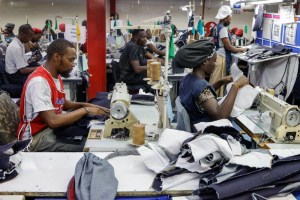
The trade agreement’s efficacy in both driving investment and diverting business from Africa is well-documented. AGOA beneficiaries like Kenya—the largest textile and apparel exporter to the U.S. under the trade agreement—have invested heavily in creating the infrastructure to scale apparel production, from reviving shuttered factories to building cotton farming and ginning capabilities. Kenya is one of about 35 countries currently eligible for AGOA preferred trade status, which grants duty-free access to the U.S. market on over 1,800 products.
Earlier this year the Norwegian government’s investment fund signed a $14 million financing agreement with Hela Apparel Holdings PLC, a sustainability-focused multinational manufacturer which plans to use the money to bolster its seven-year-old Kenyan apparel factory. The operation employs over 4,000 workers and is responsible for 20 percent of Kenya’s apparel export volume.
After Ethiopia lost AGOA trade benefits in January 2022 due to human rights abuses during the civil war, its textile sector lost key investments. India’s Arvind Limited said the change in Ethiopia’s trade status created unfavorable business conditions, and it soon after transferred nearly 90 percent of its Ethiopian apparel sourcing back to India.
Prior to the conflict in the Tigray region, Ethiopia attracted apparel manufacturers from Asia, Europe and the U.S. supplying global brands and fashion firms including H&M, PVH Corp., Hanes, JCPenney, and The Children’s Place to set up shop in a fast-growing network of government-built industrial parks.