Sub-Saharan African nations benefitting from the Africa Growth and Opportunity Act (AGOA) have been waiting for months with bated breath on news of a renewal for the 25-year-old trade preference program, which stands to expire on Tuesday.
This week, a number of the continent’s trade emissaries and heads of state have pushed for an expeditious extension of the program’s benefits—namely, duty-free access to the United States market for more than 1,800 products from 32 countries.
Related Stories
Signed into law by President Bill Clinton in the year 2000, eligibility requirements for AGOA beneficiaries include movement toward a market-based economy and the establishment of policies designed to combat poverty and corruption while protecting human rights.
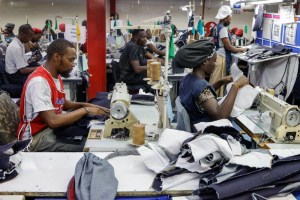
Kenya’s trade minister last week said the country was aiming to finalize a trade deal with the U.S. by year’s end, with hopes of remediating the impacts of the 10 percent “reciprocal” tariff rate announced in August. While that rate represents the lowest figure available under President Donald Trump’s current tariff regime, a total cutoff of the preference program could imperil the country’s blossoming apparel and textile sector, which employs about 300,000 people, as well as its cotton-growing agricultural base.
On Wednesday, Kenyan President William Ruto met with Secretary of State Marco Rubio to discuss the future of AGOA on the sidelines of the United Nations General Assembly (UNGA) in New York. Before the tete-a-tete, he reiterated that he expected Kenya would be signing a deal with the U.S. in the coming months—and said he’d be seriously pushing the U.S. to renew AGOA.
“I will be asking him for the U.S. to consider seriously renewing and extending AGOA for at least a minimum of five years, because it is a platform that connects Africa and the U.S. in a very fundamental way, and it can go a long way in solving some of the trade deficits and challenges that exist at the moment,” Ruto said, according to Reuters.
Kenyan security forces were deployed to Haiti in waves over the course of 2024 and 2025 to help the Caribbean nation as it was destabilized by gang violence and civil unrest. The Biden and Trump administrations have praised the Kenyan government for its leadership within the Multinational Security Support (MSS) mission, as it stepped up when other nations shied away from the conflict.
Haiti’s own duty-free trade preference and relief program, known as Haiti HOPE-HELP, will also expire Sept. 30.
Following Rubio’s meeting with Ruto, the State Department provided few details about the conversation or the future of AGOA, but again lauded Kenya’s “brave contributions to Haiti’s peace and security.”
“The Secretary and President also reviewed numerous opportunities for U.S. commercial investment in key Kenyan sectors,” deputy spokesperson Tommy Pigott said. He did not reference particular industries or the role of a trade agreement or preference program in bolstering that investment.
Following a visit to Washington, D.C. this week, Lesotho‘s trade minister, Mokhethi Shelile, was operating on different information.
He said that the Congressional leaders on the House Ways and Means Committee and the Senate Finance Committee “promised” to extend AGOA by one year. In a press briefing after the Wednesday meeting, Shelile said the lawmakers committed to the extension by November or December at the latest.
According to the International Trade Commission (ITC), “Lesotho has taken advantage of AGOA to become one of the largest garments exporters to the United States from Sub-Saharan Africa.”
The nation ranked No. 1 in terms of value of goods exported under the program, and No. 3 in volume of goods—primarily textiles. Exports from Lesotho to the U.S. totaled $237.3 million last year, with the manufacturing sector ranking as the second largest employer after the government.
But the Covid-19 crisis did a number on employment; the 43,542-worker strong manufacturing sector in February of 2020 declined by more than 13,000 within a matter of months. The industry briefly rebounded in 2021 but fell again to 30,991 by December 2024. And now, the country is facing a 15 percent tariff rate for exports to the U.S., which stands to further impede its access to American brands and shoppers and hinder the sector’s revival.
As such, Lesotho has been setting its sights on new partnerships. “As U.S. market demand fell—forcing factory closures and downsizing—Lesotho has increasingly diversified into the South African market, which now accounts for 30 percent of apparel export volume,” according to the ITC.
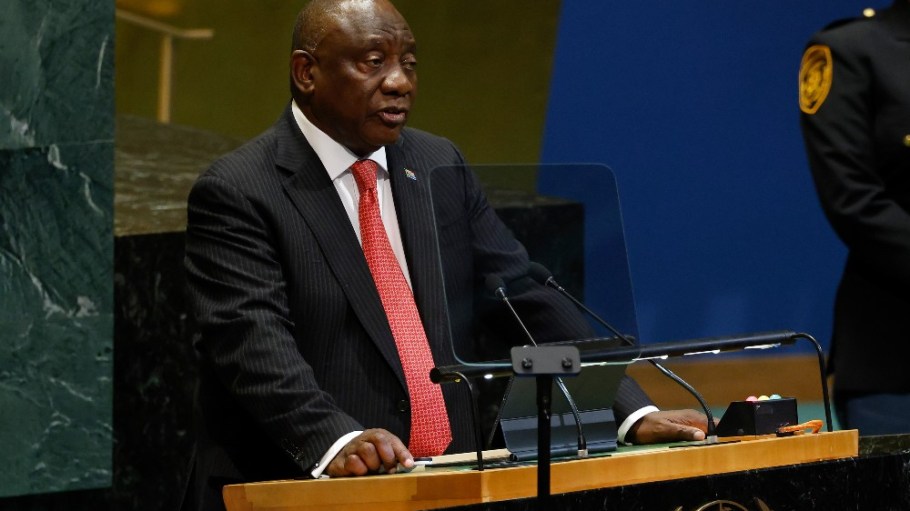
While it has grown as an export market for other African nations, characterized by the ITC as the “most advanced, diversified, and productive economy in Africa,” South Africa is nonetheless majorly concerned about AGOA’s expiration. President Cyril Ramaphosa rallied for a renewal of the program at the South Africa-U.S. Trade and Investment Dialogue at the UNGA this week.
Ramaphosa said South Africa—not known for its textile or apparel exports, but its agricultural and automotive production—has benefitted significantly from AGOA.
“Its expiry would not only undermine those gains, but also remove the link to the Generalized System of Preferences, which has been so critical to many of our exporters,” he said, according to Xinhua.
The GSP, which expired in 2020 and has not been renewed, guaranteed duty-free treatment for over 3,500 products imported into the U.S. from developing nations. Its lapse has been felt acutely within these economies, which are loathe to see AGOA suffer the same fate. South Africa has engaged with the U.S. Trade Representative (USTR) consistently in talks about the program’s future, Ramaphosa said.
Trump’s tariff scheme has been a “wake-up call” for South Africa, which he said has been driven to forge other trade partnerships as tensions have deepened within the U.S.
“New challenges have emerged in our trade relationship, not least the reciprocal tariffs recently imposed on South African exports. These measures have already disrupted supply chains and created uncertainty for both our exporters and American importers,” he added, according to Reuters.
“Geopolitical shocks and unprecedented trade policy volatility are destabilizing the global economy and jeopardizing a critical source of development finance. In fact, trade is now being used as a weapon against a number of countries in the world.”