After nearly a quarter century, the Africa Growth and Opportunity Act (AGOA) has expired.
The legacy trade preference program lapsed Tuesday without a renewal from Congress, shocking some and disappointing many, including lawmakers, importers and the Sub-Saharan African (SSA) exporters and heads of state who have been lobbying with mounting fervor for an extension.
Those calls have grown louder in recent months and even days, apparently to no avail. Last week, leaders from countries like Lesotho, South Africa and Kenya implored the Trump administration and Congress to prioritize the program’s continuation as America’s ties with its longstanding allies become ever more fraught and tenuous.
Related Stories
Signed into law by President Bill Clinton in 2000, AGOA provided some three dozen SSA nations and 1,800 products with duty-free access to the United States market. Eligibility was determined by the developing countries’ efforts to evolve and establish policies that prioritize and protect human rights and economic freedoms.
Largely viewed as a standout example of successful American trade diplomacy by legislators on both sides of the aisle, AGOA’s renewal was once viewed as a foregone conclusion. But that certainty devolved as the program faded from discussion amid the chaos of rapidly evolving trade policy, and relationships with bigger partners—China, India, the European Union—have dominated the discourse.
“It’s frustrating to see this program lapse despite its clear, mutually beneficial advantages for Sub-Saharan nations and U.S. businesses, its long history of bipartisan support in Congress, and its alignment with the President’s America First policy,” Steve Lamar, president and CEO of the American Apparel and Footwear Association, told Sourcing Journal.
“For American companies, Sub-Saharan Africa had become a vital sourcing opportunity to diversify away from China. While those relationships will continue, they are no longer as seamless or beneficial without the program. We urge Congress to renew it as soon as possible, even as the government faces a pending shutdown.”
“With avoiding a government shutdown being the administration’s and Congress’s top priority, there is little room left to consider AGOA,” added Dr. Sheng Lu, professor of fashion and apparel studies at the University of Delaware.
Beyond the growing list of five-alarm fires that legislators are currently contending with, a successful renewal of AGOA would require “deliberate effort” and strong support from President Donald Trump, he added. However, the administration “has not sent a clear signal” that it supports or believes in the program’s objectives.
“On the contrary, the U.S. trade deficit with AGOA members has surged by more than 47 percent so far in 2025, and the Trump administration has shown a preference for pursuing bilateral trade deals rather than reaching regional ones with a group of countries,” Lu said. “In other words, given its trade policy priorities and preferences, the Trump administration does not see AGOA renewal as a compelling and urgent goal.”
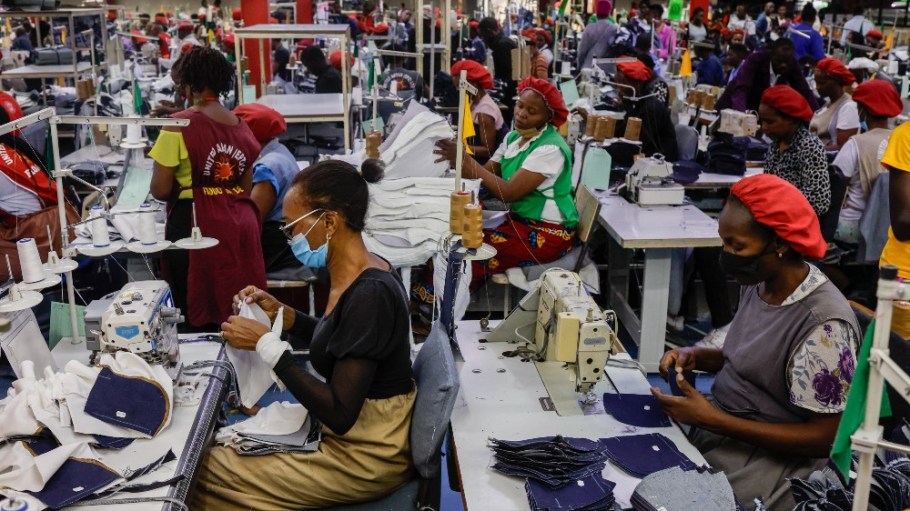
The U.S. is the single largest export market for SSA nations producing apparel, accounting for around 36 percent of the region’s apparel exports in 2023 (the latest year for which data is available). AGOA is a major driver of trade, with U.S. Office of Textiles and Apparel (OTEXA) data showing that nearly 95 percent of the $758 million in apparel imports from SSA nations were brought in using the trade preference program over the first seven months of this year.
“If AGOA were to expire, in the short run, SSA’s apparel exports to the U.S. would be subject to the most-favored nation (MFN) tariff rate—averaging about 16 percent—plus the additional IEEPA tariffs,” Lu explained. This sizable shift would “sharply undermine the price competitiveness of SSA countries as an apparel sourcing base, particularly since most of their exports to the U.S. are price-sensitive basic items like T-shirts and tops.”
Such items are widely available from other sourcing locales, including Asia, Mexico and Central and South America.
More concerning still is what the expiration of AGOA portends for the future, the academic believes. Without a duty-free U.S. trade program to spur investment into SSA countries, the region’s long-term potential could be called into question just as it begins to emerge as a bona-fide option for international sourcing.
“Likewise, if AGOA were to lapse for an extended period, U.S. fashion companies might permanently shift away from sourcing in SSA countries, given the lack of incentives to continue sourcing from the region,” Lu said. “Such a shift could greatly reduce SSA countries’ apparel exports and, as a result, lead to significant job losses, ultimately creating a humanitarian crisis and worsening the region’s political stability.”
Data from the United National Trade and Development (UNCTAD) released Monday underscored that point. Absent an AGOA renewal, market access to the U.S. stands to further deteriorate for many African countries.
In 2023, imports from AGOA beneficiary countries amounted to nearly $10 billion—small potatoes when compared to overall American imports, but massively meaningful to countries like Lesotho and Madagascar, for example, which rely on the U.S. relationship for a substantial portion of outbound trade.
The program provides symbiotic benefits; American firms have “enjoyed greater choice and lower prices on imported raw material and intermediates, which enhances competitiveness in downstream industries,” UNCTAD wrote.

With AGOA now expiring, both SSA countries and U.S. companies are slated to face a “compounded impact”; new tariffs levied by the Trump administration will mean shrinking options for importers and diminished competitiveness for exporters. Meanwhile, the country-specific and sectoral tariffs will stack on top of most-favored nation duty rates, eliminating the preferential treatment AGOA has provided.
“This sudden jump in tariffs could disrupt long-standing trade relations and severely disadvantage African exporters, particularly in highly protected sectors like textiles and apparel, where AGOA has so far provided critical market access,” UNCTAD wrote, noting that Kenya will see its trade-weighted average U.S. tariff nearly triple from 10 percent to 28 percent. “Without AGOA’s renewal, Africa’s export competitiveness in the US market could quickly erode at a time when competition for alternative export markets intensifies globally,” the group said.
Moving forward, Lu believes the fight for AGOA isn’t over.
“I would not be surprised if AGOA members continue to advocate for the agreement’s renewal. There is also strong support among the U.S. fashion industry for extending AGOA,” he said.
However, as so many American trade partners have come to understand, “negotiating so-called bilateral trade deals with the Trump administration takes time,” he added—and leverage.
“It is uncertain what each individual AGOA member could realistically offer in such negotiations, given their small economic size and limited demand for U.S. products.”