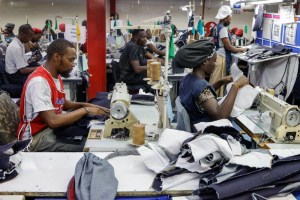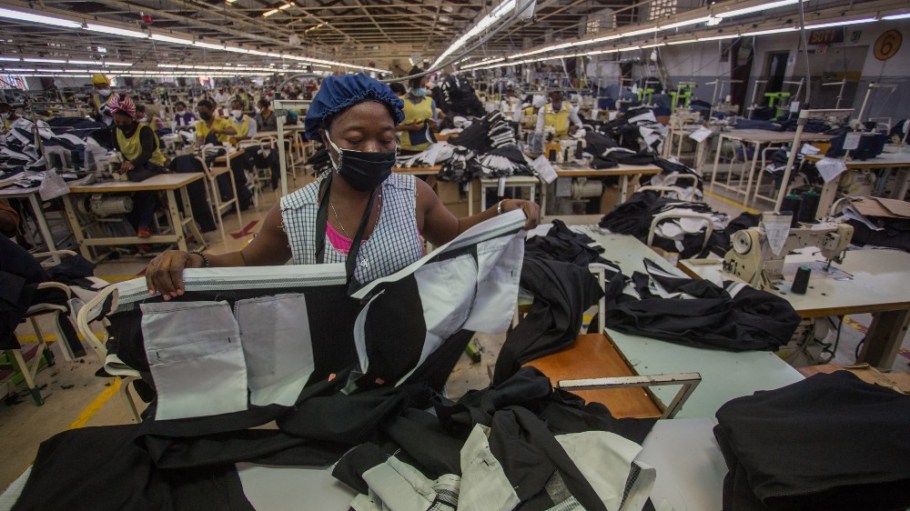
The American Apparel and Footwear Association (AAFA) is getting behind a Congressional effort to save a legacy Caribbean trade preference program from lapsing in eight months.
Congressman Greg Murphy (R-N.C.) this week introduced the HELP Extension Act—a bipartisan bill that would extend the Haiti HOPE-HELP trade programs for a decade.
The HOPE Act of 2006 and the Haitian Hemispheric Opportunity through Partnership Encouragement Act of 2008 (HOPE II) gave the nation duty-free treatment for an array of apparel products. Meanwhile, the Haiti Economic Lift Program (HELP) Act, signed into law in 2010 following a devastating earthquake, expanded the preference program to include additional textile and apparel products as the country sought to rebuild and develop its apparel sector, which has become a critical economic engine.
Related Stories
“The HOPE and HELP programs have proven to be mutually beneficial to the United States and Haiti,” Rep. Murphy said upon the bill’s introduction. “Shifting our supply chains away from China to neighboring nations provides stability for American consumers and businesses.”
“Likewise, a robust trade relationship with Haiti has given the embattled nation much-needed economic opportunity, providing a pathway to future peace and stability,” he added. The programs are set to expire on Sept. 25.
According to AAFA president and CEO Steve Lamar, it’s critical that the extension be passed in a timely manner. There was some momentum in December, when a HOPE-HELP extension was added to the bipartisan spending bill, known as a “continuing resolution.” While the government narrowly avoided a shutdown, the trade preference program was cut from the final bill.
According to Lamar, the Congressional foot-dragging on an extension has already contributed to massive job loss in Haiti’s apparel sector.
“There’s a lot of, there’s a lot of business that’s draining away from Haiti right now,” he told Sourcing Journal. “A couple years ago, there were about 60,000 apparel jobs in Haiti, and that’s dropped to a little bit more than one-third of that. And the reason is that there’s a lot of uncertainty about whether or not the program is going to get renewed.”
Haiti HOPE-HELP has support across the political spectrum, and the program is largely viewed as successful due to its high utilization rates. About 70 percent of the apparel imported into the U.S. from Haiti enters duty-free under the program. “But some companies have said, ‘We can’t deal with that level of uncertainty,’ and then they’re moving their production other places. Many have stayed, but that number is dropping as the situation continues to remain unpredictable,” Lamar said.
In recent years, Haiti has faced civil and political unrest and gang violence that has disrupted commerce and daily life for its citizens. In addition to having questions about the future duty-free status of their imports, brands are also worried about a security crisis that has rendered production and sourcing problematic.
“There are efforts to make sure the security situation stabilizes and improves,” he said, pointing to the presence of Kenyan peacekeepers sent to help restore safety and order in the island nation.
The answer for the U.S. is not to turn its back on the country in a time of need, he added. Doing so could worsen the very migration issues that the nation is currently trying to mitigate, like those at the Southern border. Now, Congress has the power to utilize tariffs—or in this case, the absence of duties—”to leverage better controls on illegal migration patterns or migration pressures,” the AAFA lead said. “Haiti is a classic example of how that can be done effectively.”
“A preference program is quite literally a tool to leverage behavior and activity by another country,” he added. Part of the program’s appeal is that it offers American producers of inputs an avenue for business, too. “At a time when we’re trying to get U.S. textile companies more business in the Western Hemisphere, Haiti is a place where yarns and fabrics and zippers and buttons and things from the U.S. textile industry are used.”
Textiles and T-shirt company Gildan praised the extension bill for this reason.
“Gildan is pleased to see the introduction of HOPE-HELP renewal legislation, which plays a vital role in supporting U.S. textile jobs and strengthening regional supply chains,” vice president of commodities Marc Doyon said. “By driving demand for American-grown cotton and yarns within Gildan’s vertically integrated supply chain, the bill bolsters U.S. manufacturing while also promoting nearshoring and maintaining jobs in Haiti. Renewing HOPE-HELP is essential to continuing this mutually beneficial relationship.”
The further development of other production markets also allows the U.S. to continue to diversify away from Asia sourcing, Lamar said. “If you think about what’s going on in the sourcing world right now, everybody’s under threat for tariffs. We don’t know what the relationship with China is going to be like, we don’t know what the relationship between the U.S. and other countries will be like—but the relationship between the U.S. and Haiti, if it remains secure, gives them an opportunity to grow and attract a lot more business.”
AAFA has consistently lobbied for a ten-year extension of HOPE-HELP, which Lamar believes is necessary. “It’s our recommendation, because you really want that long-term predictability to support trade and investment,” he explained.
And given the turmoil the country has seen in recent years, the economic security provided by a long-term trade agreement is critical to rebuilding and expanding the textile and apparel sector. According to the U.S. Department of State, “During the last 40 years, the apparel industry has played a central role in Haiti’s overall economy, accounting for 80 to 90 percent of the country’s total exports which helped raise $1.01 billion in revenue in 2020.” The department referred to HOPE-HELP as “cornerstones of the textile sector.”
In a developing sourcing market, “It’s really hard to turn things on overnight,” Lamar said. U.S. brands and Haitian manufacturers both need the assurance of a trade agreement in order to ramp up production capacity again and ensure continued business in the years to come.
Despite Congress’ penchant for pushing trade program renewals to the back burner—think the Africa Growth and Opportunity Act (AGOA), which is also slated to expire—the AAFA lead said he’s optimistic that HOPE-HELP will see the support it needs to get over the finish line.
“There’s definitely an urgency, people are talking about it, and it has traction,” he said.