With the U.S. fast fashion market projected to grow by nearly $22 billion by 2032—according to marketing insights firm CoherentMI—Waste360 is betting on upcycled designs.
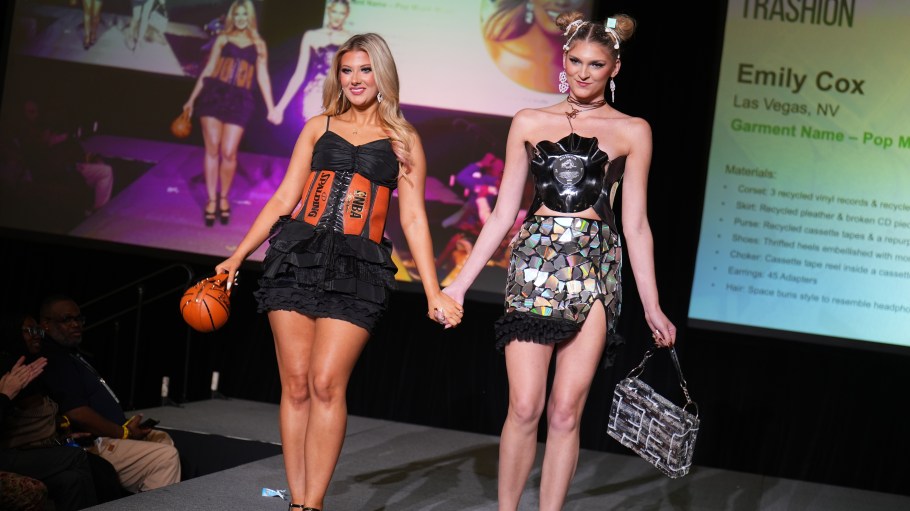
Last month, the sustainability and recycling education provider hosted its third annual Trashion Show. Held at WasteExpo—North America’s largest trade show dedicated to waste, recycling and sustainability—the Las Vegas-based runway show featured local upcycled designers and thrift stylists who “breathed new life into discarded items,” according to Stefanie Valentic, editorial director at Waste360.
Related Stories
To earn a spot on the runway, each competitor must use at least 95 percent repurposed materials and submit a detailed materials list ahead of the show, outlining every component used in their design.
“All designers apply through our ‘Call for Designers’ form and complete a series of questions about their background, fashion philosophy and views on fashion’s role in sustainability. They are also required to submit digital portfolios that specifically highlight repurposed designs,” Valentic told Sourcing Journal. “[We believe] fast fashion is a global issue… which is why we’re proud to contribute to the chorus of smaller voices and proud of all our designers who create with passion to help reshape behavior, education and policy.”
According to Valentic, that passion was clearly reflected this year, as Waste360 honored three standout designers for their creativity and commitment to sustainability: Nancy Watts, Best in Show ($3,000 prize); Andrea Valentina, Runner-Up ($2,000 prize) and Emily Cox, Fan Favorite ($1,000 prize).

Watts, who’s been designing since she was a little girl, said she was “very surprised” when they called her name.
“All the blood drained from my face and my knees kinda buckled,” Watts told Sourcing Journal. “I’m fully committed to sustainable fashion and excited to try something new. Winning this show gave me confidence that maybe I’m doing something right.”
When the designer first started participating in trashion shows over eight years ago, Watts remembers the designs being much simpler—“basically trash bags.” Since then, the events have evolved dramatically, featuring elevated attire made from “unimaginable materials” like sponges and basketballs.
“I hope more and more trashion and upcycle fashion shows happen. Not only are these shows very entertaining, but people see what can be done with ordinary trash and hopefully think differently about our one-use, throw-away society,” Watts said. “I [also] love seeing young people getting involved and passionate about their outfits and designs…there is hope with this next generation.”