Consider Earth as Patagonia’s sole shareholder. The privately held Californian company’s inaugural “Work in Progress Report” is its update on how operations are going.
“We want to show our employees, customers and community where we are doing well—and where we have work to do,” said Corley Kenna, chief impact and communications officer at Patagonia. Kenna said the goal is to engage in constructive dialogue that can lead to better outcomes for people and the planet.
“This report is a transparency tool, not a victory lap.”
Related Stories
To reiterate, it’s Patagonia’s debut comprehensive environmental and social progress testimonial. Not abnormal, given that the Ventura-based brand’s billion-dollar business was never beholden to annual stakeholder reporting.
“After giving Patagonia away in 2022, I’ve been working harder than an 87-year-old should,” Yvon Chouinard, Patagonia’s founder and former chief executive, wrote in the note leading the “Work in Progress” report.
And the fact that it’s the first of its kind for the 52-year-old industry-leading label feels funny, given that Patagonia was founded circa 1973 in pure pursuit of protecting the planet rather than personal profit. Chouinard shared a relatively rational reason: “Money, and how we run our company, are two of the most effective tools we have to protect nature.”
That wasn’t always the case for the retailer that raked in $1.47 billion in total revenue this year alone.
“To put it into perspective, when Patagonia was founded in 1973, the average lifespan of an American company on the S&P 500 was around 30 years. Today, it’s less than 18,” Chouinard said in the report. Today, he said, companies are bought up or hollowed out while billionaires burgeon with blithe and in spite of an industry that used to think entrepreneurial success was building a durable business, not selling or stripping or siphoning it to the highest bidder.

“Patagonia is not perfect by any means,” Chouinard continued. “We do not have all the answers, but the fear of getting things wrong in the process cannot stop us from trying to get things right in the end.”
Thus, its 130-page narrative does just that: detailing the outdoor apparel giant’s work—in progress and otherwise.
“We can change this fatal form of extractive capitalism that has brought us here,” Chouinard’s note concluded. “But we have to take the first step.”
From the top, the comprehensive document underscores the inherent paradox of Patagonia’s existence: a company whose purpose is to save the planet but whose operations inevitably consume its resources. Chief executive officer Ryan Gellert considered the Catch-22 concept as seemingly at intrinsic odds with the brand that changed its mission statement to “we’re in business to save our home planet” in 2018.
“Our existence seems counter to our purpose. That tension is not lost on us,” Gellert said in his CEO note. “Like every other business, we do not exist in a vacuum.”
“Nothing we do is sustainable”
Before the results, the reasons.
In September 2022, Chouinard’s family transferred ownership to the Holdfast Collective (98 percent of the non-voting stock) and the Patagonia Purpose Trust (PPT), which owns all of the company’s voting stock and constitutes 2 percent of the total stock.
The choice was twofold: to protect the company’s purpose and values—indefinitely—and to put the company’s assets to work fighting the climate crisis. “Earth is now our only shareholder,” Chouinard said
Since the Holdfast Collective was founded in August 2022, the collection of nonprofits has received $180 million from Patagonia. During its first three years, the organization committed over $142 million toward planet-healing projects, including work to protect the Vjosa River in Albania and Bristol Bay in Alaska, per the Eastman partner. In 2025, Holdfast gave $2 million to help purchase 8,000 acres near Georgia’s Okefenokee National Wildlife Refuge.
“Put another way, Holdfast Collective is funded solely by profits that are not reinvested into the business,” the report reads. “That means how we do as a business determines how much we can send out to Holdfast Collective for its work.”
Notably, both the PPT and the Holdfast Collective are operated by a shared trustee: Four Seas, LLC. Effectively, the combined ownership model is designed to ensure Patagonia’s values remain intact “forever.”
On the topic of forever, 100 percent of Patagonia’s products are to be made without intentionally added per- and polyfluoroalkyl substances (PFAS) moving forward, effective spring 2025 and beyond. This achievement culminates a nearly 20-year commitment Patagonia made in pursuit of PFAS-free products.
“PFAS are in hundreds of thousands of products for a reason,” Patagonia said, noting the virtually impossible ability to make such a claim. “And that’s why we don’t make that claim.”
The forever chemicals phase-out is one of two (out of four) “passing grades” Patagonia gave itself; the other achievement fêted manufacturing over 95 percent of products in Fair Trade Certified factories.
However, the B Corp copped to falling short elsewhere. Only 6 percent of synthetic fabrics are made from secondary waste against a goal of 50 percent. Thirty-nine percent of its partner factories pay a verified living wage. Despite Patagonia’s commitment to reach net-zero by 2025, the Worn Wear purveyor’s carbon emissions, by its own admission, continue to rise.
“Decarb is hard”
But, those greenhouse gas (GHG) emissions findings highlighted where the retailer’s greatest challenges—and opportunities for impact—lie.
The Double Materiality Assessment is Patagonia’s method for accounting for both its impact on the environment and society at large and how those issues affect its finances. And, per the “Don’t Buy This Jacket” firm’s DMA, GHG emissions—spanning Scopes 1, 2 and 3—were not running on fumes.
Patagonia’s annual emissions totaled 182,646 metric tons of carbon dioxide equivalent (CO2e)—the same amount as guzzling 20.5 million gallons of gasoline, according to calculations from the Environmental Protection Agency (EPA).
Patagonia’s Scope 3 emissions, particularly from its extended value chain, accounted for nearly 99 percent of the total. Within that, 86 percent of emissions (168,667 metric tons of CO2e) pertained to the manufacturing of its raw materials and finished goods—the equivalent of producing some 14 million pounds of ground beef. This figure is dominated by the manufacturing processes that require thermal energy: fabric formation (43 percent), preparation and dyeing (22 percent) and yarn formation (14 percent).
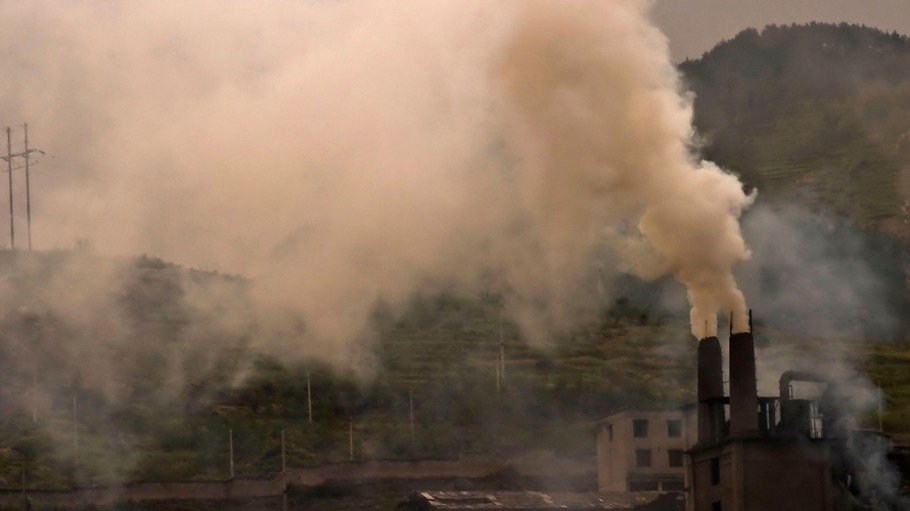
Global Efficiency Intelligence’s research, which informs its new electrification tool, highlighted that up to 75 percent of the energy generated in a textile mill comes from the on-site burning of fossil fuels to create process steam—thus, thermal energy.
Considering the vast majority of its emissions originate in its supply chain, Patagonia’s primary decarbonization strategy focuses on the textile mills and facilities deeply dependent on fossil fuels, chiefly coal, for wet-processing production stages like dyeing and drying. The company plans to directly fund its suppliers’ transition from coal-fired boilers to electrified systems, paired with the procurement of renewable energy.
“Even if you maxed out the entire roof of a factory with solar, the majority of emissions would still be coming from burning fossil fuels to create steam and heat,” Patagonia’s head of environmental impact, Kim Drenner, said in the report. “Solar alone isn’t going to fix your decarbonization problem.”
To facilitate (see: finance) such a transition—what Drenner called the elephant in the room—Patagonia developed the Verified Carbon Intervention Unit (VCIU): an internal financial mechanism used to incentivize and fund its suppliers’ emissions reduction efforts.
“We’re not talking about crazy climate tech and emissions capture and storage, none of what I call the ‘shiny object’ stuff,” Drenner said. “There are non-sexy solves that exist today; they just cost money.”
Functioning as an internal carbon price, the value fluctuates between $92 $350 per ton of CO2e, dependent on project type (such as the green premium of renewable electricity) and location (like Taiwan versus Mexico).
“In setting these targets, we acknowledge that the latest science may change,” the company said in the report. “While target language may change over time, our ambition and focus on cutting absolute GHG emissions will not.”
Patagonia’s original carbon emission goalpost (which was announced in 2018 as part of a set of 2025 targets established in 2015, for what it’s worth) was to be carbon neutral. The goal was later abandoned, à la the Patagonia Paradox.
The minds behind “The Shitthroprocene” cited a core issue of “balancing out emissions with offsets…felt like purchasing the passing grade,” per the report—in essence, a rejection of the idea of buying offsets while continuing to pollute. In 2021, Patagonia set its sights on reaching true Net Zero GHG by 2040, as defined by the Science-Based Targets Initiative (SBTi).
“Earth is no easy boss”
“We ran Patagonia for 50 years as an experiment in responsible business and we’ve proven that works,” co-founder Malinda Chouinard said in the report, noting the next experiment will tackle transforming corporations and extractive capitalism. “We can’t save the world but can be involved in fighting what destroys it. Everything else is a symptom, the modern corporate model of doing business is the cause and has to change.”
Critics have previously and periodically pressed Patagonia to do more; further decouple its profits from new clothing production, wean itself off petrochemicals altogether, and support the California Garment Workers Protection Act.
But perhaps Patagonia beat the crowd to the punchbowl this go around.
The “Work in Progress” report unflinchingly discloses the retailer’s failures, such as missing its 2025 goal for using secondary waste synthetics. Against a target of 50 percent, the company achieved only 6 percent, a result it describes with one self-critical interjection: Yikes.