Scope 3 emissions, which include a brand’s upstream and downstream greenhouse gas (GHG) output, tend to account for at least 95 percent of a brand’s environmental impact. About 80 percent of these emissions are released during the production of apparel.
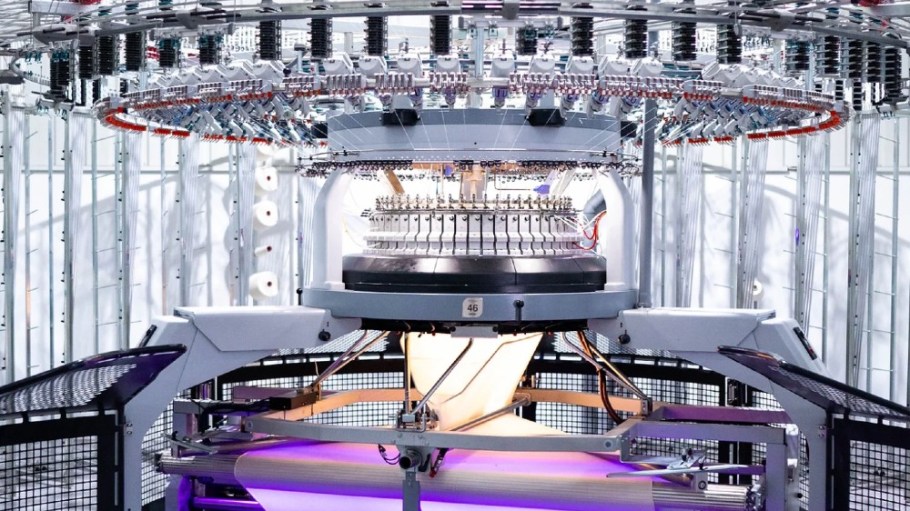
According to Porto, Portugal-based Smartex, which develops both hardware and software for factory operations, the emergence of the Modern Textile Factory (MTF) will be spurred by innovations that slash waste and ensure traceability. The fashion technology solutions provider gathered insights that it believes will help mitigate environmental impact by revolutionizing one of the most opaque parts of the supply chain, gathering recommendations from focus group of brand, innovator and factory experts including Luke Henning, chief business officer at Virginia-based textile recycler Circ, Tricia Carey, chief commercial officer at Swedish textile-to-textile recycling firm Renewcell, and Jeffrey Hsu, chief innovation and marketing officer at NTX.
Related Stories
While the sector has been largely unregulated for decades, with cost prioritized over all else, “The commercial attributes of speed and quality are growing in importance while regulation is coming,” Smartex wrote in a report released this week. “It has been well publicized that the rules of the textile game are changing through legislation—from banning the destruction of excess stock to tracking products through the supply chain,” it added. “In order to prepare the supply chain for this sea change in primary data reporting and investment in more sustainable technology, the Modern Textile Factory (MTF) has to emerge.”
The textile supply chain has always operated on tight margins and limited budgets. Returns on investment in new technology and sustainable processes must be lightning fast, as “fashion brands are unforgiving on price increases and will switch suppliers without a second thought.” Despite the outsized pressures on producers, it’s in the best interest of factory owners to get ahead of impending legislation and commercial pressure by adopting technology that drives efficiency. “Most importantly, the textile industry’s approximate contribution of 2 percent of global emissions won’t really reduce—and may actually increase as a percentage as other industries decarbonize more quickly,” according to Smartex.
In qualitatively mapping the most essential demands on textile producers, the report’s contributors identified five key elements that define the MTF: resource efficiency, real-time data collection capabilities, data-driven decision making, high quality, safe jobs and integration with stakeholders like other supply chain partners.
MTFs will constantly work to improve resource efficiency to slash both environmental impacts and costs, using data to understand those metrics and identify areas for improvement. They must also avoid “working in silos,” and should collaborate with upstream partners to understand the origins of the materials they are working with. “This is certainly a strength of vertically-integrated facilities, which can connect more easily with other supply chain steps by linking up factory systems,” the report stated. “As a result, they can have full visibility on the production process to review order progress, identify problem areas and continuously improve.”
Modernized factories will also be safer for workers, the writers said. Working with more advanced “smart” machinery will help them drive efficiency and create consistent, high-quality products, while limiting some of the risks posed by outmoded machinery and systems. “As a result of technology progression, workers will require constant training and upskilling to maximize the factory’s investment in technology and deliver products with the right mix of price, speed, quality and compliance,” the report said.
However, the report made it clear that modernization requires money. Fashion for Good estimates that achieving net-zero emissions could cost the industry $1 trillion, including investments in renewable energy, more sustainable materials and processes, and the phasing out of fossil fuels. Unfortunately for suppliers, brands have been thus far unwilling to offer long- or even medium-term commitments to factories that are working toward these goals.
Recently, H&M worked with Southeast Asia’s biggest bank to create a green loan program supporting climate action in the fashion sector. Nonprofits mostly funded by brands, like the Good Fashion Fund (GFF), led by Laudes Foundation and Fashion for Good, offer loans along with technical, environmental and social expertise to manufacturers. These types of programs are essential to advancing climate goals. However, the textile industry often lets its “traditional mindset” win out during times of economic hardship, and that could stymie progress. “We are in the midst of a macro downturn right now with brands and suppliers seeing their string purses tighten,” the report said. “Brands are applying price pressure to control their costs amidst inflation, and ESG has slipped down the priority list.”
“No one will implement systems for ‘Traceability’ or ‘Sustainability’ if those systems don’t save them enough money and resources, while justifying a tangible return on investment,” Smartex co-founder and CEO Gilberto Loureiro said. “External pressures, like those from clients, might force compliance but the costs will inevitably reflect in their product bills.” Textile factories risk sacrificing business if they increase their prices, and coupled with their slim profit margins, investing in new environmentally focused systems can be cost prohibitive.
But while “[i]nnovation creates barriers to entry,” this represents “a positive for the industry as it will drive change,” the report said. The most forward-thinking manufacturers will be rewarded for their progressive approach with relationships with brands that value sustainability. “It will also allow the best suppliers to finally start holding some pricing negotiation power while brands financially benefit from their supply chain’s market-leading speed, top quality and verified impact reduction,” the report said.