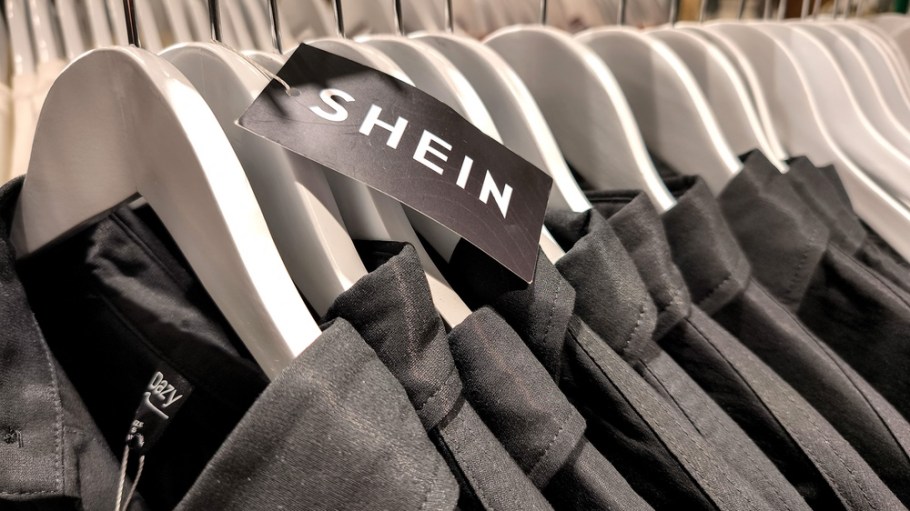
A watchdog group has told Shein to substantiate its net-zero claim on its German website or remove it altogether, prompting the e-tail giant to elaborate on its decarbonization goals.
“We have engaged constructively with DUH over recent months, providing additional clarity on our sustainability roadmap, targets and underlying data,” a Shein spokesperson said, using the acronym for Deutsche Umwelthilfe. “Following our engagement, we proactively published further information on our corporate website to provide our stakeholders with additional transparency around our plans and progress.”
Related Stories
The move followed a complaint that DUH filed in December against Infinite Styles Services Co., the Dublin-registered entity that operates Shein’s online platforms. In the filing, the environmental nonprofit argued that the Chinese-founded firm failed to sufficiently explain how it would achieve net-zero emissions by 2050 despite a 23 percent year-over-year spike in greenhouse gas emissions in 2024 and a 45 percent increase the year before. Together, the increases made Shein fashion’s worst polluter for two years running.
“We welcome this engagement and appreciate DUH’s input as part of our commitment to ongoing and substantive dialogue with all our stakeholders,” the spokesperson said.
Shein had previously described the Science Based Targets initiative’s 2025 validation of its target as a “milestone” in its “climate journey.” With the submission of a legally binding cease-and-desist agreement, the Singapore-headquartered retailer must steer clear of what DUH has characterized as its “blatant consumer deception” or risk severe financial penalties.
What’s noteworthy is that the lawsuit’s conclusion came more than half a year after the European Commission abruptly withdrew a proposed law targeting the same kind of nebulous or unfounded corporate environmental claims commonly known as “greenwashing.” Had it passed as planned, it would have outlawed vague terms such as “environmentally friendly,” “climate neutral” and, indeed, even “net-zero” if enough evidence didn’t back them up.
As with the corporate sustainability due diligence directive and other sustainability laws, concerns abound that any environmental claims regulation that makes it through will be watered down in scope and impact.
And yet for Maxine Bédat, executive director of the New Standard Institute and an architect of New York State’s Fashion Sustainability and Social Accountability Act, the case against Shein only exemplifies the “need for real rules” industry-wide, especially since “ignoring climate change doesn’t make it go away.”
“The bigger issue is what happens next,” she said. “Nothing about the underlying trajectory changes; emissions continue to rise; kids stay hooked on cheap, toxic-infused products; landfills become more expensive to maintain; and the costs of climate change mount through more fires and more flooding.”
But DUH is far from done: Not only is the organization calling on Germany’s environment minister Carsten Schneider to hold fast fashion purveyors fiscally accountable for their practices, but it’s cueing up further legal action for what it said were “misleading” advertising descriptions such as “local,” “eco-friendly” and “100 percent natural.”
“We are now the first environmental and consumer protection organization to begin exposing Shein’s unbelievable climate protection promises,” said DUH managing director Barbara Metz. “Ultra-fast fashion, with its masses of toxic disposable clothing flown halfway around the globe, can never be climate-friendly by its very nature. These business models must no longer be profitable.”
While Schneider, citing overflowing landfills and collection bins, said last month that the government is mulling a law that would require textile producers to contribute financially to the disposal of used clothing, Metz said he wasn’t thinking nearly ambitiously enough.
“Minister Schneider now has the opportunity, through extended producer responsibility, to bring about a genuine systemic change in the textile industry,” she said. “He must make fast-fashion practices economically unattractive through binding environmental criteria. We need durable and repairable fashion that can be borrowed, repaired, and reused. Such business models must be financed through a fund from manufacturer fees.”
Shein has come under scrutiny for greenwashing before, including by Italian authorities that fined Infinite Styles Services Co. 1 million euros ($1.2 million) last August for making “misleading or omissive” environmental claims about its products, including assertions that may have led consumers to believe that its EvoluShein by Design collection was made entirely from “sustainable” materials and fully recyclable.
And in July, France’s competition, consumer affairs and fraud regulator dinged Shein for 40 million euros ($47 million) for false discounting and environmental claims that contradicted its business model—including that it was a “responsible company” that limited its environmental impact by “reducing greenhouse gas emissions by 25 percent.” It was also in France that the Temu rival narrowly avoided being suspended for its sale of illicit products, though it remains to be seen if the broader European Union will take up the baton.