The SEC now faces more opponents to its controversial climate rules.
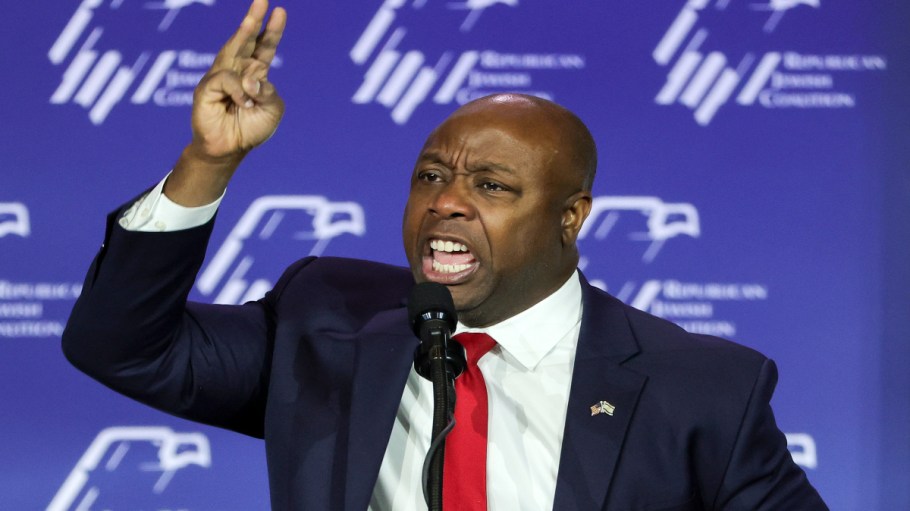
32 Republican members of both chambers of Congress have filed a resolution of disapproval under the Congressional Review Act (CRA), targeting the SEC’s rules. The resolution, put forth Wednesday, was led by Senator Tim Scott (R-S.C.), and it seeks to wipe out the rules completely.
Like other adversaries of the rule, which would mandate more thorough greenhouse gas emissions reporting, among other climate-related stipulations, Scott said the SEC has overstepped.
Related Stories
“The SEC’s final climate disclosure rule threatens economic opportunity across the country, and it must be overturned. Over and over again, SEC Chair Gensler has disregarded the real-world impacts of his aggressive regulatory agenda in his dogged pursuit of left-wing political priorities. This rule is no exception,” Scott said in a statement. “The SEC’s mission is to regulate our capital markets and ensure all Americans can safely share in their economic success – not to force a partisan climate agenda on American businesses. This rule is federal overreach at its worst, and the SEC should stay in its lane.”
The SEC has already faced numerous lawsuits from those that oppose its rule; some of the lawsuits make similar claims to Scott and other Republican members of Congress, while others contend that it didn’t mandate enough to protect investors.
Those legal complaints have been sent to the U.S. Eighth Circuit Court, which was selected via lottery to review the SEC’s rules. When it became clear the Eighth Circuit Court would hear the cases, the SEC issued a voluntary stay on the rule. That means the rule won’t go into effect until the legal proceedings have been completed.
But the CRA resolution, if passed, could wipe out the need for legal action entirely, said Jonathan Entin, a professor of law at Case Western Reserve University—and that’s exactly what the resolution’s supporters want.
To overturn the SEC’s rules, the resolution’s supporters would need to pass it with simple majority rules in both the House and the Senate. If they can manage that, the resolution would then go to President Biden to be signed. If President Biden vetoed the resolution, were it to pass, Congress could override his veto with a two-thirds majority vote in each chamber.
Entin said that, in the current Congress, margins are thin—and that could be why Republicans have decided to pursue the action.
“Sometimes, you don’t get a straight party line vote. Republicans in the House who are pursuing this might think that they have a chance to win over some Democrats and get it through the House. They may also think they have a chance to get some Democrats in the Senate,” he told Sourcing Journal. “This is an election year; there are some vulnerable Democratic senators for whom a vote against the agency rule might seem like an attractive option.”
If Congress ultimately passes this CRA resolution, and either President Biden or a veto override from Congress subsequently ends in adoption of the resolution, the SEC would be prohibited from proposing a similar rule for five years.
Alternatively, if Congress leaves the rule up to the Eighth Circuit, the SEC may have a chance to revise and re-propose the rule if the court finds some or all of it impermissible.
Since the CRA came into effect in 1996, 20 agency rules have been struck by resolutions from Congress. But nearly all of the rules Congress has overturned have happened shortly after a change in administration.
“It’s not unusual for [agency] rules to be adopted near the end of an administration, partly because it takes a certain amount of time to get rules adopted and partly because when the administration is leaving office, they know that the clock is going to run out on them, so things sometimes get disproportionately pushed off to the end,” he explained. “If the other party controls Congress after the presidential election, and you’ve got these rules that were adopted late in the previous year, you’ve got a limited amount of time to use the CRA, so in the new Congress you tend to get a flurry of CRA resolutions.”
The 2017-2018 Congress adopted 16 CRA resolutions, overturning Obama administration rules. The 2021-2022 Congress adopted three CRA resolutions, discarding some Trump administration rules.
Because the SEC rules come well before the election, it may prove difficult to overturn them via legislative measures, Entin said.
“This is not the optimal timeline for having a successful resolution of disapproval—either to get a majority in both houses of Congress or to get the president to sign off,” he said.
But even if the Republicans interested in overturning the rule don’t succeed, it still sends a message to voters, Entin said, which may be the ultimate goal.
“Regardless of whether this resolution gets through, this can be a way for the supporters of the resolution to lay down a marker and say, ‘Look, we tried to stop what we think is overreaching by the SEC, and we failed because the Democrats voted to [support] the agency, and that shows that you need to vote for Republicans because we’re going to stand up against what we regard as overreaching by federal agencies,’” he told Sourcing Journal.