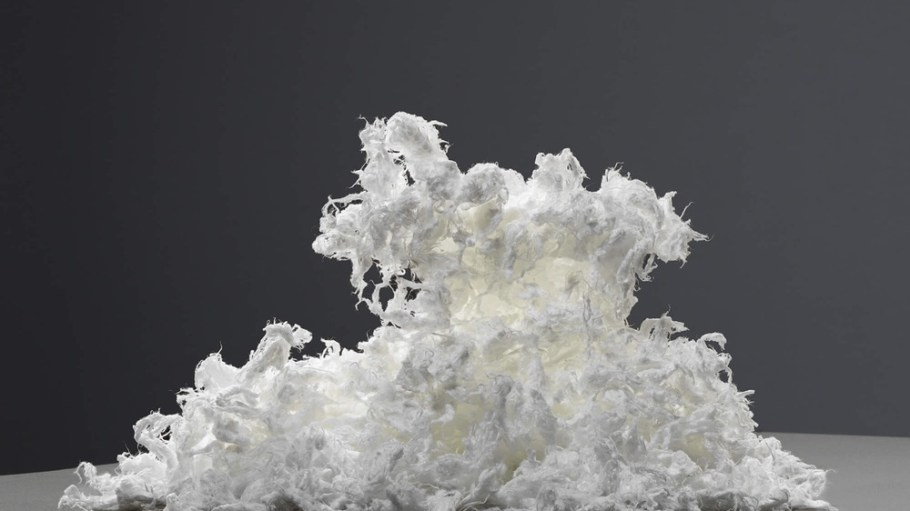
Puma is exploring the possibility of employing Renewcell’s dissolving pulp cellulose, which is derived from cotton-rich textile waste for the production of lyocell, modal, viscose, acetate and other man-made regenerated fibers that rely less on virgin forest sources as ingredients.
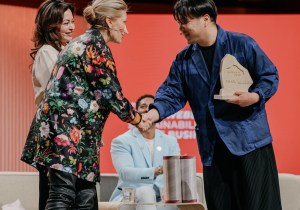
Speaking to an audience at the United Nations climate change summit in Dubai on Tuesday, Anne-Laure Descour, Puma’s chief sourcing officer, said that the sportswear giant is working with Hong Kong-based manufacturer Crystal International Group to “look at options” regarding the use of Circulose in a “specific set” of products that can be made available to consumers.
Related Stories
“It’s just a kickoff project that we have at the moment,” Descour said at a panel organized by the UN Fashion Industry Charter for Climate Action, a coalition that seeks to drive the fashion industry to net-zero greenhouse gas emissions no later than 2050. Puma and UN Climate Change debuted the platform in 2018 at the Textile Exchange Sustainability Conference in Milan and later at COP24 in Poland.
The news would be a welcome one for Renewcell, which has struggled with sales a year into its industrial-scale foray at a former paper mill in Sundsvall, Sweden.
Despite high-profile partnerships with the likes of Ganni, Levi Strauss, Zara owner Inditex and H&M Group—the last is also Renewcell’s largest shareholder with a 10.3 percent stake—the Stockholm-headquartered firm has labored to expand the use of Circulose beyond trial volumes and capsule collections because of the dearth of offtake agreements. A sales warning in early November triggered the ouster of CEO Patrik Lundström and sent shares careening, and its third-quarter earnings revealed that it was bleeding cash to the tune of 94.5 million Swedish kronor, or nearly $9 million.
Late last month, Renewcell announced that it would be seeking new funding as part of a strategic review. It has also been urging brands to step up, much like Inditex did recently when it committed to acquiring the first 2,000 metric tons of Circulose and responsibly harvested cellulose-blended fiber from Chinese producer Tangshan Sanyou. Without these clear signals from buyers, a Boston Consulting Group, Textile Exchange and Quantis report warned in October, the industry will face a 133 million-ton preferred fibers deficit by 2030, hampering its ability to respond to looming legislation that demands that products be made with more environmentally friendly attributes.
In November, Renewcell churned out 1,339 metric tons of Circulose with few, if any, takers. Production volumes will continue to take a hit unless this changes.
“Due to the lack of sales volumes in November, the monthly production volume was lower than the production capacity, in order not to affect cash flow negatively,” it said in a statement last week. “It is expected that the production volume for December will also be below the production capacity due to expected lower sales volumes.”
Waste is on Puma’s mind, said Descour, noting that the Re:Suede sneaker maker plans to source more cotton waste from its suppliers in Bangladesh to “put it back into production.” Some of the products that Crystal International Group makes for the Nike rival, for instance, contain 20 percent of post-production cotton offcuts.
“We also have some examples in Vietnam, where we work on waste from polyester, also to be recycled into the fabric to make new T-shirts made of waste,” Descour said. “So we have multiple actions that we’re doing together.”
Earlier this week, Puma said that it is scaling up its Re:Fibre technology, its polyester textile-to-textile recycling solution, for use in all football club and federation replica jerseys beginning next year.
“Our wish is to have 100 percent of product polyester coming from textile waste,” Descours said at the time. “Textile waste build-up in landfills is an environmental risk. Rethinking the way we produce and moving towards a more circular business model is one of the main priorities of our sustainability strategy.”
The secret to Puma’s success with making sustainable strides, in tandem with suppliers? “Collaboration, collaboration, collaboration,” she said, adding that unless buyers and factories share the same vision with a high level of transparency, “there is no way to get there.” Consensus is important, Descour said, particularly now that sustainability has moved from an “expert conversation” to a “business conversation.” Sourcing teams need to have a level of sustainability knowledge that allows them to engage with vendors about the pathways forward—“how we do business and where we are going together.”
This goes for other brands, as well. “We share Tier 2s with multiple other brands,” Descour said. “We need collaboration between them to also build a similar journey for the Tier 2s, so they don’t hear something different from my friends at H&M when they ask for something.”
Puma, she said, is working with an unnamed American university to provide sustainability education for suppliers, since the regulatory zeitgeist has increased the level of complexity not only for brands but also for manufacturers when it comes to calculating and reporting their impacts.
But Catherine Chiu, vice president of global sustainability at Crystal International Group, said that suppliers must be “proactive,” too, and not wait for stable orders from brands to “stop climate change.” Those who wait risk losing their competitive edge, she said.
“There are a lot of very good and very short investments with returns of less than two to five years,” she said. “This is good not only for carbon reductions but also [has] cost savings for manufacturers.” Chiu used solar installation as an example. The return on investment, she said, is just seven years, after which, companies “don’t have to pay anything for power.”
She has a message for brands, however. “I hope they will reward suppliers with better performance,” Chiu said.
Meanwhile, sustainable products that are more durable, easier to reuse, repair and recycle, and use less resources, energy and water are set to become the “norm,” the European Parliament said.
On Monday night, negotiators from the EU member states arrived at a new provision agreement on revising the bloc’s ecodesign framework for sustainable products, including a ban on the destruction of unsold clothing, clothing accessories and footwear two years after the law enters into force, or six for medium-sized enterprises. Now the parties have to formally approve the agreement.
“It is time to end the model of “take, make, dispose’ that is so harmful to our planet, our health and our economy,” Italian politician Alessandra Moretti, the Member of the European Parliament spearheading the legislation, said in a statement. “New products will be designed in a way that benefits all, respects our planet and protects the environment.”
Renewcell has said that while Circulose is considered to be “more sustainable” because it is made from recycled materials and the production process requires minimal water and chemicals compared with traditional viscose, it’s also in the process of conducting a life cycle assessment using “real production data” from its plant in Sundsvall. The results are set to be published in the first quarter next year.