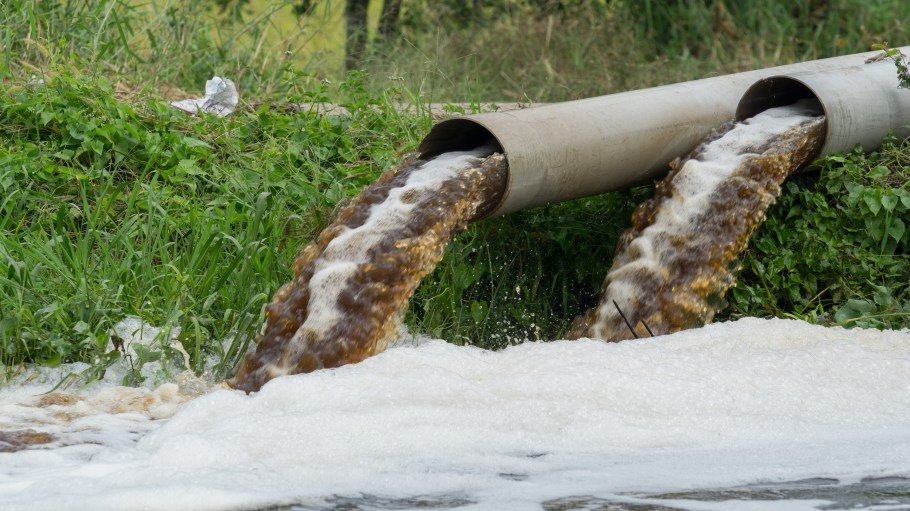
Fashion could be wading into troubled waters.
On the heels of World Water Day, Planet Tracker wants the fashion and apparel industries to know that water-related stresses and struggles could soon trickle into their supply chains.
The London-based nonprofit released a new report Tuesday detailing the potential financial risks fashion and apparel companies could inherit based on water issues.
While many companies have begun to disclose their greenhouse gas emissions—Scope 1, 2 and 3—a significantly lower number disclose any information about their water usage and pollution.
Related Stories
Previous research from the sustainable finance think tank shows that of 29 large fashion and apparel brands and retailers researched, 15 report to the Carbon Disclosure Project (CDP) on water usage. Further research showed that even among brands that do have some targets and tracking initiatives for water, most lack depth in the targets they’ve outlined.
For instance, Puma has a water target established and is a signatory to the UN Global Company CEO water mandate, it only has specific targets around consumption and discharge, according to Planet Tracker’s analysis. It does not track other facets of the problem, like water recycling and reuse or withdrawals.
Other companies, like Adidas, have specific goals around water use efficiency and consumption, but have not signed the UN Global Company CEO Water Mandate.
Some brands, like Nordstrom and Burlington, have no publicly available targets in place around water.
Climate Tracker contends that fashion and apparel companies need to begin reporting on water risks and usage as thoroughly as they do on emissions.
Richard Wielechowski, senior analyst of textiles at Planet Tracker, said that’s because many of the water risks associated with fashion and apparel come not from the brands and retailers’ operations themselves, but from the sourcing and manufacturing pieces of a company’s supply chain.
“I think we need Scope 1, 2 and 3 of water because it absolutely is the supply chain where this is a big issue. If you’re an apparel brand or retailer running stores, your water footprint of your direct operations is probably not that significant and probably not that much for the business risk,” he said. “But actually, you have extreme exposure to wet processes, cotton farmers, etc., which are your Scope 3 that you currently probably don’t really talk about in water reporting.”
Wielechowski noted that fashion and apparel are “a decade or two behind where [it] was on greenhouse gas,” despite some retailers and brands beginning to discuss the issue more extensively.
At the moment, it may be easier said than done to report on Scope 3 water impacts—Planet Tracker’s data shows that many raw materials, fibers and fabrics suppliers do not report to CDP on water.
Wielechowski said that he anticipates that could soon change as brands face pressure from investors to disclose their impacts where water is concerned. Once that happens, he said, those brands will likely begin peppering their suppliers with questions in the same way they do around greenhouse gasses.
“If you can do greenhouse gas emissions, then surely you can know how much water you’re bringing in,” he said. “There will be some areas where it’s particularly difficult…but any significant factory supplier in your supply chain is probably able to make some sort of judgment of how much water they’re consuming.”
Wielechowski’s recommendations for brands come at a time when Planet Tracker has identified some startling trends around water stress, which it defines as the “ratio of water demand to available renewable surface and groundwater supplies.”
The research’s findings show that half of global apparel manufacturing plants operate in China or Turkey, each of which have medium-to-high water stress as of 2024. In other popular locations, like India and Bangladesh, the reality has already become more stark—Bangladesh has an extremely high water stress rate, and India has a high water stress rate, which is expected to worsen by 12 percent by 2030.
North American domiciled brands are expected to fare worse than their European counterparts, if they keep their existing suppliers over time. According to the research, North American companies work with more suppliers in at-risk areas.
Wielechowski said a number of brands have historically shifted sustainability-related responsibilities off to their suppliers to solve, but that shouldn’t be the case with water. Without investment and active participation from brands, he said, progression will be more difficult.
“I think brands need to step up and accept that if they want to make a change toward more sustainable [water] practices, they need to do more in terms of supporting the supply chain,” he said.
The report estimates that if suppliers and brands don’t soon begin working toward more sustainable water use—and stronger methods for tracking it—it won’t be long until brands’ supply chains and bottom lines are put at risk.
It also notes that brands could soon face shortages if suppliers have to reduce production levels due to water stress and states that margins could be impacted if suppliers suddenly begin paying more for water or technology, then pass that cost on to brands.
Wielechowski said he believes the former could arrive in the near term.
“In a major [supplier] area…we know that it will tend to be an area as a whole that would get hit, rather than just one factory. This could be water stress or flooding—with this, you can have too much or too little. Either could seriously impact volume production in a major hub, and then suddenly your spring/summer collection, you can’t get the volumes you need. That hits your top line straight away, and that will flow through the margin obviously. That’s the risk I’d be most worried about,” he told Sourcing Journal.
If brands don’t get ahead of the problem, they likely have profit losses coming for them, according to Planet Tracker. And Wielechowski said it won’t be long until investors begin to catch on—and subsequently, demand answers.
That in mind, he recommended that brands begin with science-based targets around water, which would eventually morph into highly specific, actionable goals that brands could report on to investors.
Wielechowski said that, in the long term, providing active and potential stakeholders with additional data will likely only strengthen their trust in a brand. He said he doesn’t think early movers will be punished by investors for showing data around their water usage and pollution, even if it is lackluster at the starting point.
“I’d like to think investors are savvy enough to say, ‘OK, if you’re giving me more data, you’re a leader, and you’re not the only one exposed to this [issue],’” he said. “Longer term, being a first actor is a good thing. Historically, there’s been this problem across sustainability of, as a corporate, why put your head above the parapet—everyone say nothing, and that way no one gets dinged for not doing enough…but I would hope that investors would pretty quickly go, ‘OK, if you’re not telling me the details, I’m going to start giving you a risk premium because there’s things that you’re hiding and I’m worried about what that means.”