Material World is a weekly roundup of innovations and ideas within the materials sector, covering news from emerging biomaterials and alternative leathers to sustainable substitutes and future-proof fibers.
Sparxell x Positive Materials

Sparxell and Positive Materials have joined forces.
Related Stories
The Cambridge-based color platform technology company announced the launch of its first textile ink (derived from its dye-free pigments) in partnership with the PDS Group’s textile company.
“This textile ink launch transforms how brands can access our breakthrough technology. For too long, the textile industry had no choice other than to accept that vibrant colors meant environmental damage. Sparxell’s bio-inspired technology shatters that assumption, delivering exceptional results from plant-based cellulose,” Benjamin Droguet, founder and CEO of Sparxell, said. “This is just the beginning—our vision is to make bio-inspired color technology the new standard across fashion, proving that high performance and working in harmony with nature are perfectly aligned.”
Sparxell’s textile ink is “available from the end of June,” with printing orders processed through Positive Materials. Partnership rollout includes an all-over printed cotton jersey featuring Sparxell’s technology, available starting in September in European markets.
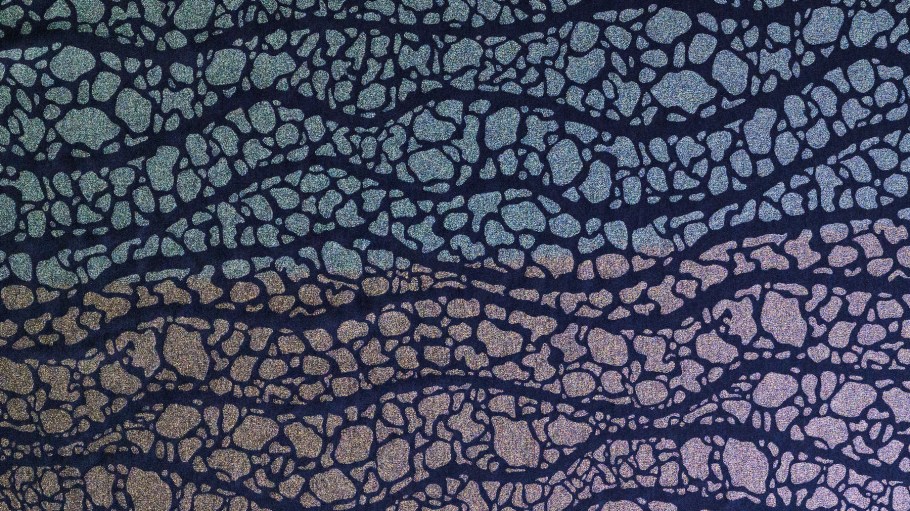
The spin-out startup’s textile ink yokes the same structural color principles found in Morpho butterfly wings, “engineering plant-based cellulose at the microscale to create vibrant colors through light manipulation rather than chemical formulas.”
Positive Materials supports the validation and scale-up of Sparxell’s breakthrough, the partners said, by integrating it into its existing production infrastructure—delivering the manufacturing expertise and operational capacity needed to take the technology from prototype to production-ready. On Sparxell’s side, the team can then scale production alongside maintaining sustainability standards during the manufacturing process.
“Rather than requiring custom development projects, fashion designers and procurement teams can now order the most sustainable colorant options out there as easily as conventional alternatives, but with the added benefit of containing 100 percent biodegradable pigments that are free from toxic chemicals,” Elsa Parente, co-CEO and CTO of Positive Materials, said. “Our collaboration with Sparxell represents exactly the kind of innovation the textile industry needs, aligning perfectly with our mission to create low-impact textiles that don’t compromise on performance.”
The launch builds on Sparxell’s recent commercial momentum, including a nearly $2 million grant from the European Innovation Council and participation in LVMH’s La Maison des Startups accelerator program.
Spiber
Spiber has landed a few new partners ahead of the trade show summer season, as Japanese biotech venture company announced its partnerships with Manifattura Sesia and Achille Pinto.
Known for adopting responsible materials and providing refined quality, the Manifattura Sesia partnership yielded yarn blends containing 30 percent Brewed Protein fiber combined with wool. The Italian knitwear producer developed three variations of its T-Gen yarn—short for “technological generation yarns.” The resulting material is soft to the touch and weighs less than pure wool.
“The combination of Spiber’s Brewed Protein fiber with a selection of Superfine Merino Wool certified RWS and Nativa makes these yarns a cutting-edge example in our search for sustainable textile solutions,” said Chiara Serra, creative director of Manifattura Sesia. “T-Gen represents another milestone in the path that Manifattura Sesia started years ago: creating ever more responsible yarns, with a quality designed to stand the test of time.”
Spiber’s partnership with Achille Pinto—an Italian premium mill known for its high-detail jacquards and printed textiles—has resulted in new collections containing 15–30 percent Brewed Protein fiber blended with silk and wool.
“These are the first and only textiles in Europe to combine Brewed Protein fiber with silk,” Spiber said. “Moreover, Achille Pinto is the first European manufacturer to demonstrate printing capabilities on Brewed Protein fabrics.”
Zegna Baruffa Lane Borgosesia (ZBLB) developed two brewed yarns, combining the properties of Brewed Protein fiber with ZBLB’s expertise in spinning and finishing merino wool. The company offers a variety of colors with 30 percent Brewed Protein fiber and 70 percent RWS wool as well.
In addition, Botto Giuseppe renewed its 100 percent Brewed Protein yarn from the previous season and remains the only mill in Europe currently offering the entirely worsted yarn. Marzotto Group has renewed its textile collection “FiberPro” from the previous season with 30 percent Brewed Protein blend fabrics and will present five new tailoring qualities. Japanese fiber distributor Takisada-Nagoya, meanwhile, will unveil over 20 new fabric collections.
All new developments and samples will be on display at Spiber’s booths at Pitti Filati and Milano Unica.
Modern Meadow
Modern Meadow has entered a development partnership with Mercedes-Benz.
The German luxury automotive brand leveraged the New Jersey-based biofabrication company’s Innovera to develop a bio-design leather alternative for Mercedes’ technology program, Concept AMG GT XX. Ideally, the partnership will further develop Modern Meadow’s Innovera for series production and, ultimately, set a new standard in vehicle interiors.
“In our development partnership with Mercedes-Benz, we have used Innovera to create a new luxury leather alternative without sacrificing aesthetics, versatility and texture,” said CEO David Williamson. “It looks and feels as good as it performs.”
Innovera achieves more than 80 percent renewable carbon content and is completely animal-free. It requires no “special preservation” or storage conditions—reducing complexity and costs—and is adaptable to any standard manufacturing process.
The leather alternative consists of a combination of chemically recycled AMG GT3 racing car tires, plant-based proteins and biopolymers. In the Concept AMG GT XX, one scrap tire provides the basis for about four square meters of Innovera. The black seat pads of the bucket seats are covered with the Nappa-look variant. The bio-design means the leather alternative is breathable, waterproof and lighter than traditional materials, of which its maximum tensile strength is twice as high. With these properties, Modern Meadow said the material represents the “new dimension of performance,” which the technology program stands for in the vehicle’s interior.
Modern Meadow’s bio-design technology used to create this leather alternative included recycled racing tires that were used in “tough competition” on AMG GT3 customer racing cars as well.
Balena Science x Stella McCartney
Balena and Stella McCartney’s partnership has hit the market.
“I mean this is insane. My shoe designer came up to me and said, ‘smell the sole.’ It’s made of cinnamon waste. It smells of cinnamon,” Stella McCartney said in a statement. “And it’s basically 100 percent plant based, recyclable and biodegradable textile. It’s a closed-loop production, so it ensures completely zero waste. It is mind-blowing.”
The next-gen material science company’s innovative material, BioCir Flex, is featured in the sustainable designer’s “highly anticipated” S-Wave Sport trainers for McCartney’s autumn 2025 collection. Balena’s BioCir Flex is a non-toxic, compostable, recyclable and biobased alternative to traditional plastics. BioCir Flex absorbs impact, responds to motion, is as durable as TPU and as flexible as rubber.
It’s dyed with natural cinnamon, too.
“This collaboration represents more than just a partnership, it’s a shared commitment to shaping a future where materials are truly circular, sustainable, and high-performance,” said David Roubach, founder and CEO of Balena Science. “Seeing BioCir Flex brought to life in a Stella McCartney design, and now available for consumers worldwide, is a milestone I could only dream of when we began this journey. Stella has long been a beacon of responsibility and innovation in fashion, and we’re proud to help push the industry forward together.”