Material World is a weekly roundup of innovations and ideas within the materials sector, covering news from emerging biomaterials and alternative leathers to sustainable substitutes and future-proof fibers.
Rheom Materials

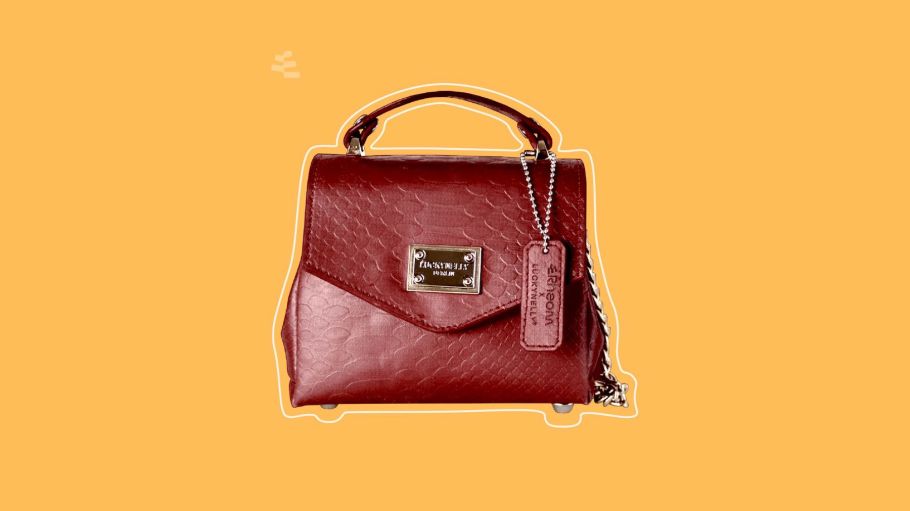
Next-gen startup Rheom Materials teamed with Berlin-based brand LuckyNelly to create the Eden bag. Crafted with a custom version of Rheom’s Shorai material in a merlot hue embossed with a rigid crocodile pattern, the purse symbolizes reaching a paradise—or Eden—of sustainable luxury.
Related Stories
“This collaboration came to fruition while sharing some Glühwein over the dinner table,” said Megan Beck, business development manager at Rheom Materials. “Seeing the passion that Christine had for bringing sustainable products to market sparked the inspiration to develop this custom material. Working with LuckyNelly is and always will be a pleasure.”
Rheom’s leather alternative, Shorai, contains 93 percent USDA-certified biobased content. Inspired by the Japanese word for “future,” Shorai is extruded as a continuous sheet and achieves an 80 percent reduction in carbon footprint compared to synthetic leather. The fiber is from natural materials, such as fermentation products, biomass derivatives, minerals and clays.
“A designer’s dream is to create something truly groundbreaking—something that pushes the boundaries of fashion and sustainability. I am beyond grateful to Rheom Materials for entrusting me with their pioneering next-gen material, allowing me to bring this vision to life,” Christine Rochlitz, founder of LuckyNelly, said. “Collaborating with such an innovative brand has been an inspiring journey, proving that luxury and ethics can merge seamlessly. Thank you, Rheom, for your trust, your innovation, and for shaping the future of sustainable fashion with us. This is just the beginning!”
Ambercycle
Dyed polyester yarn manufacturer Zhejiang Huilong New Materials has entered into a partnership with Ambercycle to scale circular textile materials.
That likely include’s the Los Angeles-based material sciences company’s circular polyester, Cycora. Using advanced molecular regeneration technology, the solution purifies regenerated PET before its reconstituted into virgin-grade pellets.
“Working with Huilong will allow us to significantly expand our impact, enabling us to meet the growing demand for circular materials in the global fashion industry,” said Shay Sethi, co-founder and CEO of Ambercycle. “Together, we are building the future of sustainable fashion.”
The partnership, the duo said, reflects a “shared commitment to advancing sustainable solutions” at scale—solving for the biggest hurdle that material innovators face. Huilong, already known for its ecologically-mindful yarn, is doubling down on its commitment to sustainability with plans of integrating next-generation circular materials into the mix.
“As a company with over two decades of expertise in sustainable materials, we are excited to partner with Ambercycle to bring innovative circular solutions to market,” said chairman Shen Shunhua of Huilong. “This collaboration represents a significant step in driving industry-wide change toward greener and more sustainable textile production.”
MyGroup
British waste management firm MyGroup has begun a textile production and manufacturing proof-of-concept in Sri Lanka, which is intended to empower local communities while contributing to a sustainable supply chain. The multi-faceted initiative is led by the company’s ReFactory arm and will extend across the North West, North Central, Uva and Eastern provinces of Sir Lanka.
“As the seeds are planted—both literally and figuratively—on our Sri Lanka project, MyGroup is forging a new path for planet-friendly textiles production that supports skilled artisans, particularly women, working in traditional local labor settings, while preserving the rich cultural heritage of this wonderful country,” Steve Carrie, MyGroup’s group director, said. “Together with our drive to rid the country’s beaches of waste plastic, we hope to create long-term, positive changes in communities and natural ecosystems while creating products with a story—unlocking new commercial opportunities in markets where authenticity, sustainability and social impact drive consumer choice.”
It aims to reintroduce cotton cultivation in the country for the first time since the 1970s, supporting traditional artisan skills and techniques in communities and driving planet-friendly fabric production and treatment innovation. Regarding the latter, the ReFactory team partnered with the Sri Lanka arm of Fibershed, a global non-profit consultancy focused on sustainable, localized systems for producing textiles and clothing.
“We at Fibershed Sri Lanka warmly welcome international brands to collaborate with us in revitalizing the nation’s textile and fashion heritage,” said Thilina Premjayanth, founder of Fibershed Sri Lanka. “Our partnership with MyGroup exemplifies our commitment to a broad spectrum of innovative projects that prioritize climate-beneficial regenerative agriculture, sustainable practices and community empowerment.”
MyGroup secured land in the Monaragala District of Uva province, where the company plans to grow and cultivate regenerative cotton in an effort to re-establish the industry, which collapsed in the late ’70s. The initiative will incorporate regenerative agriculture techniques powered by green energy. Solar-powered machinery for ginning and spinning the cultivated cotton into yarn will be on-site in an effort to prove that these processes can be de-centralized from urban areas to the “benefit of local communities and rural economies.”
“This collaboration between MyGroup and Fibershed Sri Lanka is a shining example of how global partnerships can drive prosperity for our nation. By combining innovative projects like climate-beneficial regenerative agriculture and handloom with the empowerment of local artisans, notably women, not only does this initiative preserve Sri Lanka’s rich cultural heritage but also revitalizes our industries,” Neranjala Karunaratne, regional director, department of industrial development, local government authority, North Western Province, Sri Lanka, said. “These efforts will contribute to sustainable economic growth, enhance the livelihoods of our communities and position Sri Lanka as a leader in ethical and eco-friendly production on the global stage.”
In collaboration with Fibershed Sir Lanka and the local government administration, MyGroup’s ReFactory team will work to support and improve working conditions across skills like natural dyeing and handloom weaving as well as reed and rush weaving.
The company hopes the initiative will demonstrate the “art of the possible” regarding reducing waste and fostering circularity. Meeting such goals aligns with MyGroup’s commitment to the Waste and Resources Action Program (WRAP) ’s Textiles 2030 voluntary agreement.
“As a signatory of WRAP’s Textiles 2030 voluntary agreement, we welcome this development in Sri Lanka from MyGroup which will hope to benefit the local environment, community and economy,” Sophie Scanlon, specialist at WRAP, said. “Implementation of regenerative cotton practices and Just Transitions principles are complex, with many technical and economic factors to be considered, but engaging with local communities is key to the success of such projects.”
MycoWorks
Biomaterials technology company MycoWorks announced that its flagship mycelium material, Reishi, has hit the luxury market. Customers can now purchase Fine Mycelium materials directly with the launch of the company’s e-commerce site as well.
The company’s San Francisco-based innovation center and Spanish tannery in Igualada—a region known for its traditional leather tanning technique—have collaborated to roll out what Mycoworks is calling its Rei-Tanning technology.
The formula enhances the Reishi sheets’ performance consistency, which is necessary for the production of luxury goods with delicate construction techniques, including “stitch-and-turn” and edge applications. During this “nourishing process,” the sheets are treated for desired properties, like fullness and softness, as well as durability and resistance to water. As Reishi is currently available—at scale—specific re-tanning guidelines are available under license for use by clients’ facilities, MycoWorks said. The Rei-Tanning process in particular helps “unlock” new applications within the luxury sector, which has struggled to incorporate biomaterials in the past due to such specific standards.
In fact, Reishi’s recent performance results revealed the material surpassed several luxury leather benchmarks.
Reishi with Rei-Tanning achieved new standards in five categories, as validated by third-party testing. Those qualitative evaluation areas include Bally Flex resistance at 20,000 cycles, Martindale Abrasion Resistance until 25,600 cycles, colorfastness (dye transfer) passed the 200 cycles mark for dry rub tests, aging test at 50 degrees Celsius and 90 percent R.H. passed, and Reishi’s finish adhesion reached 0.5N/mm.
Regarding the company’s e-commerce platform, the online site has multiple options available. This includes the Reishi Sample Kit with swatches of material, single Reishi sheet purchases (of which up to five can be ordered per SKU) and large orders ranging from 15-50 sheets of Reishi per SKU.
Toray Industries
Toray Industries announced a breakthrough in recycling nylon 66—a popular polyamide used by the textile and plastic industries.
The Tokyo-based company recently developed a proprietary depolymerization technology using subcritical water (aka water in a high-temperature, high-pressure state) to depolymerize resin quickly before recovering it as a raw monomer material.
The technology and advanced materials firm will develop comprehensive nylon recycling technologies for both nylon 6 and nylon 66. It plans to broaden its chemical-recycled technologies beyond apparel and automotive materials to other industrial applications in pursuit of creating a circular economy.
Aligned with the group’s sustainability vision for 2050, Toray will keep undertaking R&D to realize a “sustainable, recycling-oriented society,” as part of the company’s efforts to realize its corporate philosophy of “contributing to society through the creation of new value with innovative ideas, technologies and products.”
Birla Cellulose
Birla Cellulose, the cellulosic fibers division of Grasim Industries, has signed a joint development agreement with LNJ Bhilwara Group to explore functional textiles with graphene.
Graphene—a single layer of carbon atoms in a hexagonal lattice—is known for its strength, conductivity and lightweight properties. Under this collaboration with the group, consisting of textile manufacturer RSWM Limited and innovation-driven venture TACC Limited, the partners will integrate graphene into fabrics for enhanced durability and performance.
TACC Limited will supply graphene derivatives to Birla Cellulose, which will then integrate into the production of viscose fibers. RSWM Limited will then use the graphene-enhanced viscose fibers for textile manufacturing.