Material World is a weekly roundup of innovations and ideas within the materials sector, covering news from emerging biomaterials and alternative leathers to sustainable substitutes and future-proof fibers.
Lenzing

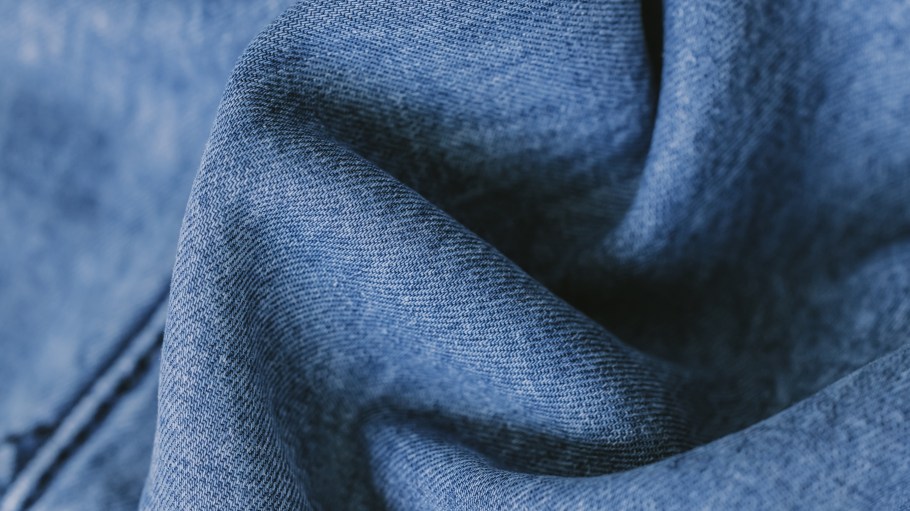
The Lenzing Group has officially launched Tencel Lyocell HV100: a new fiber innovation developed in response to value chain partners seeking textured aesthetics inspired by natural fibers. The material uses Variocut technology to create deliberate variations in fiber length within the bale—producing a textured, natural look on the final product.
Related Stories
“Tencel Lyocell HV100 redefines what regenerated cellulosic fibers can achieve,” said Rohit Aggarwal, CEO of Lenzing Group. “It comes at a crucial time as the industry faces a widening gap between fiber demand and supply. As the textile industry adapts to meet increasing demand for natural aesthetics and more sustainable solutions, Tencel Lyocell HV100 provides a unique answer to both. It marks a meaningful step forward in our commitment to helping partners and customers continue to thrive in a rapidly evolving market, while addressing key environmental priorities such as resource efficiency.”
Inherently, Tencel Lyocell HV100 has the environmental benefits and consistent quality of the group’s cellulosic fiber offerings, Lenzing said. Through controlled variation in staple lengths, the HV100 fibers create the subtle irregularities in the fabric, as demonstrated in denim applications, offering new possibilities in warp yarns—otherwise traditionally cotton-dominated—using the processing efficiency that manufacturers need.
“Sustainability conversations with our partners consistently return to a central question: how can we reduce environmental impact while fostering design possibilities?” asked Krishna Manda, vice president of corporate sustainability at Lenzing. “Tencel Lyocell HV100 provides one solution by combining the resource efficiency of our closed-loop production, which results in at least 50 percent less water consumption and carbon emissions than generic lyocell, with the aesthetic versatility our partners need to differentiate their products.”
Beyond denim, trials in apparel and home textile applications found further potential for Lyocell HV100. This versatility means manufacturers can fine-tune texture with flexible blending ratios—for applications like structured chinos and soft home furnishings—while maintaining the moisture control and biodegradability characteristics inherent to Tencel fibers.
“From a technical standpoint, Tencel Lyocell HV100 allows us to innovate and co-create with our mill partners in new ways,” said Florian Heubrandner, vice president global business management textiles at Lenzing. “The controlled variation opens up possibilities for yarns and fabrics that weren’t previously achievable with Lyocell. We’re already seeing innovative approaches from different markets that suggest significant potential for product differentiation.”
The Tencel Lyocell HV100 fibers will be showcased at the Lenzing booth during Kingpins Amsterdam, Oct. 15-16, alongside over a dozen mill partners that will feature fabrics made with the new fibers at their respective booths.
Kering
Launched in 2018 by Kering and Plug and Play China, the Kering Generation Award aims to identify and support startups that drive sustainable innovation in the fashion and beauty industries. This year’s edition, themed “Pioneering Water Positive Impact,” explores innovation around water stewardship across the luxury industry’s value chain.
In collaboration with Tsinghua X-Lab, a university-based education platform, Kering’s sustainability experts and the China Advisory Council selected 10 projects—out of over 200 submissions—to participate in a closed-door Acceleration Camp. The following Pitch Day showcased industry-crossing solutions like aquatic ecosystem protection, fashion and beauty raw materials, waterless dyeing, water-saving and energy-saving manufacturing, wastewater reduction and treatment, as well as microplastic and microfiber detection.
“We are proud to partner with Tsinghua x-lab through this year’s award to fuel the growth of the youth entrepreneurship community,” said Jinqing Cai, president of Kering Greater China. “The startups competing for this award have shown exceptional business insight, innovation and a strong commitment to sustainability.”
Daosheng Synbiology replaces chemical dyes with synthetic ones to reduce water pollution. Its industrial-scale synthetic indigo production that uses a proprietary bacterial strain for world-leading efficiency.
Exponent Envirotech is a technology startup that previously teamed with Lenzing on Ecohues: a waterless dyeing technology for wood-based cellulosic fibers, including cotton and linen yarns, that uses a proprietary non-aqueous solution to reduce consumption by 95 percent and nearly eliminate wastewater discharge.
Green Universe leverages a silicon-based cyclic compound as a dyeing medium to power waterless and water-saving processes for raw material production. InterPhase, meanwhile, leverages 3D textile and AI-assisted design to enable efficient wastewater treatment and recycling and the extraction of valuable resources.
Jiayuan Biotech industrializes pure chitosan fiber from discarded crab shells. Jintang Textile provides consulting services and a technology package adopting self-developed new material and wastewater processing solutions for the pre-treatment stage of dyeing.
Ocean Shield develops an environmentally friendly macromolecular sunscreen ingredient while Purvée Technology’s device can detect microplastics and microfibers using smart hardware equipped with infrared spectroscopy and AI algorithms.
Qs SynBio is powered by a proprietary AI large-language model (LLM) that can identify and isolate bacterial strains to develop tailored water treatment solutions. Yuantian Biotechnology is focused on enabling the circular utilization of PET plastics and post-consumer polyester textiles through enzyme-catalyzed degradation technology, the luxury conglomerate said.
The award ceremony will take place on Oct. 16, during Shanghai Fashion Week, held at the Museum of Art Pudong.
“At Kering, we believe that true innovation goes hand in hand with sustainability,” chief sustainability and institutional affairs officer Marie-Claire Daveu said. “This year’s Chinese finalists have demonstrated not only strong technological potential, but also a shared commitment to shaping a more responsible and regenerative future.”
Fulgar x Sweaty Betty
Italian man-made fiber manufacturer Fulgar has re-teamed with Sweaty Betty, this time for 10 pieces from the British activewear brand’s Athlete collection.
“We always aim for the best in our collections,” Fiona Hannam, head of product technology at Sweaty Betty, said. “That’s why we chose to rely on Fulgar and its cutting-edge yarn Q-Cycle, which embodies the highest standards of quality and sustainability.”
Q-Cycle is a new-generation polyamide 6.6 yarn made through a certified mass balance process. That process uses an entirely alternative raw material: pyrolysis oil, as obtained from the recycling of end-of-life or disused tires.
In addition to its technical performance attributes—including lightness, durability and elasticity comparable to virgin polyamide—Q-Cycle has a lower environmental impact, too. International certifications and labels such as RCS by Textile Exchange and Oeko-Tex, among others, attest to its sustainability credentials. The versatile material can be combined and processed with a variety of fibers, ideal for textile applications across performance and ready-to-wear.
“We are proud to support Sweaty Betty on its journey towards increasingly responsible collections, thanks to the potential of our yarns,” Daniela Antunes, marketing manager at Fulgar, said. “We hope this will be the first step towards an even stronger collaboration; our portfolio includes not only sustainable yarns, but also high-performance ones.”
Hyosung x Speedo
Speedo has launched an outdoor swimwear range made with Hyosung’s GRS and RCS-certified Ocean Flex fabric.
Ocean Flex is made from an 80/20 blend of Hyosung TNC’s GRS-certified Regen Ocean—a 100 percent post-consumer nylon made from discarded fishing nets—and its RCS-certified 100 percent recycled Regen spandex. An independent third-party life cycle assessment (LCA) determined manufacturing one kilogram of Regen Ocean nylon reduced carbon emissions by 51 percent, compared to production of one kilogram of conventional nylon.
“We’ve long valued our partnership with Speedo and are proud that such an iconic brand—synonymous with swim and committed to protecting our waters—has chosen our certified recycled textile innovation for its Ocean Flex swimwear range,” said Laura Nilo, Hyosung’s U.S. marketing manager and West Coast lead.
G. Schneider
Italian manufacturer of wool tops G. Schneider was honored with the Climate Action Award at the CNMI Sustainable Fashion Awards 2025. The ceremony was hosted by Camera Nazionale della Moda Italiana in collaboration with the United Nations Alliance for Sustainable Fashion, with the support of the municipality of Milan.
The award was presented by Paola Deda, chairperson of the UN Alliance for Sustainable Fashion and director of UNECE. Giovanni Schneider and Laura Ros, chairman and CEO of G. Schneider, accepted the award on stage for the company’s climate strategies and long-term commitment to environmental stewardship. At the heart of this achievement lies the Sanin Project—a model of collaboration, responsibility and regenerative impact.
Launched in 2007 in the Argentinian Andes, the Sanin Project represents an 18-year journey dedicated to biodiversity conservation, community empowerment and the responsible sourcing of natural fibers. Beyond species protection, the project also advances ethical shearing practices, fiber contribution programs supporting regional artisan communities, as well as a transparent and traceable supply chain for vicuña fiber.