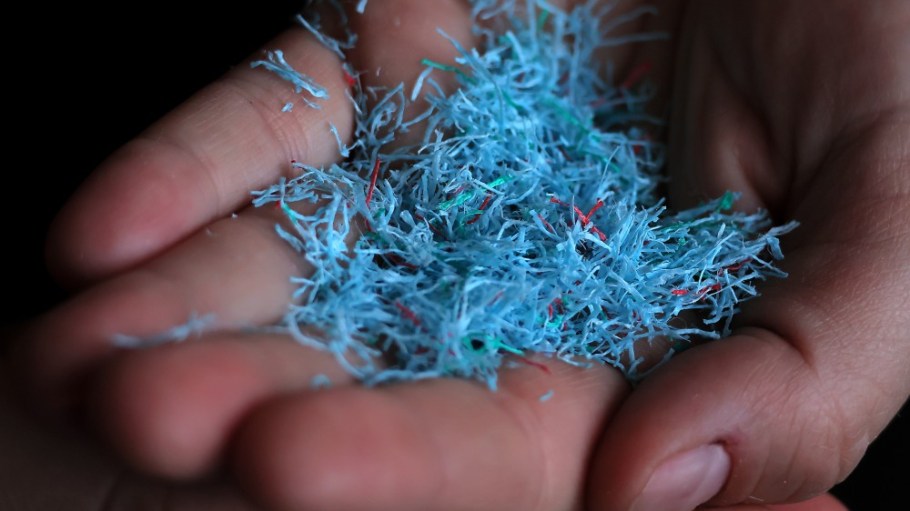
The United States Department of Health and Human Services (HHS) is investigating the ways that toxic microplastics build up within the human body and looking for ways to guard consumers against their health impacts.
The The Advanced Research Projects Agency for Health (ARPA-H), an agency within HHS, announced an initiative dubbed the Systematic Targeting Of MicroPlastics, or STOMP, last week. The $144 million program will create a framework for measuring microplastics and nanoplastics (MNPs) in the bodies of people and researching their effects.
Related Stories
“Today, HHS is taking decisive action to confront microplastics as a growing threat to human health,” said HHS Secretary Robert F. Kennedy, Jr. “Americans deserve clear answers about how microplastics in their bodies affect their health. Through ARPA-H’s STOMP program, we will measure microplastic exposure, identify sources of risk, and develop targeted solutions to reduce it.”
Often nearly invisible to the naked eye, microplastics have insidiously found their way into people’s lungs, arterial plaques and brains through food, air and water, researchers have found. Animal case studies of the phenomenon show definitively that microplastics cause disease, while human studies show a high correlation.
“Yet to date, we are still remarkably in the dark. We don’t have a precise way to measure microplastics in our organs, nor do we understand which ones are affecting us in what ways—because each plastic works differently,” ARPA-H said in a statement. Because standardized measurement methods for the problem have been elusive, scientists have been unable to develop interventions that are precise and safe.
“Microplastics are in every organ we look at—in ourselves and in our children. But we don’t know which ones are harmful or how to remove them,” said Alicia Jackson, Ph.D., ARPA-H Director. “Nobody wants unknown particles accumulating in their body. The field is working in the dark. STOMP is turning on the lights.”
Led by program managers Drs. Ileana Hancu and Shannon Greene, STOMP aims to create tools that will be affordable and accessible, reaching the masses and helping to lower the downstream costs of treating and preventing microplastic-related disease. The program’s three technical focus areas will be split into two phases—first, measurement and mechanism, and second, removal.
“A key first step is to measure microplastics accurately and understand how they reach different organ systems,” Hancu explained “So we must establish a solid, shared foundation for precise measurement and mapping.”
During Phase One, STOMP will develop experiments to understand the effects of microplastics, including a clinical test to quantify individual microplastic burdens, with the goal of making monitoring and intervention feasible at a large scale. Measurement techniques have been both lacking and inconsistent since microplastics became a widely discussed issue, and while accumulation in human tissue is a widespread concern, there’s no current consensus on the extent of that accumulation and what it means.
The Center for Disease Control will serve as an independent validator for the methods that are developed, and the research will then yield a risk stratification mechanism for plastic materials ranking them by biological harm. This will give scientists, policymakers and industry answers as to which microplastics must be addressed most pressingly through pharmaceutical biology and bioremediation science.
“It’s physically impossible for us to completely divorce our lives from plastics. They are in everything we touch—our clothes, the materials from which we get our food and water. We need to understand how microplastics are distributed throughout the body and what harm they are causing before we can take the next leap forward to ultimately remove them and improve human health,” Greene said.