Fashion’s footprint starts long before a garment hits the laundry basket. By the time a shirt reaches the sales floor—let alone your closet—it has already left a mark upstream.
The textile industry accounts for about 20 percent of global industrial water pollution—a reminder that the environmental cost of a garment is baked in long before it hits a hanger—according to a 2018 UN Environment post cited by Princeton University and, later, the David Suzuki Foundation.
Against that backdrop, Vancouver-based Viridis Research has completed a pilot program in Dhaka, Bangladesh with H&M Group and three textile mill partners, testing its electrochemical oxidation technology on wastewater from multiple stages of the dyeing process. Founded in 2019, the British Columbia company develops systems designed to eliminate organic pollutants from textile effluent, with the goal of enabling water recycling and reuse inside factory operations.
Related Stories
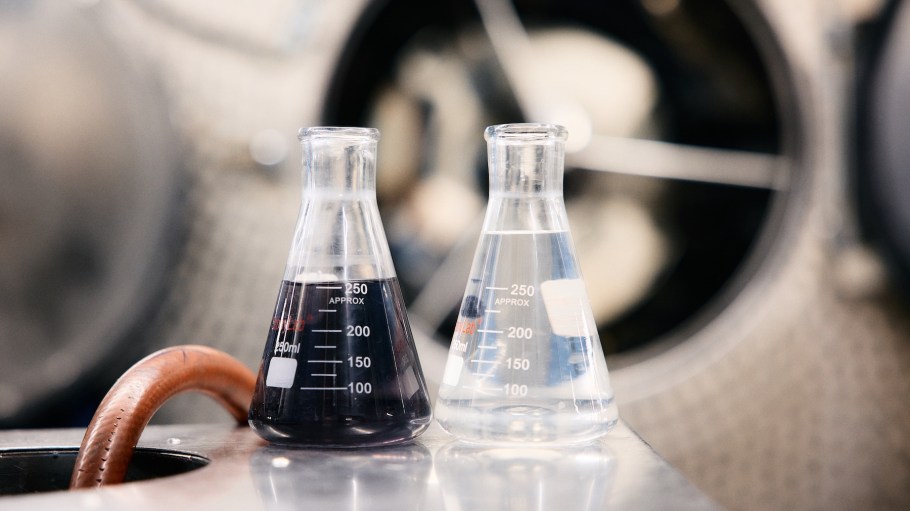
During the pilot, the system was applied to wastewater streams spanning dye baths, equalization tanks, conventional treatment plant output and reverse osmosis rejection—in other words, the full spectrum of a dyehouse’s dirtiest flows. Viridis said the trial reduced color and organic contamination to pre-set thresholds, reporting 99.56 to 99.94 percent color removal from dye baths. The company also said it was able to recover certain processing chemicals and reuse treated water in subsequent dye cycles.
The pitch rests on two levers; one cuts freshwater withdrawal by recycling dyehouse water back into production, while the other reduces discharge pollution by breaking down dyes and auxiliaries at the source.
“It was inspiring to witness the leadership our textile mill partners are showing in driving sustainable business practices and water conservation efforts,” said Macarena Cataldo, CEO and founder of Viridis. “Working alongside H&M Group and these mill partners, we have demonstrated that a more responsible future for fashion is within reach.”
The technology relies on electrochemical oxidation to break down organic pollutants—including dyes, surfactants and auxiliary chemicals—into simpler compounds through a mineralization process. In a commercial setting, Viridis envisions the system intercepting wastewater before discharge, stripping out contaminants and returning treated water to production lines in a closed-loop configuration.
Cataldo framed the pilot as proof-of-concept under factory-floor conditions rather than laboratory testing.
“We set out to prove that water reuse in textile manufacturing isn’t a far-fetched dream—it’s achievable right now under real operational conditions,” she said. “This pilot program validated our approach and showcased the tangible benefits our solution can deliver for the industry.”
H&M Group characterized the trial as preliminary. Sharif Hoque, the group’s water impact lead, said the trial reflects the brand’s push to reduce freshwater use and curb pollution across its supplier base.
“The tests that were carried out, at limited scale, indicated that the reuse of water from the dyeing process could replace part of the freshwater need for the next dye batch,” Haroque said over email. “The pilot also suggested potential reductions in process salt use, including removal of color from wastewater.”
These are promising results, he wrote, but it’s too early to give an exact percentage of potential freshwater reduction in a scaled-up deployment. At present, the retailer remains in the evaluation phase and hasn’t committed to a commercial rollout.
“We are currently finalizing the economic assessment and defining next steps, so specific timelines are not yet confirmed,” Cataldo confirmed. “That said, working with H&M Group has been an extremely positive and inspiring experience.”
No external validation has been conducted to date. Moving forward, meanwhile, requires a lengthy mill-scale trial, involving suppliers and independent third-party measurement and verification, before expanding the technology to additional facilities.
“Such a trial will also support quantifying co‑benefits, such as lower pollution and potential heat recovery, assess the business case and evaluate operational requirements,” he said. That said, the technology aligns with H&M’s broader water stewardship targets in Bangladesh, given the global group’s broader strategies for less pollution and more circularity.
“If validated at scale, it could help remove color and other pollutants from textile wastewater, enable more closed‑loop water management, and recover salt for reuse, which may lower the need for chemical inputs,” he wrote. “Any scale up would be guided by evidence from larger‑scale trials and independent verification.”
Viridis said its development has been supported by a mix of Canadian public funding and accelerator programs, including the National Research Council of Canada, InnovateBC, Mitacs, CanExport and ECO Canada, alongside ecosystem partners such as the Trade Commissioner Service of Canada, Simon Fraser University’s 4D LABS, MaRS Women in Cleantech Accelerator, the University of British Columbia’s HATCH Venture Builder, Foresight Canada and VentureLAB’s Hardware Catalyst Initiative.
“H&M are engaged, collaborative partners who are genuinely committed to environmental sustainability,” Cataldo said, “We are confident that this pilot represents a strong starting point and the foundation for a larger, long-term collaboration.”