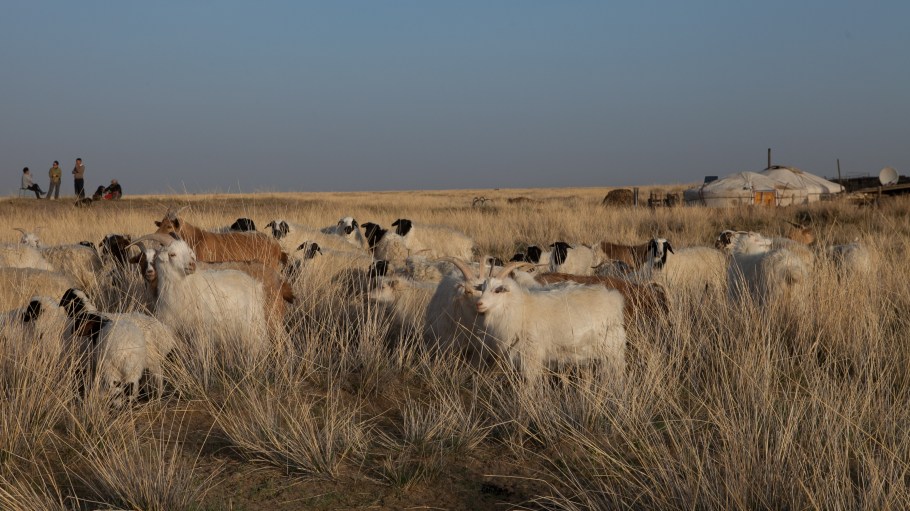
Fashion brand Everlane has pledged to support regenerative cashmere farming in Mongolia through its annual Black Friday Fund.
The company is partnering with Good Growth, a nonprofit that operates the Regenerative Cashmere Initiative in Mongolia. The program works with local communities in Mongolia, launching grazing programs in partnership with Hustai National Park. The Regenerative Cashmere Initiative’s programs benefit more than 40 herder families, 8,000 goats and 113,000 acres of grassland.
Related Stories
Everlane invests in responsibly sourced cashmere, produced through practices that protect biodiversity, support herding communities and safeguard long-term availability. The fashion brand uses a majority of recycled cashmere along with Good Cashmere Standard-certified fibers, helping ensure Everlane’s pieces are responsibly made.
Cashmere production can threaten the land that sustains the fibers when overgrazing depletes delicate grasslands. By using recycled fibers along with certified sources, Everlane reduces pressure on the land and reduces carbon emissions for the production of its products.
“Cashmere is one of our most beloved and intensive materials to produce, and we know its quality depends on healthy grasslands and thriving herding communities,” said Alfred Chang, CEO of Everlane. “By investing in regenerative grazing, we’re protecting the source of our cashmere so we can continue delivering the soft, durable, and responsibly made pieces our customers love—pieces they can feel good about wearing.”
Everlane launched the Black Friday Fund in 2014 as a way to turn the traditional shopping day into an opportunity to give back. Since its launch, the initiative has raised more than $1.57 million for environmental and social impact projects worldwide, such as Fibershed, the New Zealand Merino Company and TreePeople. The fund donates a percentage of Everlane’s Black Friday sales to designated nonprofits each year.
The Black Friday Fund initiative is just one part of the Bay Area-based fashion brand’s work toward sustainability and social responsibility. Earlier this month, the brand launched a denim repair and mending program at its Williamsburg, Brooklyn, store, running over the next three months and aiming to promote circularity.
Everlane released its third impact report his past spring, noting that 90 percent of materials used by the brand met their lower-impact, preferred standards, such as being recycled, organic, responsible or FSC-certified. Those efforts helped Everlane cut its greenhouse gas emissions by 52 percent since 2019.
Katina Boutis, senior director of sustainability and sourcing at Everlane, said the company’s Black Friday Fund designation helps it further align with those sustainability and social responsibility goals.
“Customers already know us for our innovative use of recycled cashmere and responsible investment in Good Cashmere Standard-certified cashmere,” she said. “This partnership builds on our Clean Luxury, Better for You promise to catalyze regenerative practices for the preservation and future of cashmere herding.”