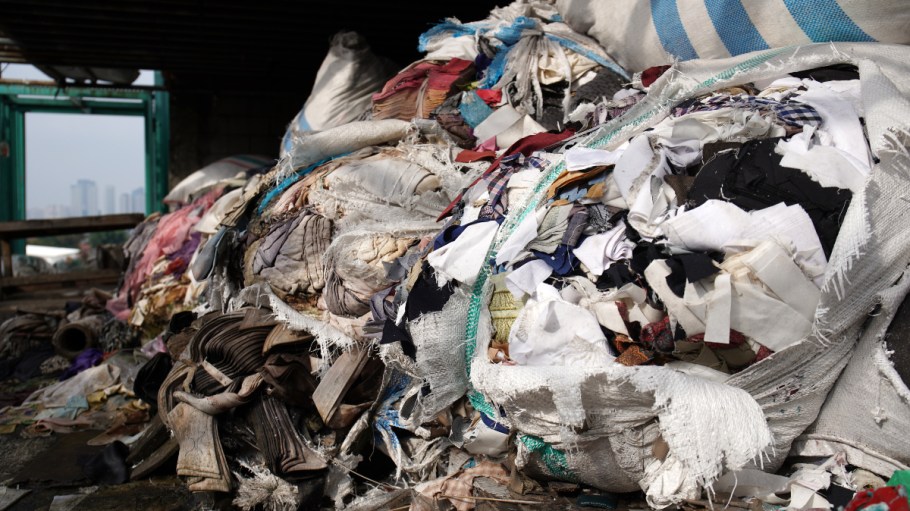
In the United States, textile waste grew 80 percent since 2000 — four times greater than the overall waste stream. To turn the tide on this troubling trend, we need a pragmatic, collaborative approach to textile recovery.
Let’s start by identifying the barriers to sustainability. A recent sustainability study named at least two: a lack of financial incentives and a lack of “waste ownership” among stakeholders. With so many participants in the value chain, it is difficult to determine who’s ultimately responsible for the recovery of textiles.
Related Stories
Textile recovery: it’s the law (?)
Some U.S. lawmakers have taken “ownership” by introducing sustainability legislation for the textile industry. In California, the Responsible Textile Recovery Act of 2023 would require producers of clothing and other textiles to implement and fund an extended producer responsibility (EPR) program. The program would enhance textile recycling, facilitate repair, and increase the reuse of clothing within the industry.
The bill aims to hold manufacturers responsible for textile recovery. Yet Ilse Metchek, president of the California Fashion Association, insists on holding consumers accountable. She says most clothing goes to landfills when people throw it away or donate it to a thrift store — where it might gather dust. “Where does it go from there?” she asks. “And why is it the manufacturer’s problem?”
Across the country, New York’s Fashion Sustainability and Social Accountability Act (the Fashion Act) would require major brands to map at least 50 percent of their supply chains as well as disclose and reduce their impacts such as greenhouse emissions. The Fashion Act also calls for more transparent and ethical labour management practices.
The Fashion Act faces criticism, such as a “lack of diversity” among the bill’s authors and the need for stronger labour provisions. Detractors also question if brands will only map the 50 percent of their supply-chain companies that put them in the best light and therefore not help reduce environmental harm.
“Mapping suppliers doesn’t necessarily get us any closer to stopping the destruction,” says Céline Semaan, founder of the Slow Factory Foundation.
A look at the EU strategy
Textile recovery in Europe faces challenges similar to that of the United States. Consumers typically discard clothing rather than reuse or donate it, and even if they do, the textile collection and sorting infrastructure is not well-established in all EU countries. Further, textile recycling technologies are costly and not widely available, yet funding for these initiatives is scarce.
Despite these challenges, the EU has developed a comprehensive plan, the Strategy for Sustainable and Circular Textiles, that can inspire U.S. leaders as they address textile waste in their country:
- Extended producer responsibility. In Europe, manufacturers are responsible for the disposal of their products, including textiles. This encourages them to design products for circularity and invest in sustainable production methods.
- Public awareness. Europe is informing consumers about textile waste and the benefits of textile recovery by launching education campaigns, incentivizing textile donations, and promoting sustainable fashion.
- Efficient collection and sorting systems, which are critical for successful textile recovery.
- Innovation and investment in research and development to improve textile recycling technology, which has led to the development of innovative recycling methods.
- Collaboration: Europe’s textile recovery strategy has been successful due to collaboration among different stakeholders, including governments, NGOs, and the private sector.
U.S. legislators are just now starting to lay the foundation of textile recovery and sustainability in their country. By studying the EU strategy today, American lawmakers can glean key insights that may help shape the U.S. policies and strategies of tomorrow.
Collaborate now to solve textile waste
The good news is we, as an industry, don’t need to wait for lawmakers. We can take ownership of textile recovery now, and we can start by collaborating. Initiatives such as the American Circular Textiles (ACT) policy group inspire such collaboration.
Led by the Circular Services Group (CSG) and Resource Recycling Systems (RRS), ACT is a coalition of leading organizations driving circularity in the U.S. Founding members include ThredUp, Rent The Runway, The RealReal, CaaStle, Thrilling, Trove, Treet, Recurate, SuperCircle, Fashionphile, Tersus, Debrand, H&M, and Reformation.
The Network Association of Uniform Manufacturers & Distributors (NAUMD) recently launched a similar initiative: the Uniform Sustainability Collaborative (USC). USC members will work together to generate ideas, participate in network groups, and share expertise — all towards the common goal of reducing uniform industrial and consumer textile waste.
It’s inspiring to see the industry “own” the problem of textile waste through initiatives like ACT and USC. As we collaborate, we’ll find new, scalable solutions for fashion circularity and, ultimately, sustainability.
Amelia Eleiter is the co-founder and CEO of Debrand Services, a provider of reverse logistics solutions for apparel and footwear brands. Along with co-founder Wes Baker, she launched Debrand to help companies extend the life of their products—and the precious resources used to make them. Debrand’s tech-enabled sortation process and comprehensive network of recommerce, recycling and responsible disposal partners offer innovative reverse logistics solutions, helping many of North America’s top apparel and footwear brands unlock the highest-value of their products by extending the life of the products and strengthening their whole supply chain to prevent waste problems before they happen.