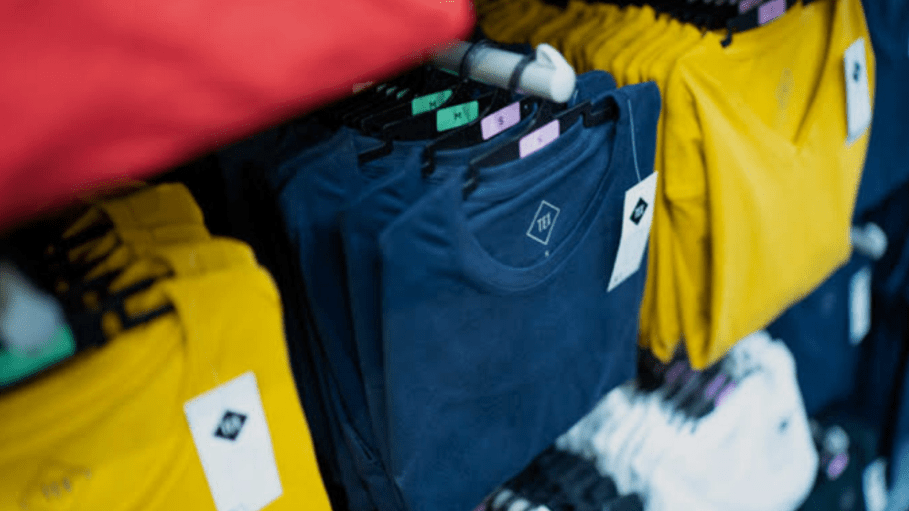
French retail giant Carrefour is making it easier for consumers to understand the environmental impact of their purchases. The company introduced labeling on nearly 70 of its private label textile products, such as t-shirts, underwear and bodysuits, outlining their environmental score.
The rollout is part of a larger initiative by the French government to provide greater transparency for consumers via environmental labeling. Carrefour’s labeling will work with the Clear Fashion app, which allows customers to scan labels to see the garment’s environmental score out of 100.
Related Stories
The environmental scores are based on Clear Fashion’s proprietary methodology that incorporates analysis of the life cycle of each product, taking into account criteria such as greenhouse gas emissions, damage to biodiversity, consumption of natural resources and consequences of pollution on the environment. Based on the same principle as the carbon score (in kg CO2e) or nutritional value (in kcal), it quantifies the environmental cost of a product by assigning it a score, expressed in impact points.
For Carrefour Tex garments evaluated to date, the average environmental cost is estimated at 542.91 points (per 100g). The higher the value, the more harmful the production and manufacturing conditions of the garment are to the planet. For example, a Tex organic cotton t-shirt scores 510 impact points (per 100g), while a fast fashion brand t-shirt sold at a similar price (non-organic) scores over 1,000 points (per 100g).
Carrefour, which is primarily a food store with more than 15,000 locations in more than 40 countries, implemented a similar program called Nutri-Score across its food offerings. Nutri-Score gives food products a numerical score based on nutritional values.
After this initial pilot, Carrefour said it plans to expand the environmental labeling system across all its textile collections.
“Through this new commitment to greater transparency, Carrefour aims to demonstrate the technical feasibility of rolling out large-scale environmental labelling for textiles and help make this score a new benchmark for consumers in the clothing sector, as the Nutri-Score has done in the food industry,” the company said in a statement.