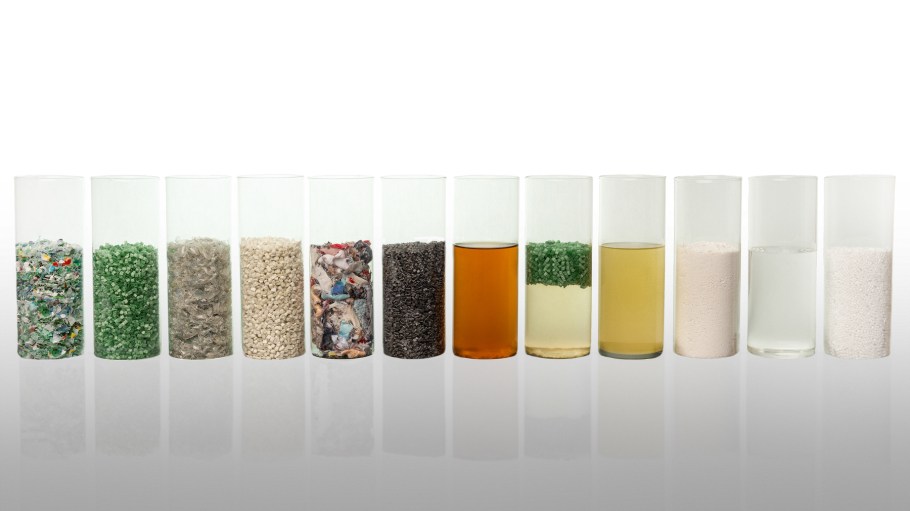
Carbios is one step closer to closing the first license for its enzymatic depolymerization technology, as the French biotechnology firm has confirmed the viability of its business model with Zhink Group subsidiary, Wankai New Materials.
Translation? With eyes on China, capital for a (conceivable) Carbios-outfitted recycling production plant in the country is on the (theoretical) table.
In the works since June 2024, the prospective partners reached a binding agreement on the main principles of their strategic collaboration: Deploying a minimum annual processing capacity of 50,000 metric tons of prepared polyethylene terephthalate (PET) waste per year.
Related Stories
“This agreement represents a key step in the international roll-out of our technology and an important milestone in the implementation of our licensing model,” said Vincent Kamel, CEO of Carbios.
While still subject to the signing of final agreements— in particular, the shareholders’ agreement and the license agreement—the effort will start by building a China-based biorecycling plant, outfitted with the next-gen company’s proprietary technology that allows for the “infinite recycling” of PET.
Carbios will “grant to this entity a licence to produce purified terephthalic acid (PTA) and mono-ethylene glycol (MEG) monomers,” which means that Carbios is legally giving this said entity—in this case, Wankai—the legal right to use its proprietary, patented enzymatic technology to break down PET plastic waste into its core chemical building blocks: PTA and MEG.
China is arguably the world’s largest PET producer; in 2021, 58 percent of the global recycled PET consumption was in Asia; China comprised 38 percent, per the June 2024 statement. Representing 61 percent of global production, the region produces 67 million tons of the popular plastic produced annually, representing 61 percent of international outputs. And, given growing demand for rPET across both the regional and global markets, China has the potential to take the lead in rPET production, Carbios said last June during the initial discussions.
As such, China is a key market for Carbios, the French biotech firm said. The agreement represents a strategic step forward for both partners, equally focused on accelerating the adoption of a circular PET industry in Asia. Furthermore, China is the primary country for turning PET into fiber, representing 78 percent of “all PET fiber transformation in the world,” the partners said.
“This cooperation with Wankai—China’s third-largest PET producer—will enable us to produce enzymatically recycled PET and thus make a concrete contribution to the transition to a more circular and low-carbon PET industry,” said Kamel.
Specializing specifically in PET and textiles, the Zhink Group produces 3 million tons of PET each year across domestic and global markets, with Wankai New Materials manufacturing and selling various versions of PET polyester. While the subsidiary’s main offerings span both bottle-grade and non-bottle-grade PET chips, the company is also involved in producing biobased and recycled PETs and has a large production capacity for PET resin, per the June statement. Carbios, meanwhile, develops and industrializes biological solutions to reinvent the lifecycle of plastics and textiles, designing enzyme-based biological processes to break down plastic and foster the circular economy.
Additionally, Wankai would make a 5 million euro ($5.8 million) investment into Carbios.
“As a result of this investment, Wankai could appoint a representative to Carbios’ board of directors,” said the companies, as shared in a superscript disclosure within the binding agreement’s public statement.
“The terms and conditions of the capital investment, particularly the financial terms, are still to be finalized in the definitive agreements. This investment will, if necessary, be subject to administrative and regulatory approvals in France and China,” per the release.
With Wankai serving as the future joint venture’s main shareholder, financing the plant’s construction will be guaranteed by the latter and is expected to break ground in the first quarter of 2026. Final agreements should be signed by the end of 2025.