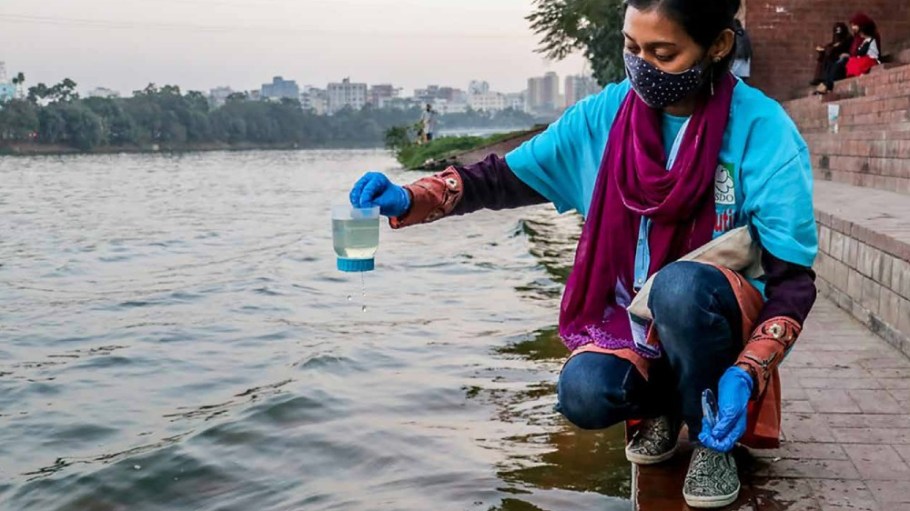
Bangladesh residents may face “significant threats” of exposure to PFAS as a result of the country’s apparel industry, a new study has found.
The “forever chemicals” have contaminated Bangladesh’s surface and tap water, according to research from the Environment and Social Development Organization (ESDO), a Bangladesh-based NGO and research body, and IPEN, a collective of 600 public interest groups in developing nations concerned with chemical and waste policies.
The research partners tested and analyzed water from 31 rivers and lakes from communities located near textile manufacturing hubs that produce clothing for brands like Benetton, C&A, Calvin Klein, H&M, Marks & Spencer, Sainsbury’s and Zara.
Related Stories
PFAS chemicals were found in 27 of the 31 surface water samples (87 percent), and in 18 of those samples (58 percent), researchers discovered chemicals that have been listed for global elimination under the Stockholm Convention. Nineteen samples representing 61 percent of the total lot tested showed PFAS levels above proposed EU regulatory limits for surface water.
Water samples taken close to textile-producing facilities contained higher concentrations of PFAS, “adding to the evidence that the textiles industry may be a significant source of PFAS water pollution,” the study found. For example, two of the waterways tested were downstream and upstream from the country’s Export Processing Zones in Dhaka and Adamjee, and the downstream samples showed higher PFAS concentrations, reinforcing the idea that the chemicals are flowing out of these facilities at a dangerous rate.
Several surface water samples showed alarmingly high PFAS concentrations, with one containing more than 310 times the proposed EU regulatory limit.
The groups also tested four tap water samples, which yielded disturbing results. Analysis indicated PFAS present in three out of the four samples taken at levels beyond the U.S. PFOA regulatory limit.
Bangladesh does not currently have its own regulatory framework for PFAS, but that doesn’t mean natural resource contamination isn’t a danger to its residents. The compounds, which scientists fear are making their way into groundwater and the food supply, have been linked to negative impacts to fertility and fetal development.
A 2022 study showed that chronic exposure in children led to elevated blood cholesterol levels, lipid imbalances that can cause cardiovascular disease, lower birth weights and reduced antibody response to some infections and vaccines. PFOS, a chemical under the PFAS umbrella, has been tied to liver damage, while PFOA, another member of the PFAS family, has been fingered for causing cancer.
It’s hard to deny that the apparel and textile sector is largely responsible for the spread of the toxic inputs, as it accounts for 50 percent of total global PFAS use and is the second largest PFAS emissions contributor on Earth.
Bangladesh may be a particularly high-risk market, given that ready-made garment (RMG) production is an essential driver of the nation’s economy. The industry accounts for 83 percent of Bangladesh’s total exports, according to the Bangladesh Garment Manufacturers and Exporters Association (BGMEA). About four million workers are employed at 3,500 factories across the country, indicating a high probability of direct exposure to PFAS.
Residents that don’t toil in factories are not necessarily safe from that exposure. Five clothing items for men, women and children purchased from retailers in Bangladesh were tested, and all were found to contain PFAS, with one garment containing suspected carcinogen PFOA.
The results of the research “add to the evidence that the textiles industry may be a significant source of PFAS water pollution, not only posing threats of PFAS exposures to residents of Bangladesh through water, food, and clothing, but also more widely due to their properties as global pollutants,” the study authors wrote.
“Based on the results of this study, ESDO and IPEN are calling on the textiles industry to phase out the use of PFAS,” they added. Policymakers also have a major role to play, as regulation is needed to institute penalties for employing the chemicals. Finally, the onus is also on the “brand-name companies” that have “tremendous market influence” to demand products free from PFAS, they wrote.