What are the friction points in recommerce?
Getting brands past them is why solutions platform involving reverse logistics was built by technology firm Arrive Recommerce Inc. The platform is aimed at making it easier for brands to resell products that are used, non-new returns, excess inventory or damaged items in a fully-branded, revenue generating resale channel. Recommerce also helps companies meet ESG goals, particularly when it comes to sustainability on the circularity front.
Related Stories
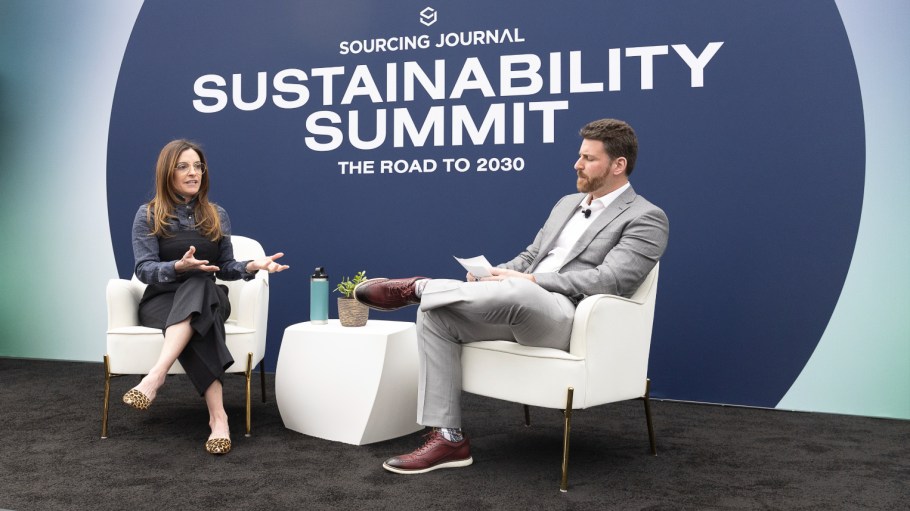
“Within the enterprise, the biggest friction we find is often cost tension.…And so, removing that cost entry is really an important part of how brands can get involved,” Mariana DiMartino, head of growth at Arrive Recommerce, said. She explained that getting out of those friction points is really about “deciding what is appropriate to recycle, and the more upscale the brand is, the more cautious the brand is. Of course, they’re going to want to sell a product in its best condition.” DiMartino spoke at Sourcing Journal’s Sustainability Summit in a chat with Glenn Taylor, SJ’s logistics editor.
DiMartino said brands need to make program decisions on what should be sellable, what they want to serve up to the recommerce customer, which could be a big opportunity for the brand, and then what should be donated or recycled.
She also provided as an example an opportunity for brands where a customer might be visiting a site and targeting a specific item, but never completes a purchase of the item. The brand could make a basic marketing decision to reach out and note that the same item is also available at its recommerce site. It’s a move that DiMartino refers to as creating “an accessibility to a new customer.”
While many brands are concerned about cannibalization, DiMartino noted that “lots of providers and brands will tell you that there’s an upside” as repurchase behavior is expect to rise, which often times means that there are “opportunities to build loyalty programs.”
“How do we incentivize customers to buy from us in our recommerce programs? You can play with your loyalty programs—offer them loyalty points, other incentives and provide that data in terms of what kind of savings they’ve actually accrued, from a cognitive standpoint,” DiMartino suggested.
She also spoke about different customer profiles that each brand has, from Gen Z shopping behavior at resale sites to the bargain hunter who is looking for an item at a third-party marketplace.
“If you can offer them a competitive price online, the same product that they might find on eBay or Poshmark or another retailer, they [will] trust the brand more,” DiMartino said, adding that nurturing that customer can help with cutting the cost associated with creating lifetime value and conversion.
DiMartino’s firm also works with brands to help them formulate a sustainabilty program for items not headed to the resale market. One example she gave is a pair of shoes that would be resold at $45 or $50, but costs $30 to $35 to get it through the steps to resale. Since that cost structure and margin might not make sense for a brand to invest in the resale process, Arrive Recommerce can work with the brand to donate the shoes through its partner network—such as Soles4Souls—in the donation space.
“Our goal is to get as much aftermarket, value-added services added to a product so that we can bring it into saleable condition. If it is not saleable, then we will make sure that we recycle it,” DiMartino said.