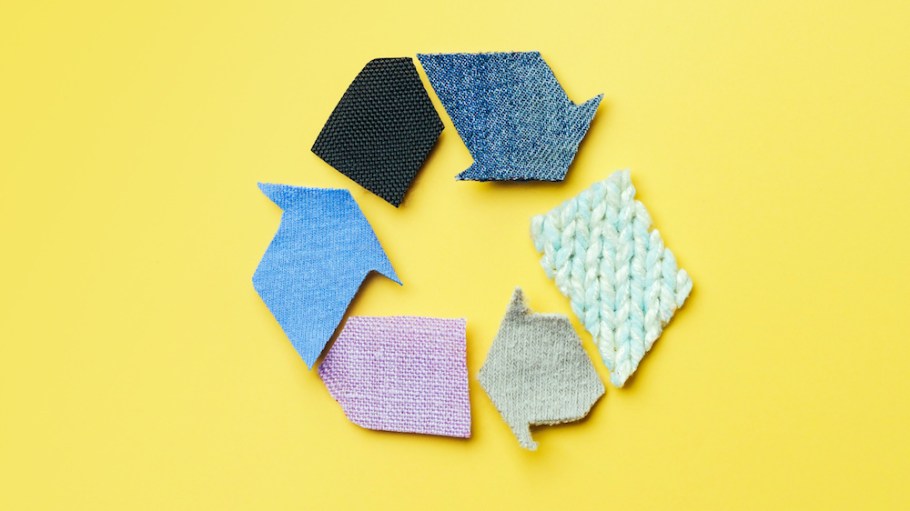
EPR for textiles is no longer a distant idea. It is in motion across the U.S., with California taking the lead in establishing and passing the first EPR law on textiles (SB 707) in 2024. In addition to California’s SB 707, New York is actively considering Senate Bill 6654, which mandates a statewide, producer-funded collection and management program for post-consumer textiles (GFA EPR Progress Report (2025). Meanwhile, Washington State is preparing similar legislation focused on large producers and importers. These developments signal clear policy momentum, but they also reveal the scale of the infrastructure challenge ahead: to support reuse at scale, collection networks and logistics systems must be significantly expanded, with textile actors and municipalities working hand-in-hand.
Related Stories
Recently, I participated in a discussion hosted by the Product Stewardship Institute (PSI) where industry leaders, policymakers and sustainability advocates spoke extensively on Extended Producer Responsibility for textiles. The more I listened to my peers and their presentations around EPR implementation, the more confident I became that reuse remains the most immediate and impactful solution to the issue of overconsumption and should be prioritized, not just treated as an afterthought.
At the forum, many conversations revolved around the feasibility of recycling playing a key role in achieving long-term circularity in the textile sector. However, at present, most recycling methods remain costly and resource-intensive, often requiring significant energy and chemical inputs to break down materials. Reuse, on the other hand, offers an immediate and practical solution. Recirculating quality items is cost-effective, better for the environment, and requires no chemicals. I believe that investing in pathways that allow textile garments to be reused, extending their life for as long as possible, must be a crucial part of how we design a more circular and sustainable textiles sector. We must ensure that there are policies that will improve the quality and durability of clothing so that it can be reused again and again.
Reuse is extremely important but remains underutilized as a solution: it can and does play a crucial role in reducing waste and saving resources, not just in the U.S., but globally. When we talk about the end of life and the circular economy, we need to ensure that we are reusing as much as possible. Reuse has many benefits; it is more water-efficient than chemical recycling (50 to 336 times, according to EuRIC), provides access to quality and affordable clothes, can help curb the problem of overproduction, serves as a means of livelihood in both the Global South and the Global North, and acts as a source of income for countries involved in the trade of secondhand clothing. What is needed is a functional collection and distribution system designed in collaboration with states and municipalities.
According to the EPA, a staggering 85 percent of clothing is still being thrown away in the U.S., rather than reused or recycled, which shows that more work needs to be done to collect unwanted and surplus textiles from the waste stream. Maximum reuse followed by recycling will get us to a circular economy, and this is where USAgain and other players in the reuse sector can step in to ensure that textile waste figures drop significantly. We operate clothes collection across thirteen U.S. states, and we’ve seen firsthand how collecting these items that would have otherwise been thrown away impacts people and planet for the better. Each year, we help divert tons of clothing, redirecting them into global markets, thereby not just diverting items from landfills but also providing quality and affordable clothing to people in the Global South.
To significantly reduce waste, we need to scale up reuse, but to do that, infrastructure is key. Expanding the number of collection drop-off points, improving logistics, and implementing policies that treat reuse as a central strategy rather than an afterthought are critical to achieving textile circularity. Textile waste is a mounting issue, and EPR alone will not solve the problem.
It is essential to have a clearer picture of the current infrastructure, a better understanding of how existing local regulations impact collection efforts, and how the system can be improved to support the successful implementation of EPR legislation.
In California, we are already working with experts and academics to help analyze the state’s textile collection infrastructure. We hope that this research will serve as a useful reference point in the development of California’s EPR program. As we continue on this journey, we do so with the knowledge that attaining textile circularity requires more than just policy change; it requires collaboration and a comprehensive understanding of the entire value chain.
Born and raised in Sweden, Mattias Wallander embarked on a journey into humanitarian work at 19. To finance his travels and pursue his passion, he accepted a position collecting secondhand in Sweden. While in Namibia, he helped establish secondhand shops to fund and initiate a reforestation project. Over the next seven years, Mattias trained and led US American volunteers in development work in Central America and Africa, learning the importance of a collective approach.
As CEO at USAgain since 2000, Mattias has played a pivotal role in fostering a robust vision. Under his leadership, the company has expanded into 12 states, implementing effective strategies to enhance textile diversion. Mattias is passionate about the increasing knowledge and understanding of the crucial choices that our generation, the Change Generation, must make for life to prevail on a livable planet.