It’s the end of an era in ethical fashion as one of the industry’s more visible labor rights watchdogs prepares to close its doors.
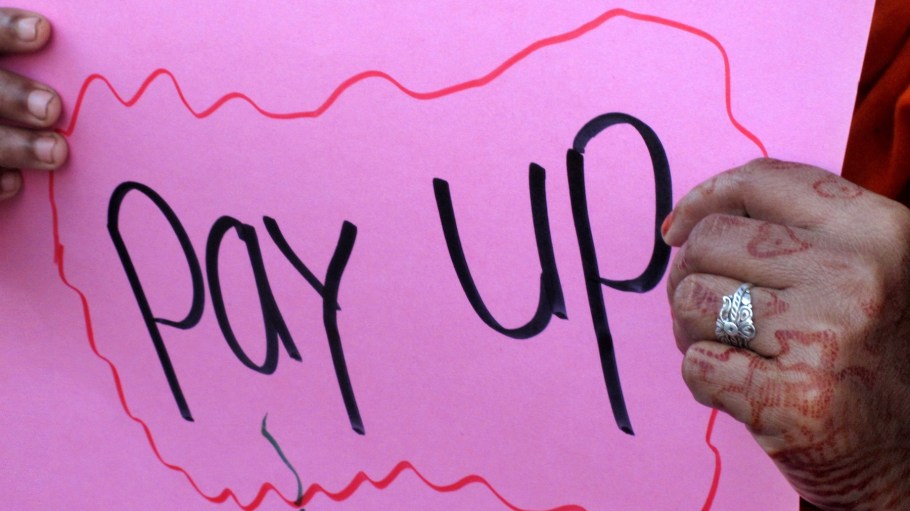
Remake, the San‑Francisco-based advocacy nonprofit behind campaigns such as #PayUp and #NoNewClothes, will end operations on Feb. 28, 2026, after its board concluded it could not secure sustainable funding.
The board made the decision in early February, describing the wind-down as intentional rather than abrupt.
Related Stories
“We want to be honest with you,” founder Ayesha Barenblat wrote in a farewell message, circulated on Remake’s social media channels. “Over the past two years, funding for labor organizing and climate justice work has declined sharply, and we’ve felt that impact deeply. The political and economic landscape has shifted, with growing pushback against the corporate accountability measures we fought so hard to establish.”
In a follow-up statement, Remake said that after the 2024 election, funding for labor organizing and climate justice work declined sharply across the nonprofit sector, a contraction it said was felt acutely within its operations.
The board explored restructuring, mergers and new revenue sources, per her post, but ultimately decided to wind down, promising to fulfill pending obligations and cancel recurring donations.
Since its 2015 founding in California, the nonprofit has worked to “unite changemakers in the fight for human rights and climate justice in the clothing industry,” according to Remake’s various social media pages. The San Francisco-based group’s efforts have centered on intersectional environmentalism: linking human rights with climate justice, chiefly focusing on the women who make our clothes.
Over the last decade, Remake became known for bridging the gap between conscious consumers and garment makers—addressing systemic issues through a strategy of “radical collaboration.”
It’s how Remake could unite unlikely allies—ranging from garment workers and unions to influencers and legislators—to promote policy change, hold brands accountable, and inspire shifts in consumer behavior. The grassroots group’s key successes include recovering over $22 billion in stolen wages through the #PayUp campaign and championing the passing of the California Garment Worker Protection Act (SB62). Reflecting on her organization’s legacy, Barenblat credited its community for its impact.
“None of this—not one campaign, not one recovered dollar, not one shifted policy—would have happened without you,” she said of the “collaborators, funders and coalition allies” who “showed up again and again with courage, compassion and conviction.”
According to Remake’s most recent IRS Form 990 filings, the organization faced mounting financial pressure in the years preceding its closure.
Remake faced a common nonprofit challenge: its freedom to evaluate 58 of the world’s largest brands also made it financially vulnerable; Remake relied on contributions for 99.6 percent of its revenue and declined all corporate funding—a structure the organization has described as a deliberate choice to preserve independence and avoid conflicts of interest. Contributions and grants accounted for $1,101,410 of its $1,105,760 in total revenue in 2024.
Net assets dropped from $521,529 in 2022 to $182,307 in 2023. Salaries and other pay ($577,494) added up to $759,801, which was 59.8 percent of all expenses.
In 2023, Remake brought in about $1.14 million but spent $1.32 million, ending up short by about $184,000. In 2024, it reported $1.10 million in revenue and $1.27 million in expenses, resulting in a deficit of $163,589. Its assets dropped from $446,075 at the end of 2023 to $239,036 a year later, and its net assets were cut in half to $173,497. Donations and grants fell to $1.10 million in 2024, and the organization continued to operate at a deficit.
Professional fundraising costs, which were $0 in 2022, jumped to $66,900 in 2024. In a follow-up statement, Remake said the increase reflected the engagement of an external fundraising partner after the departure of its development lead, calling it a standard staffing transition. With just 12 employees and a volunteer network of 2,000, Remake operated at a modest scale relative to to the global apparel industry it sought to influence.
“We explored every option: restructuring our operations, seeking merger opportunities with aligned organizations, pivoting our model, and pursuing new funding streams,” Barenblat wrote. “Despite these efforts and the tireless work of our team, we were unable to secure the sustainable funding needed to continue operating at the level our mission demands.”
That said, Remake’s Instagram account will remain active under the independent, non-affiliated management of its former director of digital media, Daisy Christophel. The organization’s free advocacy toolkits and educational resources will remain available online, too. The organization said it is directing its ambassador community to frontline partner organizations including the Garment Worker Center, Labor Education Foundation and AWAJ Foundation, and that donor or ambassador contact lists will not be transferred to any third party.