A powerful blend of nostalgia and Gen Z’s embrace of Y2K fashion has propelled True Religion back into the spotlight. But the iconic denim lifestyle brand isn’t simply replicating its past success—it’s reimagining it for a new era.
Tina Blake, the brand’s senior vice president of men’s and women’s design and brand image, has been instrumental in the brand’s growth. The former Guess and Techstyle Fashion Group designer was brought on by True Religion CEO Michael Buckley in 2022 to help revitalize and scale the women’s business, which at the time made up about 30 percent of total sales. Blake was also tasked with modernizing the brand design while staying true to its 2000s heritage. “Women represent a high-potential segment, and we knew that with stronger storytelling and a renewed focus, we could grow this business fairly rapidly,” she told SJ Denim.
Related Stories
Revamped women’s collections as well as celebrity-driven campaigns like the Holiday 2024 campaign starring Megan Thee Stallion and the launch of “Own Your True” campaign with Brazilian pop star Anitta in February have elevated the brand’s profile. The women’s segment now accounts for 45 percent of True Religion’s total sales.
“Long term, our goal is for women’s to account for 60 percent of the business. And our women’s business is helping fuel our digital business, too, which now makes up nearly half of our total revenue—up from 35 percent just three years ago,” Blake said.
Here, Blake reflects on True Religion’s recent wins and how the brand continues to connect with consumers.
What have been some of the key initiatives that helped grow the women’s business?
Tina Blake: The first major shift was taking a step back and asking, ‘What do our women customers want from us?’ I wanted to be sure we were aligned with where women’s fashion was headed as I rebuilt the product assortment. It was evident that True Religion’s female customer is confident, fashion-forward and wants to feel good in what she’s wearing, so we needed to give the women’s business its own identity. That meant a distinct voice, a clear point of view and a style personality that reflected our own customers’ mindset. Once we had that foundation—strong product, strong voice and strong marketing under our first CMO, Kristen D’Arcy, who joined a few months after I did—the needle really started to move.
What are the best-selling denim styles for women right now?
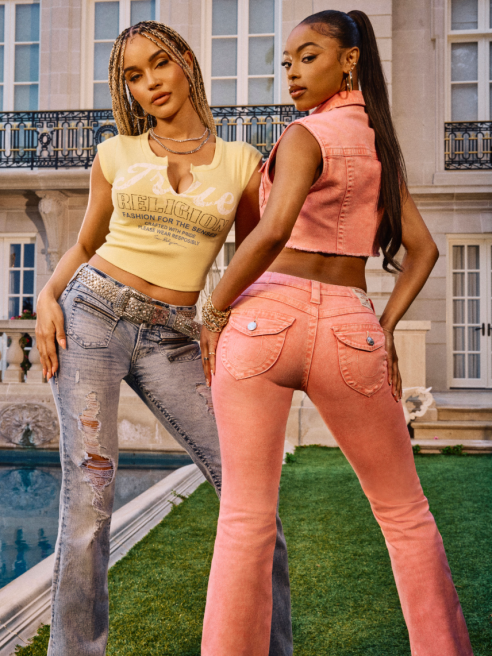
TB: It’s all about wide legs right now. A few years ago, skinnies were a much bigger of the business, but now it’s fits like the Bobbi Baggy and Becca Bootcut that are driving sales. Bootcuts and flares are coming back in a strong way, too. It’s that whole ’90s and early 2000s vibe and our women customers absolutely love it.
What’s the status of the Y2K trend in denim? And how are you planning to ensure True Religion’s staying power if this trend begins to decline?
TB: True Religion has always been about boldness and self-expression, and those values go beyond any one trend—they’re timeless. So, while we’ll keep leaning into what’s resonating now, we’re also building a women’s assortment that feels timeless and true to our customers.
That said, the Y2K trend is definitely driving a lot of what’s happening in fashion right now, especially with Gen Z. We’re seeing incredible momentum with our Y2K-style denim, like the low-rise Joey Flare and Becca Bootcut. The new consumers we’ve gained over the past few years—and continue to attract—are responding really well to our baggy styles. I think in design, to stay relevant, you always have to put the trend through the lens of the brand, and as long as we stay on top of that, our brand will stand out.

Have you noticed any surprising or innovative ways that consumers are styling True Religion pieces today? Does street style inform your design decisions?
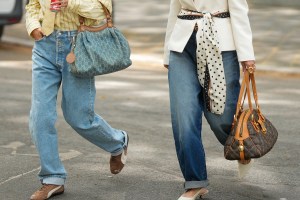
TB: Our design team constantly have their fingers on the pulse of what’s happening in street style, and are taking in all the interesting styling they see at music festivals and concerts, at flea markets and at sports events. We always think about how we can connect the dots of what we’re seeing in the outside world, but through the True Religion brand lens. We marry those observations with market research and real sales data to inform our design decisions.
The brand’s campaigns with Megan Thee Stallion and Anitta are examples of how True Religion is closely connected with celebrity culture. What’s the formula for a successful campaign, and which channels are most effective in connecting consumers to celebrity campaigns and partnerships?
TB: You have to choose the right partner for the right purpose. It’s not just about chasing a big name: for our brand, especially, it has to feel real and authentic. The goal is always to show up where our women customers are and in a way that reflects their world back to them. When we do that, then the connection hits, and the results speak for themselves.
Anitta was the perfect partner for the launch of our “Own Your True” platform during Super Bowl week, and she helped bring us to a whole new audience, not to mention make our Spicy Short an immediate top seller. And Megan? She’s family. Our women customers love her. Dressing her for Coachella felt like a full-circle moment for us. Both collaborations were home runs and our comps during those drops were significantly elevated.
True Religion received a lot of attention earlier this year when Timothée Chalamet wore its jeans and coordinates. Did this have any halo effect on the women’s side of business?
TB: That was a huge moment for the brand—Timothée is an authentic brand fan, and he was an Oscar nominee who was hitting red carpets across the globe and hosting “Saturday Night Live.” Plus, he’s known as a fashion tastemaker, so him wearing our brand brought True Religion a lot of authentic positive attention. We saw a lift in traffic across both our e-commerce and store channels, which led to a wave of customers engaging with the brand, including lots of women. We’re excited to see this momentum and domino effect continue in a very positive way.
Timothée’s stylist actually reached out recently and told us how much he genuinely loves the brand—he’s even been thrifting vintage pieces. We sent him some current styles and seeing him wear them again has been amazing. That kind of organic connection hits differently, especially with younger consumers.
How is True Religion attracting new customers?
TB: As younger generations discover True Religion, it gives us the opportunity to reintroduce iconic elements—like our signature stitching and bold logos—through a fresh, modern lens. Nostalgia isn’t about just replicating the past; it’s about reinterpreting it in a way that feels exciting and relevant today. We focus on tapping into our heritage, but making our designs look and feel fresh and relevant.
Outside of the stellar marketing moments and brand collabs, we’re attracting a whole new customer base by offering on-trend, of-the-moment styles. True Religion has so much history and heritage—marrying that with what’s resonating in the market today has really been our secret sauce when it comes to product. That balance is what’s keeping us current and driving discovery.