The introduction of unpredictable tariff policies, especially targeting goods from China, during President Donald Trump’s first 100 days in office has created significant uncertainty in the global supply chain.
CNBC and SurveyMonkey’s Small Business Confidence Index for the second quarter found that 70 percent of small businesses believe the U.S. is heading toward a recession. The trade war has driven some brands to increase their prices and others to pause their orders for the next season until there’s more clarity. Many others are planning mitigation strategies. Meanwhile, the consumer confidence index dropped 7.9 points to 86.0 in April, the lowest reading since May 2020.
Related Stories
For apparel, conversations about shopping secondhand are growing as consumers begin to revisit the savings hacks that helped their wallets during the height of the pandemic and the Great Recession.
“Secondhand is tariff-free, local and sustainable. It’s going to be an even better option than ever moving forward,” said Aarian Frye, marketing coordinator at Buffalo Exchange.
ThredUp, one of the world’s largest online resale platforms for apparel, shoes and accessories, is convinced of secondhand fashion’s impact in the future. Last week the company announced it would be removing branded resale fees and introducing a suite of enhanced services to its Resale-as-a-Service (RaaS) partners.
RaaS powers resale shops and clean put programs for brands and retailers like Madewell, Reformation and Abercrombie, helping them deliver customizable, scalable experiences to consumers. By making RaaS technology and infrastructure open source, ThredUp aims to enable more brands to build impactful circular programs.
During the company’s Q1 2025 earnings call, ThredUp co-founder and CEO James Reinhart said that if tariffs drive increases in new apparel prices, it may enhance the comparative value proposition for consumers who shop for used clothing on ThredUp.
While it’s too early to attribute any short-term changes to specific economic factors, David Eagles, chief operating officer for Goodwill Industries International, is closely monitoring the performance of the U.S. nonprofit’s retail arm. However, if prices rise, he said the value proposition of secondhand becomes even more compelling and Goodwill becomes even more essential to the communities it serves.
“Economic uncertainty often drives more people to seek value and durability, which aligns with Goodwill’s strengths. Over the last year, we have seen consumers make more intentional choices—stretching their dollars while supporting local job creation and environmental impact,” Eagles said.
“Tariffs won’t affect secondhand directly, but as the cost of living goes up as a result and as clothing prices increase, we expect more people to turn towards secondhand shops like Buffalo Exchange to sell their closet cleanout and to find the styles and deals they were used to pre-tariffs,” Frye said.
The Tucson, Ariz.-based company follows a circular business model, sourcing its secondhand merchandise directly from consumers for more than 40 stores in the U.S.
“Because we’re already such a budget-friendly option, we haven’t seen any noticeable shifts in consumer spending yet, but we’ll be interested to see what happens over the next few months,” Frye said.
In general, Buffalo Exchange’s business does well during economic downturns, as affordability becomes a higher priority for most consumers.
The retailer anticipates increased demand for secondhand high-end luxury shoes, handbags and accessories. “Many consumers are paring down excess clothing purchases in favor of capsule wardrobes, and by investing in secondhand designer accessories, they can still participate in current trends and experiment with their personal style without overspending,” Frye said.

When it comes to the price of secondhand fashion, the law of supply and demand does not apply to Goodwill. Eagles said Goodwill’s pricing remains grounded in “community affordability.”
“While we monitor trends, our goal is not to capitalize on price shifts but to ensure access to quality goods and continue funding our mission services. We balance fair pricing with the responsibility of stewarding the donated goods our community provides,” he said.
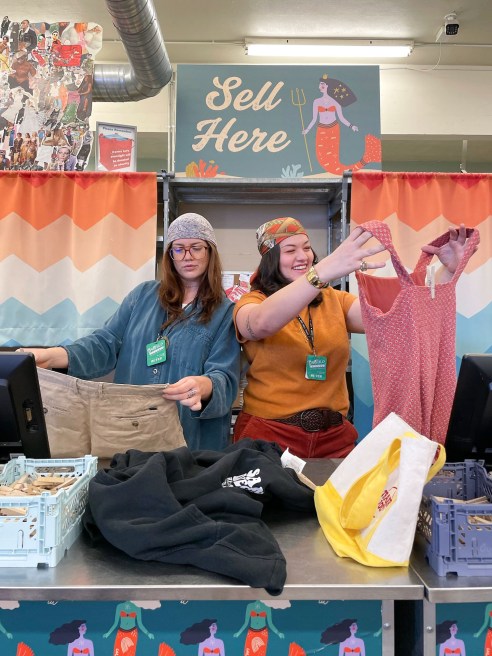
Frye doesn’t anticipate any changes to Buffalo Exchange’s “buy, sell, trade” strategy. Trained buyers at each store pay sellers 25 percent of the selling price in cash or 50 percent of the selling price in store credit for items they purchase.
“We haven’t adjusted our pricing strategy at all—we pay customers for their clothes, so we want to make sure both sellers and shoppers equally benefit from the prices we set,” Frye said. “There are plenty of resale options out there for those looking to sell and others looking to purchase, but Buffalo Exchange offers an unbeatable combination of convenience and value.”
Goodwill’s stores offer both affordability and purpose, and none of that is possible without donors who see their used goods as doing good for others, Eagles said.
“We see increased interest in secondhand shopping as an opportunity to meet rising demand while staying true to our mission—providing affordable goods and funding job training and employment services in communities across the country. Thanks to the generosity of our donors, we are uniquely positioned to serve as both a safety net and a stepping-stone, while also advancing sustainability by keeping usable goods in circulation and out of landfills,” he said.
While community donations remain the foundation of Goodwill’s model, the retailer is exploring other channels that could help meet an increase in demand for goods. Eagles said Goodwill is expanding innovative supply partnerships with brands and producers who are increasingly seeking scalable, responsible solutions for their inventory.
“Their supply chains often end where ours begins—and that creates a powerful opportunity to extend product life and reduce waste while providing more local community good,” he said.
Secondhand retailers are watching how tariffs may impact other aspects of operating a business such as fuel and the packing and transporting of their goods.
“If we see prices rise, we will manage those pressures carefully. Our focus remains on using every donation and every sale to help someone prepare for and succeed in the workforce, while also contributing to a more circular economy,” Eagle said.
According to Frye, Buffalo Exchange faces some unavoidable extra expenses, such as the cost of shipping clothing from full-price stores to outlet locations in places like Nogales, Ariz. and San Antonio, Texas. The company’s strategy of sourcing clothing locally—by having each store buy from its surrounding community—helps stabilize overall costs.
Frye maintains that shopping secondhand isn’t just a trend or a result of financial uncertainty, and rising retail prices highlight what Buffalo Exchange’s longtime customers already know: they can find high-quality, desirable items for much less than retail.
However, the relentless pace of unprecedented events in recent years has highlighted the need for alternatives to traditional retail. In times of uncertainty, secondhand shopping offers consumers and retailers stability and resilience.
Buffalo Exchange is exploring ways to make shopping and selling easier, including recently introducing a digital waitlist system to make selling more convenient.
“We always have a steady and reliable stream of sellers, but we are exploring new ways to connect with the communities we operate in to make secondhand and sustainability accessible to all. We’re beginning to experiment with on-site selling events at student housing complexes for university students,” Frye said.
During challenging economic times, Goodwill plays a vital role in supporting individuals and communities through its mission-driven services.
“What we’re seeing is an increased awareness of the value of reuse—and the role donors play in strengthening local communities. If we see prices rise, it reminds people that secondhand is smart, sustainable, and socially impactful,” Eagles said.
Goodwill stands ready to meet that growing demand, not just by offering affordable goods, but by transforming donations into workforce opportunities and by partnering with businesses to create more sustainable supply chain solutions at scale.
Goodwill’s donated goods retail business supports one of the largest job training and employment services networks in the U.S. Every purchase helps fund programs that provide hands-on skills training, career navigation, and support for individuals overcoming barriers to work, helping more people get back on their feet and thrive. By choosing Goodwill, Eagles said shoppers not only save money, they also contribute to a stronger, more resilient workforce.
“The Goodwill mission is more important than ever as the job market becomes increasingly specialized and AI and automation more prevalent,” he added.
In 2024, Goodwill helped more than 2.1 million people access employment and support services. Over 141,000 of these people found jobs within Goodwill or with other employers.
“We are seeing record demand for services that help people learn new skills, reenter the workforce, seek better-paying jobs and achieve economic independence. As industries evolve, many individuals need support to adapt and succeed in the modern economy,” Eagles said.