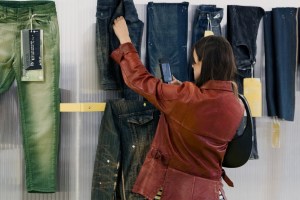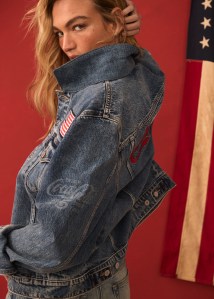
It’s time for the denim industry to get closer.
That’s the message from Turkish garment manufacturer Rimaks. The company is ushering a new approach to solving the industry’s biggest hurdles with Denim Codes, a collection intended to bring together material innovation, garment expertise, and advanced finishing into a clear and common language.
Rimaks describes Denim Codes as a “systems solution” for brands and retailers that relies on close collaboration across the supply chain—from fiber producers to fabric mills and garment innovation.
Related Stories
“The real problem is not a lack of innovation—it’s a lack of integration,” said Onur Itik, Rimaks’ sales director.
“I think the industry has become very fragmented over time. We often work in silos—fiber, fabric, garment, finishing—each part doing its best, but not always fully connected. What Denim Codes is trying to do is bring those parts back into dialogue through final product and the process development,” he said.
Denim Codes consists of three concepts—The Clean Line, Sculpted Volume and Intelligent Surface—with each addressing specific demands in the market.
Clean Line debuts Authenx, an “authentic comfort denim” range made with Bossa Denim’s fabrics enhanced by The Lycra Company’s VintageFX fiber technology. The dual-core yarn is engineered to produce long-wearing, comfort-stretch denim that looks and feels like a favorite pair of vintage jeans.

Sculpted Volume also incorporates fabrics by Bossa, this time crafted with Lenzing’s Tencel Lyocell HV100 fiber, a version of cotton-like lyocell.
“What’s interesting about HV100 is the balance it brings between innovation and authenticity,” Itik said. “It allows you to retain a very clean, authentic denim surface—something that traditionally belongs to cotton—while introducing a softness and gentleness that we usually associate with Tencel.”
That combination opens new possibilities for end uses across men’s and women’s categories. “You can work with volume, with movement, with more sculpted forms, without losing the essence of denim. It’s not just about comfort—it’s about how the fabric behaves in relation to the body,” he said.
The third concept, Intelligent Surface, explores how finishing can “redefine the relationship between fabric and wear.” It includes Bodycast, a concept with SM Denim that enables garments to create natural structure, depth, and a more intuitive fit on the body.
Shadowacast, Rimaks’ one-step dye and wash innovation, adds another level of innovation. Instead of treating dyeing and finishing as separate steps, it allows color, wear, and softness to develop together through controlled movement and heat.
“The garment evolves more naturally, which gives a balanced high and lows where you need them the most. The additional value added is the garment has a waxed surface intelligence in addition to the authentic visuality,” Itik said. “From a process perspective, combining steps can potentially reduce the need for multiple interventions—so there is an inherent efficiency. But I think it’s important not to reduce it to a single sustainability claim. The real value is in how the process respects the fabric and creates a more honest surface.”
By approaching denim as a system, he said Rimaks is creating a more connected way of working, where each decision—at fiber level, fabric level, or finishing—supports the final product in a more intentional way. “When that happens, the outcome feels more balanced, more authentic, and ultimately more meaningful for the brands as well as the consumer,” he added.
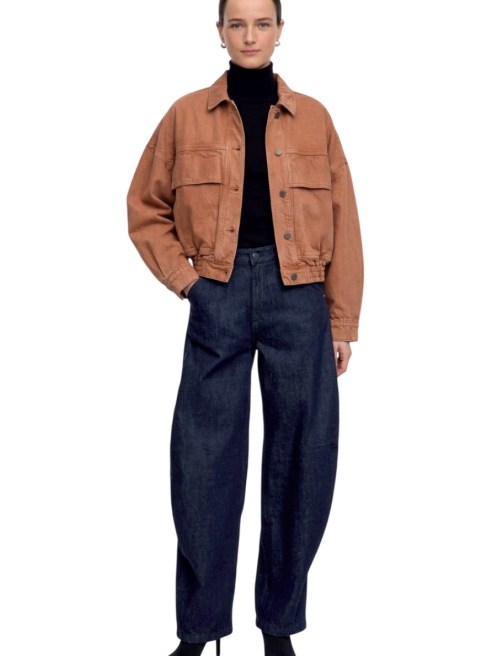
Rimaks sees silhouettes are becoming more defined—straight, wide or sculpted—for Fall/Winter 2027-2028. Itik noted that there is less interest in over-designed products and more focus on pieces that feel right, both visually and physically.
The trends reflect what he expects to be a “thoughtful and more grounded” season, especially as the supply chain is not immune to what happens globally on the political and economic level.
“There’s a sense that the industry is slowing down slightly—not in terms of innovation, but in how we approach it. There is more reflection, more intention,” Itik said. “And I think there is also a growing awareness that we are all part of the same system. The strength of denim has always come from relationships—between people [and] partners from across the supply chain. When those relationships are strong and transparent, the entire industry becomes more resilient.”
At the same time, it’s important to avoid the industry speaking in circles.
“And perhaps just as important, we need to communicate that to the consumer. Because when people understand how denim is made—how many hands, how much knowledge goes into it—they value it differently. That collective understanding is what will shape the future of denim.”