Rentrayage didn’t begin as a denim brand, and its founder, Erin Beatty, comes from different stock than the denim heads that dominate the sector.
The classically trained designer, with more than two decades of industry experience leading commercial brands, has found herself at the helm of a label that showcases the heritage fabric through a new lens. With fresh silhouettes, thoughtful styling and sustainable production processes, the New York-based designer aims to bring its jeans to a shopping public that Beatty believes is yearning to buy with a purpose.
Related Stories
In the age of lightning-fast, social-media-driven trend cycles and a litany of cheap channels for participating in fashion fads, “I think that’s the hardest thing right now is how you connect with people,” she told Rivet. “They just want to feel something.”

Beatty, who graduated from Parsons before stints at Donna Karan, Gap Inc., Generra and Tory Burch, struck out on her own in the early aughts, founding critically acclaimed lifestyle label Suno with partner Max Osterweis. The now-defunct brand manufactured garments in Africa using upcycled fabrics and was worn by the likes of Michelle Obama and Beyoncé, but by 2016, the pressures of the market took their toll on the business. Beatty found herself at a crossroads, wondering what to do next.
Those were the early days of fashion’s reckoning with its addiction to overproduction. “I was like, ‘Do I leave fashion? What do I do?’ It was this huge crisis of conscience,” she said. “I suddenly had two kids, and I was just really worried. I was thinking so much about the world we were going to leave for them.”
Rentrayage was born of a desire to explore a future for fashion based in sustainable design, using materials that already exist in the world. “That’s when I really started playing with the idea of vintage and upcycling vintage,” Beatty said. The brand’s first line launched in February 2019 to “a huge response” from specialty retail, from London’s Browns boutique to North Carolina luxury retailer Capitol and high-end Chicago women’s retailer Ikram and The Webster in Beverly Hills.
But shortly thereafter, the Covid-19 pandemic hit. While some consumers found themselves flush with a little government stimulus cash, Beatty said Rentrayage wasn’t the beneficiary of much discretionary spending. With artful, avant-garde silhouettes and limited size ranges, “Ours were the type of clothes that you had to buy in person,” she explained.
But the pause gave the designer a chance to rethink her strategy, and “to explore what we wanted to be.”
“It’s one thing to launch a brand that feels highly creative and like art, and it’s another to launch a brand that’s going to last,” she said.
For Beatty, denim was the answer to the existential questions that weighed on her mind. What are the pieces a consumer will return to over and over? What’s essential? And what can help rid the world of fashion waste?
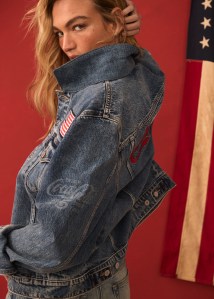
“We started to look at denim, which to me, just felt super classic. It felt super American. It felt like something that you could wear every single day,” she said.
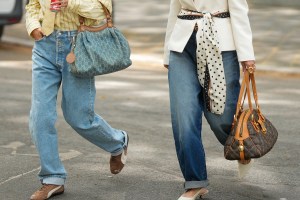
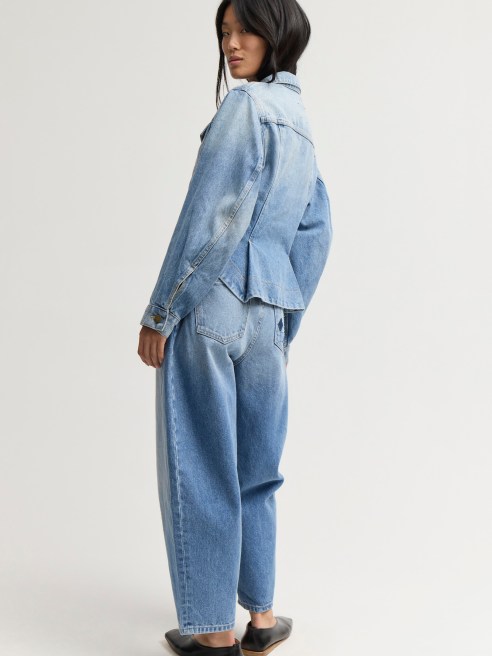
Rentrayage offers a “fashion take” on denim, deviating from the handful of familiar silhouettes commonly found across collections. “My focus is playing with proportion, playing with washes, playing with color,” she said. “And we do it in a sustainable way, in that we work with existing stock fabrics.”
The brand’s jeans are made in small batches in Los Angeles using ozone and other water-saving production processes. Beatty said she has sought to bring something different to the space than the standard denim offering: boyfriend, barrel, flare, wide-leg, boot cut.
The brand’s best-selling Silverlake jean, for example, features a full, billowy leg with a slight taper at the ankle and an elasticized waistband meant to cinch and flatter while remaining comfortable and relaxed. “What I was looking at, and what I loved about this, was creating the concept of a trouser that was a jean,” she explained. Meanwhile, a new style, the Kate, is a high-waisted workman style that’s fitted in the waist. “It’s not a skinny jean, but I do think it’s kind of the perfect mom jean.”
“I just started to explore offering styles that felt different, and from the moment we launched, we really started to get traction in the denim,” Beatty said. “So right now, it’s a place where I’m very focused.”
According to the designer, denim offers a different sort of canvas for creativity, but it’s a familiar one; something anyone can integrate into their wardrobe. “What I love about what we offer in denim is it feels like something that’s very classic, but it also feels like something that’s very fresh,” she said. “It feels something that’s like something that is simultaneously like your best friend from the minute you meet it, and it also makes you feel like you’re making a statement.”