Re&Up Recycling Technologies is a company with no time to waste. Or textiles, for that matter. By 2030, the Sanko Group spinoff aims to hit an annual recycling capacity of 1 million metric tons. That means it has to hustle.
Since announcing itself to the world at the Global Fashion Summit in Copenhagen in 2024, the textile-to-textile recycling firm has completed two industrial-scale plants in Turkey, where it can pump out a collective 80,000 metric tons of recycled polyester and recycled cotton every year; inked a multi-year “circular textile solution” agreement with Puma; and set a new industry standard by becoming the first to be Cradle to Cradle-certified circular for all its products.
Related Stories
In this condensed and lightly edited interview, we caught up with Re&Up’s general manager Andreas Dorner to learn more about the challenges of operating in today’s geopolitical quagmire, how environmental policy can be both a boon and a bane, and where the company is headed next.
SJ DENIM: You got up and running quickly!
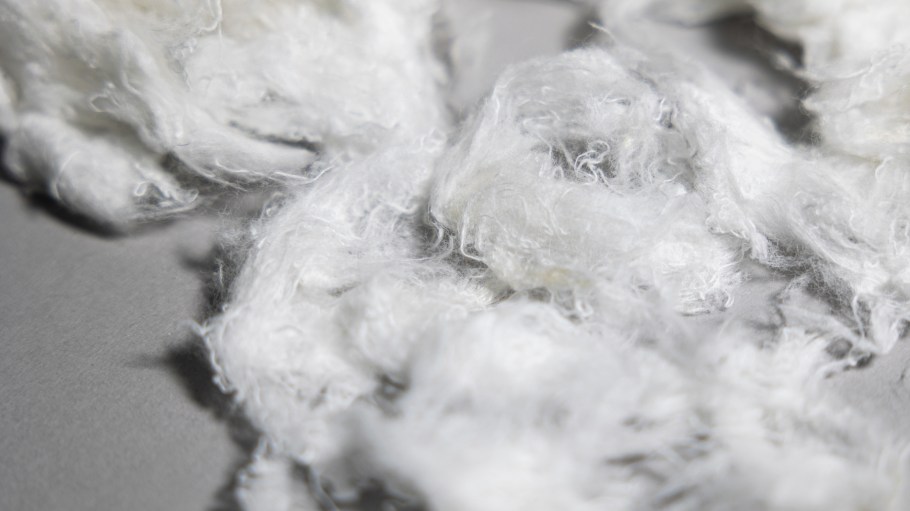
Andreas Dorner: Last year was just an announcement of Re&Up ramping up. We are very proud that the machines are running at full capacity. So that’s the reason why we can now offer 80,000 metric tons at scale to the market, where 50,000 metric tons is cotton textile-to-textile recycling and 30,000 metric tons is polyester textile-to-textile recycling.
The next step is to plan to have a site in Europe. We have some very strong negotiations with some sites in two different countries. And the next direction would be Asia, to expand some bigger lines there. The plan is also to continue to increase our capacity in Turkey, in parallel with the other developments.
Re&Up is a bit different from the current breed of advanced recyclers, which wholly use chemical methods to separate polycotton blends. You’re using a combination of mechanical and thermomechanical, instead. Why is that?
AD: While we see that the market is going toward depolymerization, which is either the glycolysis or monomer process, we went another direction, with an extrusion process. This gives us the opportunity to have Global Recycled Standard certification. The harsh chemicals in the glycolysis process don’t allow for GRS certification, but our process structure and process design allowed us to get there. And we wanted to be more innovative in our technique, too.
What inspired the move to C2C certification?
AD: Cradle to Cradle as a standard has been a bit quiet in recent years, but we think it’s a good standard in the industry. And we saw a big opportunity that reduced a lot the complexity, which before was very high, very costly and didn’t provide a real service to brands and to producers. And it only required us to do some assessments to shape the data points. So why not integrate it into our system? Ebru Özküçük Guler, our chief sustainability officer, really led that effort.
We did not have to change any processes. It was just a matter of understanding what data points they needed, what kind of reporting they were looking for. So we were able to do this very quickly with a few visits. But, of course, saying that now is easy, but it involved a lot of work to get all the things together: uploading the platform data and doing some iterations to see how it works. And Cradle to Cradle hadn’t done this with other textile companies, so it was a learning process for both sides.

Who are the main buyers of your recycled cotton and polyester?
AD: When we started in the beginning, Sanko was a very good mother company to help us prove the concept. But this year we developed a matrix of additional spinners, filament producers and staple fiber producers for polyester. And the brands helped us, too. We talked to brands in Europe and in America and said, “Hey, help us guide this to the right mills.” We’re still a small company; we can’t just go to a fair and say, “Here we are,” and then have 300 customers who’ve never used our fibers before to want to use them.
It was more clever for the leading brands who are already making commitments for circularity to say, “OK, I want to have your fibers. And here are the mill metrics to integrate the fibers into our systems.” And all I can say is that we’re in the end phase of building some long-term agreements with some major fashion and sportswear brands in addition to Puma.
Re&Up’s partnership with Puma focuses on regional strategies. How does that work exactly?
AD: It makes no sense, because of CO₂ emissions, to ship fibers or fabrics around the world, from east to west, from north to south. So we wanted to develop regional supply chains. Like for us, we go for the United States, we’ll try to build something in Mexico. Puma is working in Europe, so we try to have Turkey as a kind of central hub for the North African and European markets.
And we are working with Puma and a supplier in Asia to find a way to produce recycled fibers with the lowest possible CO₂ emissions. So it like looks like shipping polyester chips is the best way, instead of sending yarn or fabrics. So we want to use the opportunity to think about a holistic way of. We want to use the opportunity to think holistically about how to reducing the overall environmental emissions and burden.
How do you expect the U.S.’s tariff revisions to affect business overall?
AD: This impacts the global fiber business tremendously. Yes, we have the advantage if we’re sending the fibers out of Turkey to the United States, but we need to understand better what it means if we’re sending them to, say, Asia. What are the consequences? China, Bangladesh and India are still the biggest manufacturing areas.
And when the tariffs are changing every other week, it’s very difficult to build a strategy. When they were first announced, a lot of companies had to assess their own value chains to try and mitigate the risk. And when they were finished, suddenly there was an announcement for another change. And I think that’s giving the entire industry a big headache.
What do you see as the main challenges of making textile-to-textile recycled fiber the status quo, rather than something that’s a niche product?
AD: The challenges are threefold. First, you need brands that are interested. The second is to understand the legal framework. The United States has very clearly dropped back. Europe is pushing forward still but Europe is very complex, with 17 legislation points we need to comply with, plus differences in the way member states approach different regulations, like extended producer responsibility—it’s not one EPR, it’s 27 EPRs.
And the third is that Europe is mostly considering only post-consumer recycled textiles for its recycled content targets. From the industry side, there’s a push for post-industrial recycled, too. So we need some clarification because this is a global business. We need to make sure that waste isn’t traveling all over the world. It doesn’t make sense to send waste from China to Europe and then fiber back. Our mission is to clean up Europe first. There’s plenty of textile waste in Europe and there are enough ways to convert them into new fiber that creates a better product.
There are reports of brands pulling back from their sustainability commitments. What has your experience with this been like? And has that made for increased competition with other textile-to-textile innovators?
AD: We’re seeing this because there’s a lot of uncertainty. The brands we are working with, they still have very strong recycling commitments. Are they able to execute them as quickly as they want? No. There’s a lot of recalculation that is happening into the value chain because of the tariffs. So we’re seeing the speed of business slow slightly, but no one’s dropped out of their commitments.
I think overall, if you look at the global market, it needs multiple solutions. There is not one. But our differentiation is that we’re focusing on majority cotton because there is, per se, a shortage of cotton due to the annual harvest and stock situation. And we have a unique position that we offer cotton and not cellulose powder to the market. With polyester, I would say that competition will get stronger because there is less of a differentiation, but as I said, our process is GRS certified.
We see the other companies, and we read about them are very curious of what they’re doing. But I think most of them will only be ready to ship out in 2028, 2029, 2030. Whereas we’re already at 80,000 metric tons today, so we have at least a few years of an advantage there.
This article was published in SJ Denim’s fall issue. Click here to read more.