While fashion in the 2020s got off to a wobbly start affected by Covid, supply chain issues, social unrest, economic crises, and the birth of viral TikTok cores, tastemakers are eager to shed the unisex monochromatic uniforms that doubled as safety nets during the period of uncertainty and the overall blandness perpetuated by brands like Yeezy in the 2010s.
“The 2010s was a response to the ’90s hyper sexualization of masculine and femininity,” said Mariel Wuilloud, Highsnobiety head of strategy. “Un-gendered minimalism seemed like the future.”
Related Stories
Consumers’ evolving relationship with gender is driving change in fashion once again. Highsnobiety presented key findings from its new report, “State of Menswear: What’s Next?” Thursday in New York City. The report peeks into the mindset of male, female and non-binary “cultural pioneers,” or individuals that Highsnobiety describes as being a litmus test for future trends. The distinct cohort of consumers are more connected than the average person on social media, make more luxury purchases, and in general are more plugged in to where culture is going,
Though centered on men’s fashion, the report examines how pioneers are using style to construct their gender and their identity. Their approach to gender is becoming increasingly fluid, said Edward Campbell, Highsnobiety’s VP of thought leadership, with 77 percent agreeing that gender does not define a person as much as it used to, and 32 percent consider themselves to be gender non-conforming.
They’re experiencing fashion outside their gender category as well. Ninety-four percent of respondents said they would consider buying products not specifically designed for their gender and 88 percent said they have purchased products of that type.
More women buy men’s apparel than men buy women’s apparel (76 percent versus 60 percent), indicating that there are barriers like size and fit for men shopping across categories. Half of the respondents said they would like to see online retailers should show garments on male and female models.

“Culturally, things a little bit more complicated,” Wuilloud said. The report found that men are two times more likely to fear being judged by others when shopping for products not designed for them, and more than twice as likely as women to avoid products labeled for a different gender.
There are exceptions. Three categories that are acting as gateways to experimentation for men are accessories, makeup and jewelry. Nearly half of men said they have purchased accessories and jewelry not designed for their gender. Men are also three times more likely than women to have purchase beauty/personal care products not designed for them.
Genderless products or unisex fashion may not be the solutions, however. The report found that 37 percent consider the word to be outdated and 48 percent said current “unisex” offerings are full of oversized and baggy fits. Wuilloud added that some respondents described “gender neutral” as antiquated and basic.
Instead, cultural pioneers are moving from gender erasure to gender experimentation. The report found that 72 percent feel no pressure to dress in a way that reflects their gender and 57 percent mix traditionally masculine and feminine styles.
“Masculinity and femininity are really shared spaces,” Wuilloud said. “It’s not about ignoring gender, but about liberating it, because masculinity and femininity should be available to everyone regardless of gender identity.”
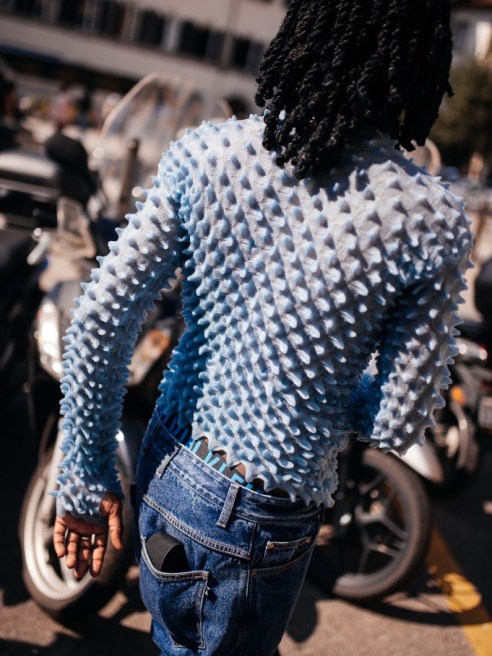
The report found that 60 percent of men are becoming more experimental with the clothes they wear. This shift is allowing men’s designers more creative freedom with their fabrics, colors and themes.
Forty-five percent of men said they have noticed themselves wearing more colorful or flashy styles. “It wasn’t that long ago that color for men’s wear was incredibly neutral,” Campbell said. “All you have to do is look around the streets of any city today and [you’ll see that] men’s wear has become a lot [brighter].”
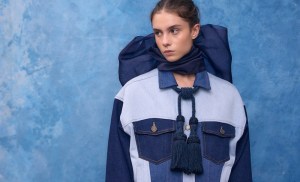
Eighty-seven percent of respondents agree that silhouettes, fabrics, and colors no longer need to conform to traditional dress codes. Though men’s wear is rooted in cotton, denim, suiting and leather, in discussions with its male audience, Highsbnobiety is starting to see chatter around mohair, embroidery and fine vintage textiles—fabrics that Campbell said are not designed for men traditionally.
“Ultimately, we really think that brands, and in the industry at large, should really be supporting their customer exploring their personal style,” he said.